Uncover Versatility with the Kwik-Trench

Uncover Versatility with the Kwik-Trench
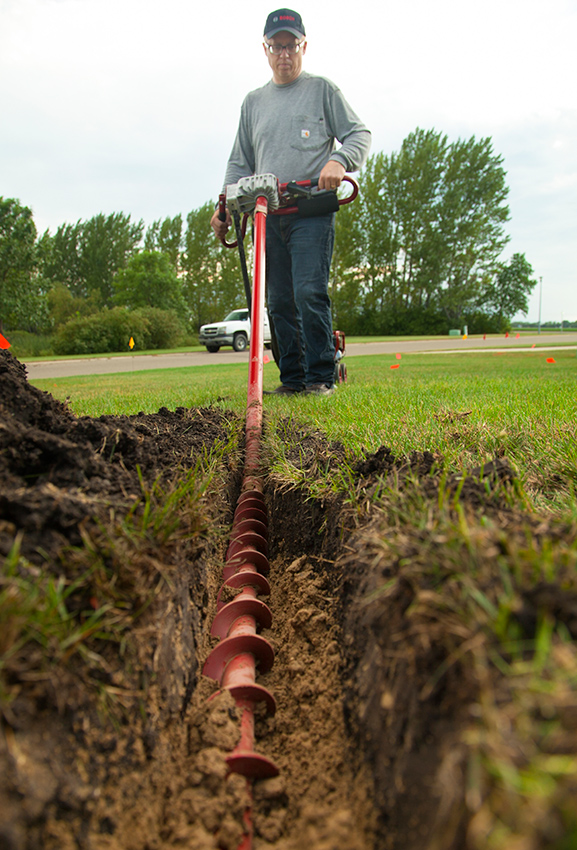
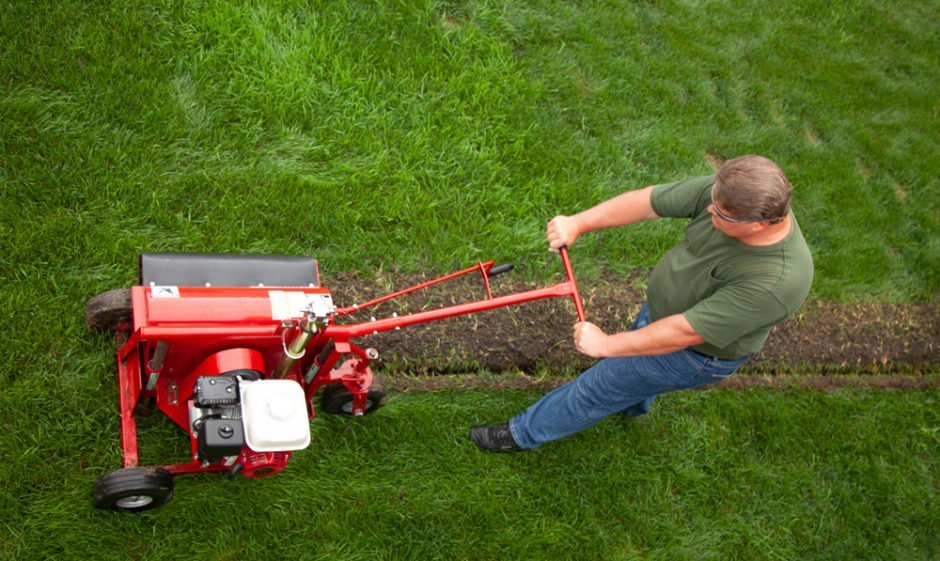
Kwik-Trecn mini trencher irrigation line install

In today’s world, versatility is key. Contractors, do-it-yourselfers and golf course superintendents constantly look for ways to reduce expenses and increase productivity for landscaping jobs, sprinkler installation and more. This means, the more applications a product can handle, the more valuable it becomes.

The Kwik-Trench Mini Trencher from Little Beaver is a great example of such a versatile machine. Whether you’re a homeowner or business owner, the Kwik-Trench offers a solution for a wide range of tasks, all in one easy-to-operate package.

Tailored for the Task

The Kwik-Trench is available in two models, the KT200B and the KT2400B. These mini trenchers cater to different jobsite requirements. The KT200B and KT2400B are perfect for projects that require shallow trenches, tight spaces and more maneuverability. The KT200B is a lightweight model and the KT2400B, while still highly maneuverable, is better for jobs that need more power and deeper trenches.

Check out the unique features of the Kwik-Trench below:

  • Cutter Wheel Design

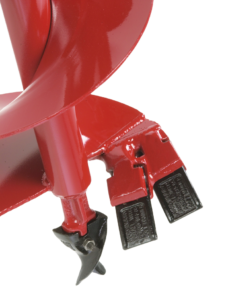
Where other trenchers require teeth to be welded directly onto the cutter wheel, the Kwik-Trench has a bolt-on tooth system. This design speeds up maintenance and allows quick tooth changes to match the application.

  • High-Performance Teeth

The Kwik-Trench’s carbide-tipped, hardened steel teeth can cut through tree roots and easily create trenches for irrigation lines in silty or sandy soil while the specialized Super Xtra Rock Teeth expand trenching capabilities into dense clay, asphalt and rocky soil.

  • Customizable Trench Dimensions

The Kwik-Trench features adjustable widths and depths, allowing operators to adapt to the task at hand and improve overall productivity. The KT200B has width options between 1 to 3 inches and depths down to 8 inches while the KT2400B features width options from 1 to 4 inches and adjustable depths down to 12 inches. This means you can customize the trench dimensions to the specific job. This adaptability minimizes the manual labor often associated with incorrect trench sizes where crews may need to expand or deepen trenches by hand when their trencher doesn’t cut wide enough or deep enough.

Meeting Diverse Applications

The practical design, adjustable settings and model options make the Kwik-Trench an attractive solution for a wide range of users across industries. Here are just a few examples:

  • Landscaping Contractors use the Kwik-Trench for professional edging, installing silt fences and burying wires for landscape lighting.
  • Utility Contractors benefit from the Kwik-Trench’s cutting speeds to quickly bury phone lines, shallow plumbing lines and drainage lines as well as low-voltage wires for satellite dishes, cable or phones.
  • Homeowners find the Kwik-Trench to be user-friendly and simple for installing sprinkler systems or burying an electric dog fence.
  • Golf Course Superintendents depend on the Kwik-Trench’s carbide-tipped, hardened steel teeth to manage problem tree roots and dig clean trenches for irrigation system maintenance.

With its intuitive design, convenient model options and broad application appeal, the Kwik-Trench is a great addition to any landscaper’s toolbox and a cost-effective option for DIY enthusiasts. Both Kwik-Trench models even come with an optional tilt bed utility trailer which makes moving the trencher from job to job easier.

For more ways to maximize your ROI, reach out to Little Beaver’s experts today.
Related Articles

Augers, Points & Blades Wear Issues

Augers, Points & Blades Wear Issues

Maximize Drill Performance

Earth auger blade replacement

Operators sometimes forget that points and blades need regular maintenance just like an earth drill does. Too often, these small pieces are forgotten in the day-to-day shuffle of drilling projects. However, forgoing routine maintenance on these critical parts can lead to a decline in drilling performance or even a complete breakdown on the jobsite.

Proper maintenance and replacement of common wear parts keeps your earth auger operating at peak performance. Like the drills they are mounted on, augers, points and blades require routine maintenance.

  • Check the placement of the points and blades every day. Misalignment might cause the auger to vibrate excessively or “walk” during use.
  • Ensure you’re using the right points and blades for the soil. Standard options work for loamy soils or areas with few rocks while hard clay or frozen ground requires carbide blades. Having the right points and blades will protect the auger from damage and make your drilling project easier.
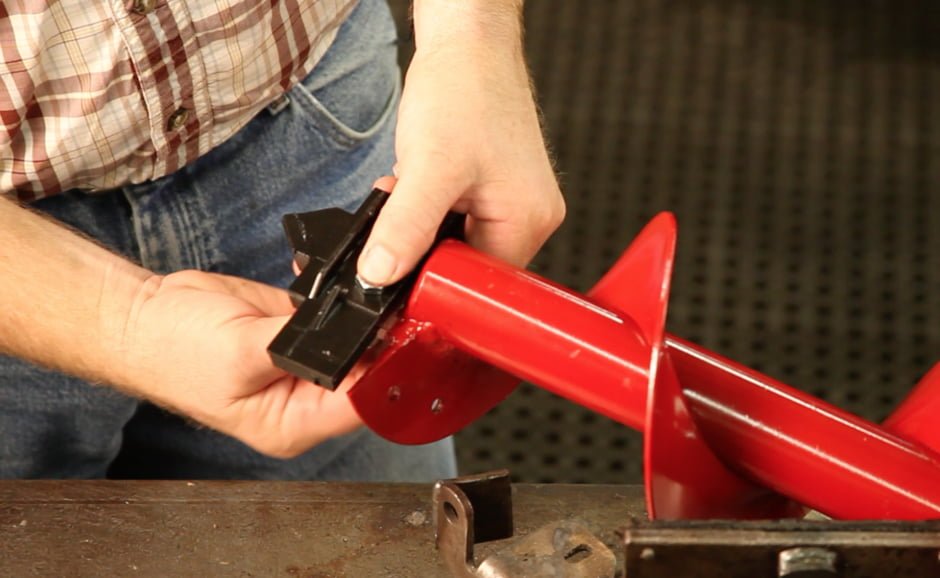
  • Replace worn attachable points and blades before they reach the auger flighting. Operators can replace these parts quickly with basic hand tools, such as a wrench or ratchet set. To learn more, check out our video below.
  • If the blades wear down far enough to damage the flighting, operators will need to repair the auger flighting by welding the material or replace the entire auger.
  • A good rule of thumb is to never operate a drill with damaged or missing parts, which includes the auger.
Heavy-Duty Auger Point

Heavy-Duty Auger Point

Our earth augers feature abrasive-resistant steel and hard surfacing on the edges of the points and blades. Another benefit of working with Little Beaver is that our points and blades are reversible, which means you get twice as much work out of one point or blade.

The time put into maintaining smaller wear parts protects against larger repair costs if the drill is damaged or breaks. Keep an eye on maintenance schedules to prolong the life of your Little Beaver earth drills.


SaveSave

SaveSave

Hydraulic Earth Drill Troubleshooting

Hydraulic Earth Drill Troubleshooting

Solutions to common hydraulic drill troubleshooting questions

Using a hydraulic earth drill can make your projects easier than ever, which is why we want to do everything we can to make sure it’s operating in peak condition. Whether you feel like your hydraulic earth drill might be losing power or the starter rope is becoming difficult to pull, you’ll find the solutions to these questions and more right here. 

Making the Starter Rope Easier to Pull

Hydraulic earth drill fencing

Using a hydraulic earth drill can make your projects easier than ever, which is why we want to do everything we can to make sure it’s operating in peak condition.

If it’s difficult to pull the starter rope on your hydraulic earth drill, check to make sure the quick disconnect couplings are fully engaged. Quick disconnect couplings provide fast and easy connection of fluid lines to easily start the drill. When they are not fully engaged, pulling the starter rope can be difficult.

The hoses can be easily connected without using tools. Connect the handle to the power source, attaching the return side first. This is the long hose that comes from the return line filter. Then, connect the pressure side of the handle to the power source.

Fixing Auger Turning Issues

When the auger turns fine in one direction but does not turn or turns very slowly in the other direction and stops when hitting the ground, your valve control linkage is most likely bent.

The valve control linkage is a small rod that connects the control to the valve spool. To fix this, straighten the linkage, making sure the flat part of the lever (the part you push or pull with your fingers) does not touch the handlebar at any time.


Improving Drill Power

If your hydraulic earth drill appears to have lost power, double check the oil that was used at the last service interval. Some retail or automotive stores sell multipurpose oils designed for tractors that are labeled “hydraulic oils.” These oils are not suitable for the Little Beaver power source because they have different additive packages. This can cause the hydraulic components to degrade faster and power to decrease due to friction and internal leakage. If you find that inappropriate oil was used, we suggest having your hydraulic drill checked by a reputable service dealer or calling us at 936-327-3121 and replacing the oil to avoid long term damage. It’s very important to always use the recommended grade when replacing hydraulic oil and to be sure to follow a schedule for regular oil changes.

If the troubleshooting solution you’re looking for isn’t listed here, take a deeper look into our service FAQs for hydraulic earth drills or check out the owner’s manual. If the answer to your problem still isn’t coming up, don’t despair! Contact us to speak with a member of our team for a personalized solution.

Mechanical Earth Drill Troubleshooting

Mechanical Earth Drill Troubleshooting

How to solve problems preventing your mechanical drill from working properly

Mechanical Earth Drill Troubleshooting

For more than 50 years, Little Beaver earth drills have been the #1 choice of rental store owners, fencing contractors and other professionals who want a one-man auger that’s safe and simple to operate.

There’s nothing more frustrating than your mechanical earth drill not performing the way you want it to. For more than 50 years, Little Beaver earth drills have been the #1 choice of rental store owners, fencing contractors and other professionals who want a one-man auger that’s safe and simple to operate. We’re dedicated to your success and have an extensive list of FAQs to address operation and maintenance questions. Check out solutions to some of the most common questions we receive about operating our mechanical earth drills.

The Drill Doesn’t Start

If you’re having trouble starting your mechanical earth drill and you’ve checked the fuel levels, there are a couple things you can try to get it working properly.

We incorporate an engine kill switch on the operating handles to allow quick fingertip control of the shut off for both safety and convenience.  Often overlooked, this switch can be the culprit and an easy fix to a drill that will not start. There is also a switch incorporated in the torque tube bracket that will prevent the unit from running unless the torque tube is installed. This switch provides added safety and operator protection.

If the switch isn’t the culprit, take a moment to inspect your spark plugs. Clear indications that the spark plugs need to be changed include an engine that misfires, surges or consumes significant fuel. While you’re at it, we also recommend checking the engine oil. Although the engine has an alert that prevents operation when levels are too low, proactively checking the levels can save time and avoid hassle in the future.

Getting an Auger “Unstuck”

Occasionally, when drilling, you may encounter soils or circumstances that prove challenging for even the most powerful drills. If your auger is stuck in the ground, disconnect the handle/gearbox. Then use a pipe wrench on top of the auger to turn it in a counter clockwise direction. Be very careful not to damage the auger top.

If the pipe wrench is not successful, we do offer a specially designed tool for this situation. Part #9022-T is a Tee Handle. This handle is used in place of the pipe wrench for added leverage. You can order a Tee Handle by calling 936-327-3121.

To prevent this situation in the future, make sure not to push down on the auger when digging in soft clay or sandy soil. Let the drill do the work to efficiently cut its way through the soil.

Getting the Auger to Turn When the Engine is On

If your engine runs but the auger doesn’t turn, a problem with the drive train is the most likely situation. Frequently, the issue can be traced back to the flexible shaft core. The best way to determine if the flex shaft is the issue is to inspect the core end fittings for cracks or breakage. If the flex shaft core appears to be undamaged, check the key on the clutch drum, the gears or shaft keys within the gearbox and the adapter key on the gearbox output shaft for signs of damage.

If you find damage to the flex shaft or an issue with the gearbox, get in touch with our team to get the necessary repair parts and tips on how to prevent future damage. If both look fine but the auger still doesn’t turn, contact us or check your maintenance manual for further information on this issue.

Keeping the Auger Still When Not Engaged

If your auger turns all the time – even when not engaged – try adjusting the engine idle. If you’re unable to adjust to a low enough level to prevent turning when not engaged, replace the springs on your centrifugal clutch. To get the replacement springs and any tips on how to install them, contact us at 936-327-3121.

When an auger is working properly, the springs in the centrifugal clutch adjust when the auger is engaged so the clutch shoes push back and forth against the clutch housing to propel the auger. When not engaged, the clutch shoes stay still, so the auger stops turning. As the springs wear down, they loosen so the clutch shoes always pulse against the clutch housing.

To help reduce wear on the springs, make sure not to “bog down” the engine when using the drill. It’s important to let the auger turn fast enough that the clutch doesn’t slip because excessive slippage will cause overheating and loss of temper of the springs. 

If you’re still not finding what you’re looking for, take a deeper look into our service FAQs for mechanical earth drills or check out our owner’s manual. If the answer to your problem still isn’t coming up, don’t despair! Contact us to speak with a member of our team for a personalized solution.

The Do-It-All Earth Drill

The Do-It-All Earth Drill

How Little Beaver Earth Drills bring versatility and efficiency to municipalities

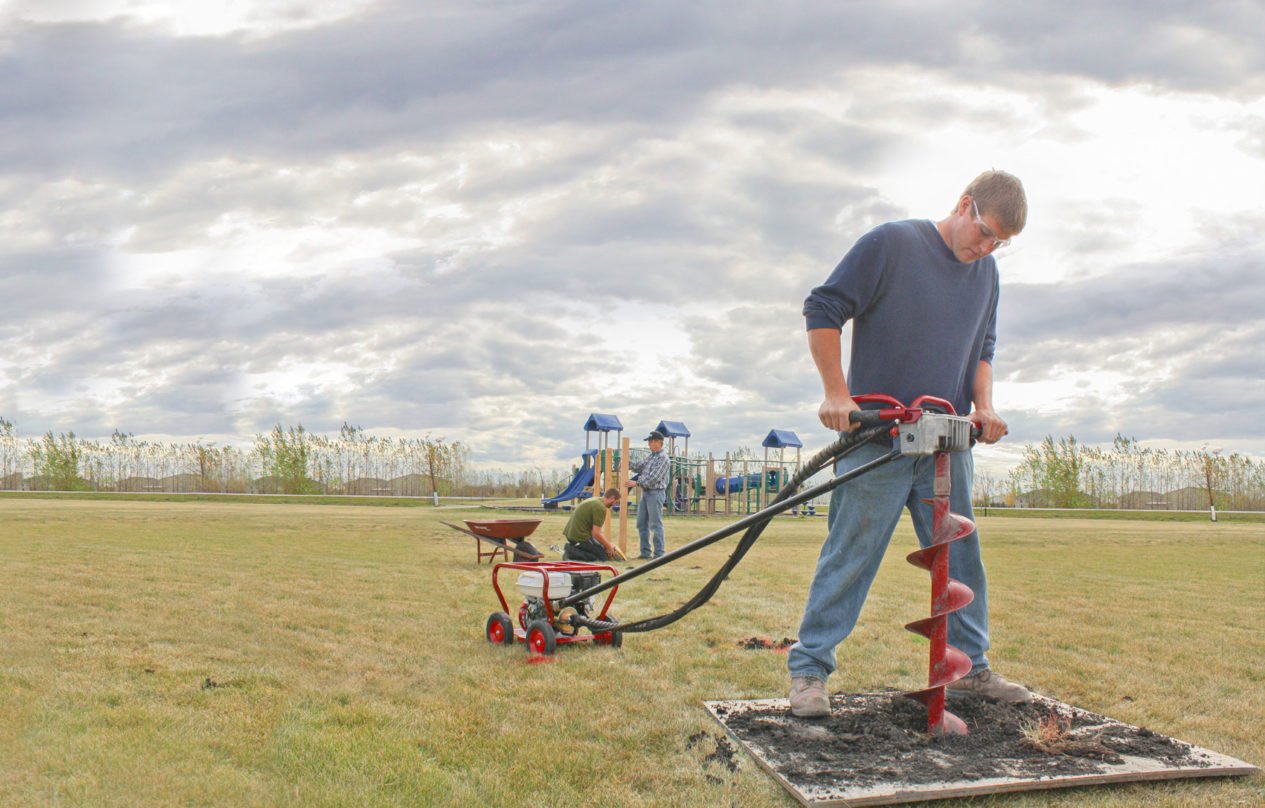
Municipalities have their work cut out for them. Whether it’s city maintenance workers or general contractors hired to sustain parks in a city, town or borough, a day’s work can involve several industries’ skills rolled into one crew. They can be installing fence posts in the morning, replacing sprinkler lines mid-day and find themselves planting trees in the afternoon.

With this much variety, working smarter, not harder, is paramount to overall productivity. And having versatile tools that allow crews to better utilize labor, safely, while also outperforming other methods, can have a major impact on efficiency. Little Beaver Earth Drills can do just that. Our full line of earth drills enables safe one-man operation with nearly two times the productivity of other units. It’s just a matter of finding the Little Beaver earth drill that best meets your municipality’s needs.

Here are our two most popular earth drills for municipalities and how they can streamline work for grounds crews.

Mechanical Drills + Boring

Earth drill horizontal boring kitsIf your town or city plants a lot of small greenery, installs several fences or other tasks that require crews to dig numerous footings quickly throughout the year, our Mechanical Earth Drills may be right for you. Perfect for horizontal boring or fast, narrow hole drilling, these drills, like all our drills, allow for safe, one-man operation and have the speed to help crews excel.
With our mechanical drills, users can choose from augers ranging from 1.5 to 16 inches in diameter with 36- or 42-inch lengths. And with multiple gear reduction ratio options, crews can choose a mechanical drill with 360 RPM for loose, soft soils or one with a lower speed that is better suited for dense, rockier formations. With a mechanical drill, crews can quickly install a long row of shrubs and then shift to setting a pole for a basketball hoop in denser soil — all without missing a beat.

To further increase municipal staffs’ versatility, we make Horizontal Boring Kits for our Little Beaver Mechanical Earth Drills. These are available in a sidewalk kit, for boring short distances up to five feet long, and a driveway kit, for boring up to 50 feet. The horizontal boring attachment allows grounds crews to install everything from sprinkler systems and lighting wire to drainage pipes and more, all with an easy-to-connect attachment.

Whether horizontal boring or planting a row of shrubs, these tasks, and everything in between, can be accomplished with one crew member thanks to our industry-leading design. A centrifugal clutch and torque tube eliminate dangerous operator kickback and prevent jarring stops when encountering an obstacle. Additionally, the innovative torque tube redirects torque to the engine carriage instead of the drill’s handles. These features make for a winning combination that spares drill components and protects the operator’s safety, allowing crews to better utilize their labor.

But, if heavy-duty applications and anchoring are abundant and soil types are consistently rocky and dense, hydraulic drills might be a better choice.

Hydraulic Drills + Anchoring

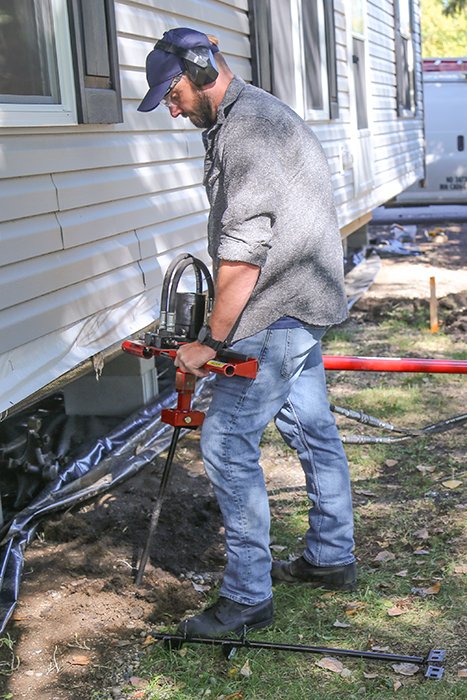
Hydraulic earth drill installing - anchors for mobile homesOur Hydraulic Earth Drills, with their powerful torque, are perfect for installing anchors or digging holes for large playground equipment, awning supports, sizable landscaping and other tasks that require deep, wide footings.

These earth drills accommodate augers up to 16 inches in diameter with drilling depths of up to 35 feet depending on the auger. The seemingly endless auger options combined with rugged drill construction and increased torque allow crews to take on lighter tasks like planting landscaping and then quickly shift to heavy-duty construction, like installing support beams for a sunshade. This gives crews the flexibility to divide and conquer whatever their municipality throws at them.

And with the hydraulic drill line, crews don’t have to look elsewhere for anchoring needs.  Thanks to our innovative torque tube and precise auger rotation at low speeds, our hydraulic drills are perfect for anchoring. Our Anchor Adapters are available for various applications from anchoring poles and beams to installing tent stakes, making them a perfect, versatile solution for municipalities. By quickly snapping an adapter onto our earth drill’s high torque anchor handle, crews have a one-man anchoring machine to secure footbridges, large playground equipment and more — a much safer and more efficient option than anchor crankers.

The extensive tasks that await city maintenance crews and contractors every morning don’t also have to mean an extensive set of tools. With a little knowledge about the applications, crews can choose one Little Beaver Earth Drill to carry them through the day — safely and efficiently.

Technological Advances Come to Fencing

Technological Advances Come to Fencing

How Innovative Design Can Improve Operator Safety

Fencing contractors have come to rely on high-speed mechanical earth drills for quick hole digging — and for good reason. These powerful machines greatly increase productivity over manual methods, improving profits and ROI. However, some efficiency is lost on increased labor costs and safety concerns directly resulting from the brute force these machines employ. Some companies — like Little Beaver — have made improvements to the design to allow a single operator to drill safely, saving time, labor costs and reducing the possibility of injury to the operator and damage to the machine.

Torque Transfer

Mechanical earth drill torque tube

By transferring dangerous kickback to the engine carriage as opposed to the handles, one person can safely operate a Little Beaver drill.

One-man drilling leaves the torque generated from a mechanical drill operating at 360 rpm in the hands of one person, a dangerous and potentially costly situation that can leave workers injured, jobs unfinished and insurance claims to be filed. It’s why Little Beaver builds its mechanical drills standard with steel torque tubes to prevent such situations from spinning out of control.

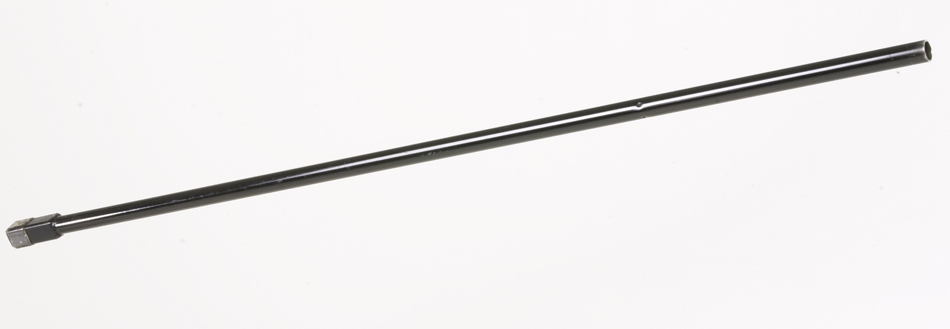
The steel torque tube transfers auger torque and kickback to a separate engine carriage instead of the drill’s handles. Little Beaver makes this possible by mounting the engine on a separate carriage and then connecting the engine to the drill via the torque tube. This makes one-man drilling a safe and efficient reality instead of a potential hazard.

But what happens when the kickback proves too much for the drill?

Centrifugal Clutch

Mechanical earth drill centrifugal clutch

A drill equipped with a centrifugal clutch will automatically slip if it becomes overloaded or strikes an object that cannot be readily drilled through.

Fence installers know the frustration of hitting tough objects, like roots or rocks, that can abruptly halt drilling at the expense of the operator or the drill itself. Quick changes in torque when drilling can destroy a transmission as easily as it can a shoulder. A centrifugal clutch helps to alleviate these hazards and headaches.

As the torque tube mitigates operator risk by reverting the torque back to the engine carriage, the drill’s transmission now takes on the risk of overloading from all the torque and drilling pressure or damage from encountering a buried object. This is where the centrifugal clutch kicks in. A drill equipped with a centrifugal clutch will automatically slip if it becomes overloaded or strikes an object that cannot be readily drilled through. Pairing this feature with a heavy-duty transmission limits the chances for auger and transmission damage or an untimely breakdown.

A centrifugal clutch, along with the steel torque tube, brings repair cost mitigation and safety maximization full circle. The increased safety of the operator combined with one-man operation and the decreased likelihood of a breakdown equals a smaller and more efficient crew that can take on more jobs.

Intuitive Design

Intuitive design leads to fluid operation. A drill operator shouldn’t need to waste time or focus searching for a switch or changing a cumbersome attachment. Time saving features like snap-on augers and handle-mounted on/off switches on Little Beaver drills help to improve operation, increasing efficiency and potentially saving the operator and machine from unnecessary harm.

There is no formula for increasing the number of jobs completed while decreasing labor input. Such a conundrum takes technological advances to overcome, and Little Beaver has done just that. Fencing crews can now complete jobs with less labor, freeing up time and budget to tackle more work safely.