
Last updated Mar 27, 2026
How Earth Drills and Mini-Trenchers Can Streamline Yard Projects
Landscaping keeps your lawn protected, healthy and looking great. Whether you’re doing a full landscaping project or just adding a sprinkler system, Little Beaver has tools that can help speed up your work. Keep reading to learn how our Mechanical earth drills and Kwik-Trench mini-trenchers can help your next project go quickly and smoothly.
Mechanical Earth Drills
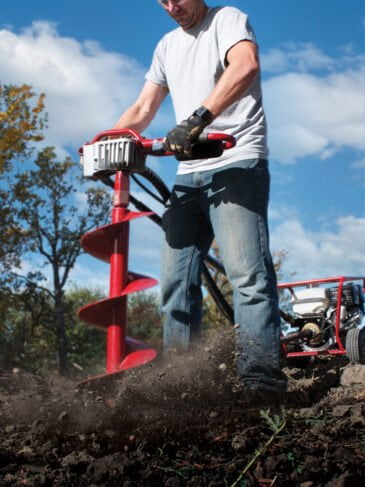
Mechanical earth drills cut down on the time you spend digging holes. If you’ll be planting trees or shrubs, or installing mailboxes or fence posts, you’ll find that using an earth drill significantly speeds up the process while creating consistent holes that meet the size requirements of your project.
Little Beaver Mechanical earth drills combine a compact, lightweight design with additional safety features to allow safe and efficient one-man operation. Our torque tube reroutes kickback from the drill away from the operator, making it one of the safest drills for single person operation. One-man drilling projects can be dangerous, but Little Beaver earth drills help ensure your project is done efficiently and safely.
Kwik-Trench Mini-Trencher
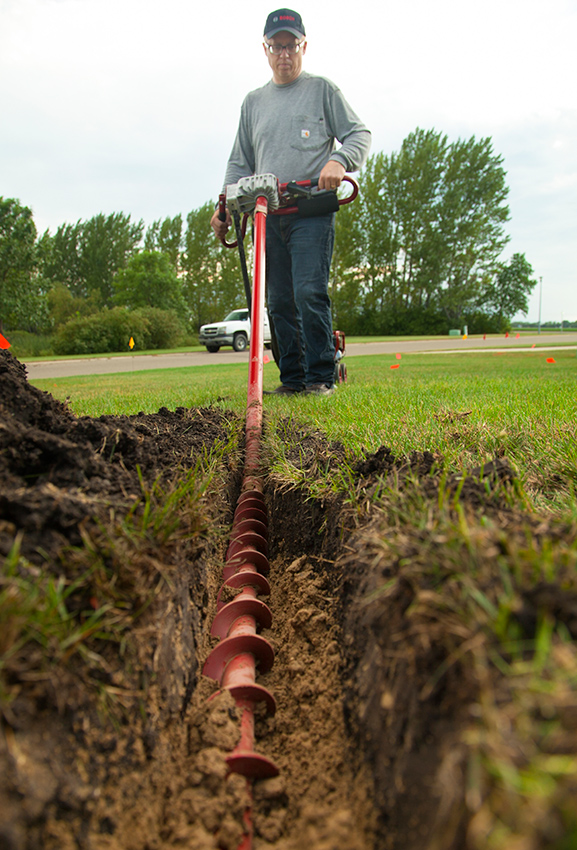
Traditionally, landscapers have used shovels and other gardening tools to break up soil to dig trenches for edging or underground wiring or sprinkler lines. This process is time-consuming and physically grueling. That’s why Little Beaver offers a mini-trencher.
The Kwik-Trench features a simple, push-forward design for easy operation and enhanced operator safety compared to competitive pull-back models. This mini-trencher cuts trenches up to 12 inches deep and 4 inches wide, neatly depositing the soil on one side of the trench to make backfill quick and easy.
Horizontal Boring Kit
When installing underground wiring or sprinklers, you might need to run a portion of the line underneath a driveway or sidewalk. To do so, you’ll need a reliable, safe equipment option to easily bore underneath the concrete or asphalt. Little Beaver’s horizontal boring kits attach to our Mechanical earth drill providing both dry and wet boring opportunities.
The sidewalk boring kit includes a 5-foot auger with a 3-inch diameter bit, a horizontal drill key and a 5-foot extension with a universal wiggle joint. Once connected to a drill, the horizontal boring kit can bore underneath a standard sidewalk. If you need to bore a longer distance, we also offer the driveway boring kit. The driveway boring kit includes a 2-, 3-, or 4-inch water drill bit with a swivel adapter that connects through swivel assembly and a horizontal drill key. This kit can bore up to 50 feet under driveways or parking lots.
No matter what landscaping project you have planned Little Beaver can help. Let us help you choose the best Little Beaver product for your landscaping project. Contact us today!
Last updated Mar 27, 2026
How to solve problems preventing your mechanical drill from working properly
There’s nothing more frustrating than your mechanical earth drill not performing the way you want it to. For more than 50 years, Little Beaver earth drills have been the #1 choice of rental store owners, fencing contractors and other professionals who want a one-man auger that’s safe and simple to operate. We’re dedicated to your success and have an extensive list of FAQs to address operation and maintenance questions. Check out solutions to some of the most common questions we receive about operating our mechanical earth drills.
The Drill Doesn’t Start
If you’re having trouble starting your mechanical earth drill and you’ve checked the fuel levels, there are a couple things you can try to get it working properly.
We incorporate an engine kill switch on the operating handles to allow quick fingertip control of the shut off for both safety and convenience. Often overlooked, this switch can be the culprit and an easy fix to a drill that will not start. There is also a switch incorporated in the torque tube bracket that will prevent the unit from running unless the torque tube is installed. This switch provides added safety and operator protection.
If the switch isn’t the culprit, take a moment to inspect your spark plugs. Clear indications that the spark plugs need to be changed include an engine that misfires, surges or consumes significant fuel. While you’re at it, we also recommend checking the engine oil. Although the engine has an alert that prevents operation when levels are too low, proactively checking the levels can save time and avoid hassle in the future.
Getting an Auger “Unstuck”
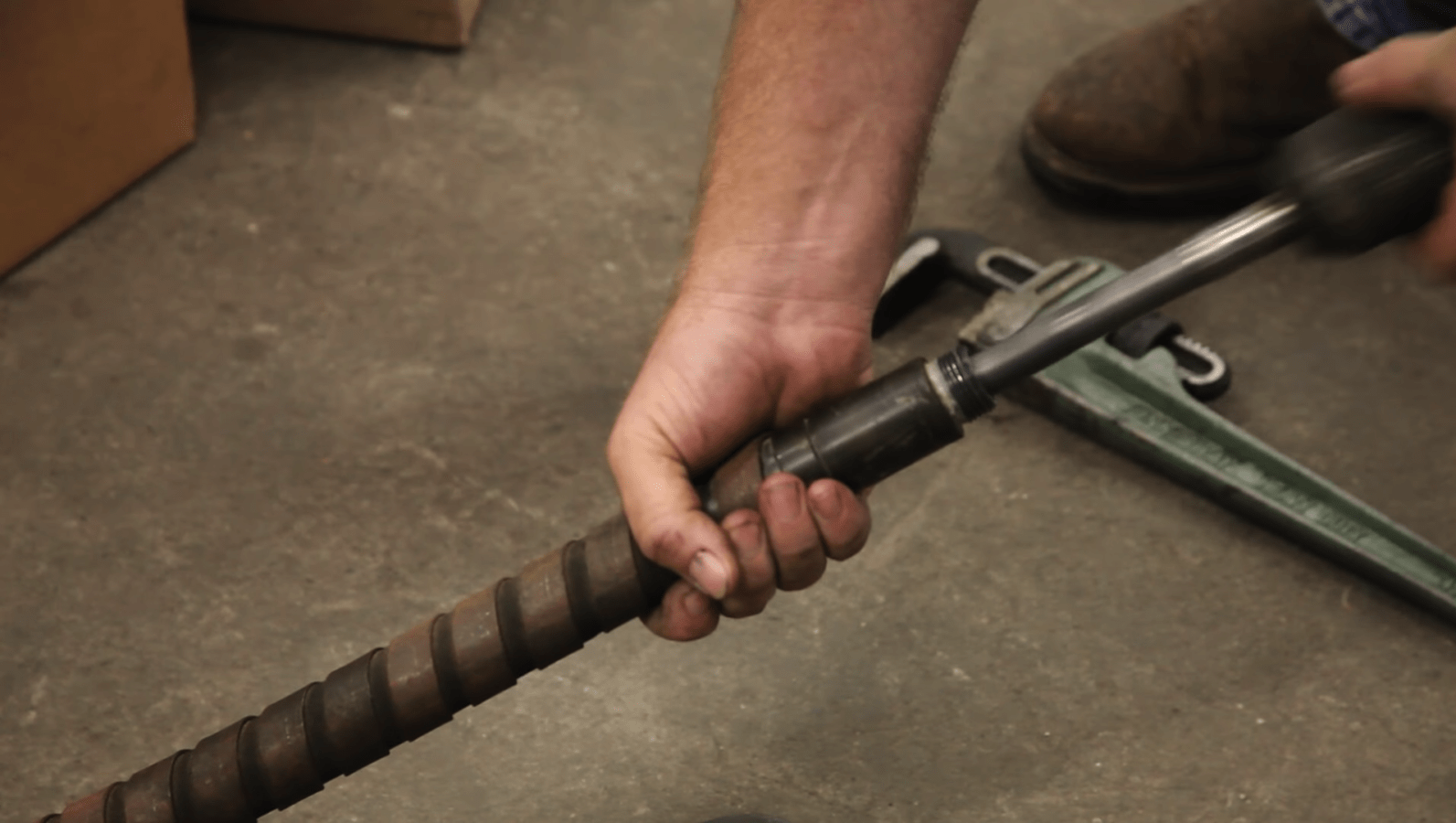
Occasionally, when drilling, you may encounter soils or circumstances that prove challenging for even the most powerful drills. If your auger is stuck in the ground, disconnect the handle/gearbox. Then use a pipe wrench on top of the auger to turn it in a counter clockwise direction. Be very careful not to damage the auger top.
If the pipe wrench is not successful, we do offer a specially designed tool for this situation. Part #9022-T is a Tee Handle. This handle is used in place of the pipe wrench for added leverage. You can order a Tee Handle by calling 936-327-3121.
To prevent this situation in the future, make sure not to push down on the auger when digging in soft clay or sandy soil. Let the drill do the work to efficiently cut its way through the soil.
Getting the Auger to Turn When the Engine is On
If your engine runs but the auger doesn’t turn, a problem with the drive train is the most likely situation. Frequently, the issue can be traced back to the flexible shaft core. The best way to determine if the flex shaft is the issue is to inspect the core end fittings for cracks or breakage. If the flex shaft core appears to be undamaged, check the key on the clutch drum, the gears or shaft keys within the gearbox and the adapter key on the gearbox output shaft for signs of damage.
If you find damage to the flex shaft or an issue with the gearbox, get in touch with our team to get the necessary repair parts and tips on how to prevent future damage. If both look fine but the auger still doesn’t turn, contact us or check your maintenance manual for further information on this issue.
Keeping the Auger Still When Not Engaged
If your auger turns all the time – even when not engaged – try adjusting the engine idle. If you’re unable to adjust to a low enough level to prevent turning when not engaged, replace the springs on your centrifugal clutch. To get the replacement springs and any tips on how to install them, contact us at 936-327-3121.
When an auger is working properly, the springs in the centrifugal clutch adjust when the auger is engaged so the clutch shoes push back and forth against the clutch housing to propel the auger. When not engaged, the clutch shoes stay still, so the auger stops turning. As the springs wear down, they loosen so the clutch shoes always pulse against the clutch housing.
To help reduce wear on the springs, make sure not to “bog down” the engine when using the drill. It’s important to let the auger turn fast enough that the clutch doesn’t slip because excessive slippage will cause overheating and loss of temper of the springs.
If you’re still not finding what you’re looking for, take a deeper look into our service FAQs for mechanical earth drills or check out our owner’s manual. If the answer to your problem still isn’t coming up, don’t despair! Contact us to speak with a member of our team for a personalized solution.
Last updated Mar 27, 2026
How Little Beaver Earth Drills bring versatility and efficiency to municipalities
Municipalities have their work cut out for them. Whether it’s city maintenance workers or general contractors hired to sustain parks in a city, town or borough, a day’s work can involve several industries’ skills rolled into one crew. They can be installing fence posts in the morning, replacing sprinkler lines mid-day and find themselves planting trees in the afternoon.
With this much variety, working smarter, not harder, is paramount to overall productivity. And having versatile tools that allow crews to better utilize labor, safely, while also outperforming other methods, can have a major impact on efficiency. Little Beaver Earth Drills can do just that. Our full line of earth drills enables safe one-man operation with nearly two times the productivity of other units. It’s just a matter of finding the Little Beaver earth drill that best meets your municipality’s needs.
Here are our two most popular earth drills for municipalities and how they can streamline work for grounds crews.
Mechanical Drills + Boring
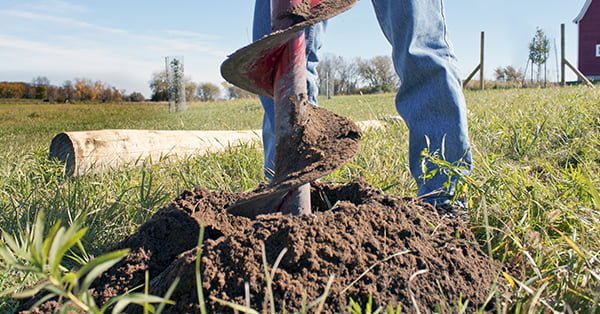
If your town or city plants a lot of small greenery, installs several fences or other tasks that require crews to dig numerous footings quickly throughout the year, our Mechanical Earth Drills may be right for you. Perfect for horizontal boring or fast, narrow hole drilling, these drills, like all our drills, allow for safe, one-man operation and have the speed to help crews excel.
With our mechanical drills, users can choose from augers ranging from 1.5 to 16 inches in diameter with 36- or 42-inch lengths. And with multiple gear reduction ratio options, crews can choose a mechanical drill with 360 RPM for loose, soft soils or one with a lower speed that is better suited for dense, rockier formations. With a mechanical drill, crews can quickly install a long row of shrubs and then shift to setting a pole for a basketball hoop in denser soil — all without missing a beat.
To further increase municipal staffs’ versatility, we make Horizontal Boring Kits for our Little Beaver Mechanical Earth Drills. These are available in a sidewalk kit, for boring short distances up to five feet long, and a driveway kit, for boring up to 50 feet. The horizontal boring attachment allows grounds crews to install everything from sprinkler systems and lighting wire to drainage pipes and more, all with an easy-to-connect attachment.
Whether horizontal boring or planting a row of shrubs, these tasks, and everything in between, can be accomplished with one crew member thanks to our industry-leading design. A centrifugal clutch and torque tube eliminate dangerous operator kickback and prevent jarring stops when encountering an obstacle. Additionally, the innovative torque tube redirects torque to the engine carriage instead of the drill’s handles. These features make for a winning combination that spares drill components and protects the operator’s safety, allowing crews to better utilize their labor.
But, if heavy-duty applications and anchoring are abundant and soil types are consistently rocky and dense, hydraulic drills might be a better choice.
Hydraulic Drills + Anchoring
Our Hydraulic Earth Drills, with their powerful torque, are perfect for installing anchors or digging holes for large playground equipment, awning supports, sizable landscaping and other tasks that require deep, wide footings.
These earth drills accommodate augers up to 16 inches in diameter with drilling depths of up to 35 feet depending on the auger. The seemingly endless auger options combined with rugged drill construction and increased torque allow crews to take on lighter tasks like planting landscaping and then quickly shift to heavy-duty construction, like installing support beams for a sunshade. This gives crews the flexibility to divide and conquer whatever their municipality throws at them.
And with the hydraulic drill line, crews don’t have to look elsewhere for anchoring needs. Thanks to our innovative torque tube and precise auger rotation at low speeds, our hydraulic drills are perfect for anchoring. Our Anchor Adapters are available for various applications from anchoring poles and beams to installing tent stakes, making them a perfect, versatile solution for municipalities. By quickly snapping an adapter onto our earth drill’s high torque anchor handle, crews have a one-man anchoring machine to secure footbridges, large playground equipment and more — a much safer and more efficient option than anchor crankers.
The extensive tasks that await city maintenance crews and contractors every morning don’t also have to mean an extensive set of tools. With a little knowledge about the applications, crews can choose one Little Beaver Earth Drill to carry them through the day — safely and efficiently.
Last updated Mar 27, 2026
Which Should You Choose?
With all the earth drills on the market that are capable of installing a fence, how do you sort through the options to find the best drill for your specific needs? Little Beaver offers multiple options that appeal to fencers looking for the labor-saving benefits of safe, one-man drilling. While any drill may do the trick, different drills have different strengths depending on the job, and a drill that consistently gives you great performance can help you land more jobs and increase your profitability. Here’s a breakdown of our most popular options for fencing and the jobs they’re best suited for:
Mechanical Earth Drill
If the majority of your jobs require speedy, one-man drilling, look to our mechanical earth drill series.
Little Beaver mechanical earth drills combine a compact, lightweight design with unbeatable speed and precision. These transmission-equipped units feature high-speed auger rotations and excel in situations requiring numerous posts in very little time. And with optional 13:1 or 20:1 gear ratios, they can take on everything from soft soils to dense, rockier applications.
If you’re looking for more ways to expand your business, Little Beaver mechanical earth drills are compatible with horizontal boring kits, enabling expansion into landscape lighting installation and running sprinkler lines or cable under driveways and sidewalks.
A centrifugal clutch and torque tube truly enables safe, efficient one-man drilling, eliminating dangerous operator kickback and preventing jarring stops when an obstacle is encountered. Additionally, the innovative torque tube redirects torque kickback to the engine carriage instead of the drill’s handles. Other brands of drills reduce performance to accommodate one-man hole digging. But not Little Beaver. We feature all of the power without the inherent risks of other drills.
Hydraulic Earth Drill
Despite all the advantages of mechanical earth drills, a season full of drilling a large auger through hard packed clay and soft rock formations may leave mechanical drill owners envying their hydraulic-equipped competitors.
Hydraulic earth drills are your go-to drill for the most challenging soils because of their rugged bodies and powerful torque. Their high torque and precise operation at low speeds allows operators to drill clean, accurate holes, even in the most difficult applications. Hydraulic drills are ideal for drilling wide holes because they have the torque to drive large-diameter augers — some as wide as 16 inches — making them perfect for installing large fence posts, gate posts and any large-scale decorative fencing. Additionally, our hydraulic earth drills have a reverse position so you can safely back-out the auger if it becomes lodged under a rock or tree root.
While hydraulic drills don’t have a clutch to worry about, the operator could be at even greater risk of injury due to the large amounts of torque from these drills. This is where our torque tube is more important than ever as it allows a single operator to safely handle high levels of torque that would be an unthinkable risk with any other design.
Towable
Do the advantages of our hydraulic earth drills sound appealing for your fencing crew, but you need easier maneuverability and transportation while still maintaining high torque? If so, look no further than our Towable Hydraulic Earth Drill.
Our Towable drill consists of a T-shaped steel frame with highway-rated tires in the center, an 11-horsepower Honda engine located on one end and the auger and controls on the other. The frame balances the weight of the drill over the wheels, making it easy for one person to move, pivot into place and manage when drilling. The wide tires also prevent damage to delicate turf or landscapes.
The design reduces operating weight by roughly 50% compared to traditional hydraulic drills, and it requires less than 20 pounds of force to pivot into digging position. The frame also eliminates torque for safe one-person drilling. The rig can be conveniently towed using a removable “no tools” towing hitch, saving valuable truck or trailer space and making it an economical tool for fencing contractors of any size.
UN-Towable
If the maneuverability of the Towable is just what your fencing operation needs but you require more transportation options and a lighter package, our UN-Towable Hydraulic Earth Drill is the workhorse you’re looking for.
Like the Towable, our UN-Towable operates with a balanced design that makes maneuvering and operation a breeze, but it comes in a smaller package with greater transportability and still achieves drilling specs similar to that of the Towable.
Unlike the Towable, which must be towed behind a truck or loaded onto a trailer, the UN-Towable can be easily moved to the jobsite in the back of a pickup truck or SUV. Alternatively, an optional slide-in receiver hitch offers an additional transportation method. The user-friendly E-Z load bracket is designed to fit in any two-inch receiver, commonly found on most pickup trucks and SUVs. Simply secure the unit in the hitch, crank up the machine until it stops, and insert the pin to lock it in place. This allows fencing crews to carry more and do more without worrying about transportation logistics or expanding their fleet.
Additionally, smaller fencing crews or those needing more flexible transportation will benefit from the UN-Towable’s removable power pack. By detaching the power pack, the overall weight of the drill is reduced by 50%, allowing the machine to be easily transported in two parts.
Fencing can be tough work; don’t make it harder with an ill-suited drill. Consider your crew’s size, typical jobs and future needs to pick a drill that will help you excel at jobs today and give you a greater return on your investment down the road.
Last updated Mar 27, 2026
How Innovative Design Can Improve Operator Safety
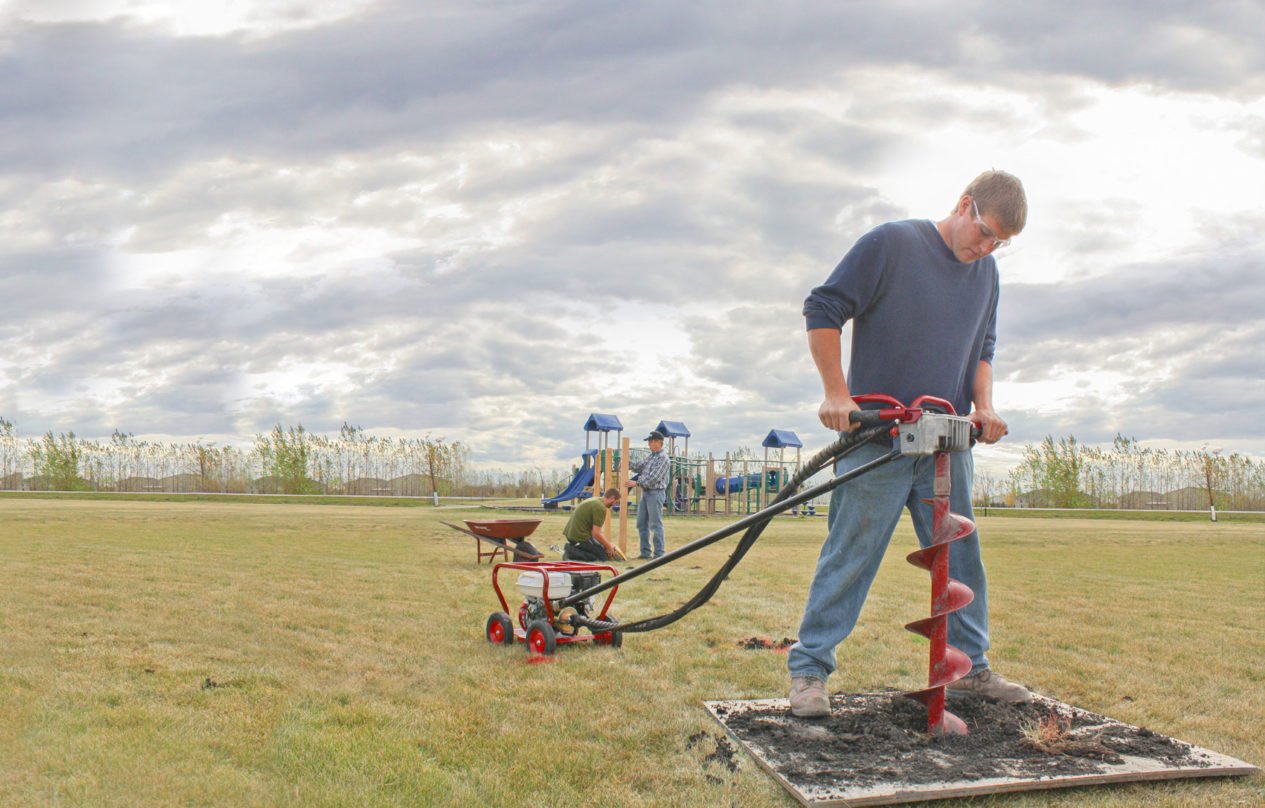
Fencing contractors have come to rely on high-speed mechanical earth drills for quick hole digging — and for good reason. These powerful machines greatly increase productivity over manual methods, improving profits and ROI. However, some efficiency is lost on increased labor costs and safety concerns directly resulting from the brute force these machines employ. Some companies — like Little Beaver — have made improvements to the design to allow a single operator to drill safely, saving time, labor costs and reducing the possibility of injury to the operator and damage to the machine.
Torque Transfer
One-man drilling leaves the torque generated from a mechanical drill operating at 360 rpm in the hands of one person, a dangerous and potentially costly situation that can leave workers injured, jobs unfinished and insurance claims to be filed. It’s why Little Beaver builds its mechanical drills standard with steel torque tubes to prevent such situations from spinning out of control.
The steel torque tube transfers auger torque and kickback to a separate engine carriage instead of the drill’s handles. Little Beaver makes this possible by mounting the engine on a separate carriage and then connecting the engine to the drill via the torque tube. This makes one-man drilling a safe and efficient reality instead of a potential hazard.
But what happens when the kickback proves too much for the drill?
Centrifugal Clutch
Fence installers know the frustration of hitting tough objects, like roots or rocks, that can abruptly halt drilling at the expense of the operator or the drill itself. Quick changes in torque when drilling can destroy a transmission as easily as it can a shoulder. A centrifugal clutch helps to alleviate these hazards and headaches.
As the torque tube mitigates operator risk by reverting the torque back to the engine carriage, the drill’s transmission now takes on the risk of overloading from all the torque and drilling pressure or damage from encountering a buried object. This is where the centrifugal clutch kicks in. A drill equipped with a centrifugal clutch will automatically slip if it becomes overloaded or strikes an object that cannot be readily drilled through. Pairing this feature with a heavy-duty transmission limits the chances for auger and transmission damage or an untimely breakdown.
A centrifugal clutch, along with the steel torque tube, brings repair cost mitigation and safety maximization full circle. The increased safety of the operator combined with one-man operation and the decreased likelihood of a breakdown equals a smaller and more efficient crew that can take on more jobs.
Intuitive Design
Intuitive design leads to fluid operation. A drill operator shouldn’t need to waste time or focus searching for a switch or changing a cumbersome attachment. Time saving features like snap-on augers and handle-mounted on/off switches on Little Beaver drills help to improve operation, increasing efficiency and potentially saving the operator and machine from unnecessary harm.
There is no formula for increasing the number of jobs completed while decreasing labor input. Such a conundrum takes technological advances to overcome, and Little Beaver has done just that. Fencing crews can now complete jobs with less labor, freeing up time and budget to tackle more work safely.
Last updated Mar 27, 2026
Factors to Consider When Addressing Wear Issues
Nothing ruins productivity like a broken piece of equipment. While that statement may seem fairly obvious, the actions to address problems are not always clear cut. Depending on the severity of the issue, you may be able to get away with a quick fix or repair to extend the life of the machine. But for larger issues, a full replacement might make more sense.
This logic holds true with earth drills just as much as any other piece of equipment in your fleet. There are many working parts to a drill, and while issues aren’t a common occurrence, they certainly can happen. Unfortunately, there is not a guide or rule book to tell you exactly when to repair and when to replace your earth drill. But with a bit of guidance and the help of an expert manufacturer, your decision may be a little easier.
Here are some factors to consider when repairing or replacing your earth drill:
What seems to be the issue?
Some of the most common earth drill issues include an auger that quits turning or turns when it’s not supposed to. If your auger spins while it’s out of the ground but quits spinning as soon as you start to drill the hole, it’s likely a broken flex shaft. The flex shaft should be cleaned and greased after every 50 hours of operation, but sometimes even routine maintenance can’t prevent breakage. A broken flex shaft can’t be repaired, and usually costs about $600 for the part and up to $100 for installation. In some cases, just replacing the inner core will fix the problem for around $200.
Gearbox issues are a different story. An issue with the gears or the gearbox prevents the drill from spinning altogether. While low motor oil can cause the motor to lock up and cease functioning, there’s also the possibility of a larger issue, such as the gears being stripped. Gearboxes can be repaired, but can cost nearly as much as a full replacement – a comparison of about $725 to repair or $850 plus installation costs to replace.
If the auger spins at idle, the diagnosis is likely the clutch. The auger shouldn’t spin until you depress the throttle and engage the clutch. If the clutch is overheated during operation, the heat-treated springs will no longer keep the shoes from engaging, causing the auger to stay engaged at all times. Similar to the gearbox, the repair cost nears the full replacement cost – a comparison of about $140 and $160 plus installation costs for a new clutch.
If the auger vibrates excessively or “walks” during use, it is likely due to misalignment or wear of the points and blades. Blades should be replaced when worn flush of the auger flighting. If the blades wear into the auger flighting, the auger will need to be repaired or replaced. Points should be replaced when the split or fork in the tip is less than ¼” from the bottom of the split.
What would a replacement part cost?
The cost of parts varies among manufacturers. A general statement of advice is that if the replacement parts cost more than 50% of a new drill, it might be best to invest in a new unit. Keep in mind though, don’t just look at the sticker price. You should also include the labor and cost of lost production, as well as the age of the equipment.
Common replacement parts like the flex shaft and the gearbox can add up to a significant dollar amount. In fact, if both need to be repaired at the same time, it can cost almost 50% of a new drill. While it’s not common for these two parts to break at the same time, it can happen if an operator hits an obstacle while digging at a fast speed.
If two or more parts need to be replaced at the same time, you may be better off replacing the entire drill. However, making the repairs and rebuilds yourself can be a more financially feasible option for those with the experience and tools to do so.
Can you fix it yourself?
Hiring someone to fix your equipment is often a logical choice, as it alleviates the effort required on your part. However, when you take this route, it’s important to factor in repair costs and time that is outside of your control.
The alternative – fixing it yourself – doesn’t have to seem like a daunting undertaking. Many manufacturers have resources to walk you through the process. Little Beaver offers service videos that address common repairs and maintenance questions. It might seem tempting to pay someone to fix your drill, but educating yourself on the components and repair process can save you time and money in the long run. If someone on your staff is mechanically inclined, they should be able to tackle the repairs.
In what application do you use the drill?
If you’ve got backup drills in your fleet, waiting for a repair might not be an issue. But for contractors who rely on the unit on a daily or even weekly basis, being without it could result in lost revenue. In the summer, especially, many local lawn and garden repair shops are backed up for 6-12 weeks, which is not a feasible wait time for many people. Depending on how long you’ve owned the machine and what industry you’re in, the decision to repair or replace might make more sense.
Rental
In the rental industry, only drills that operate bring in revenue. So if repairing a drill would take time, replacing it might be a better option. If time is the greatest concern, consider purchasing a second unit as a back-up and additional revenue source until the original drill is fixed.
In the rental industry, appearance of equipment is a large deciding factor for customers. Replacing a worn-out drill with a shiny new one might make more sense for the fleet. If turning inventory is on an annual or 18-month requirement, the chances are low that something would go wrong and require a full replacement before that time. In other instances, a rental center might repair a drill for 20 years. The criteria is different for each business, so make sure the cost and the results make sense for your store.
Fencing
In the fencing industry, it’s important to have a large enough fleet to change out drills if one needs repairs. Fencing contractors likely have more than one drill in their lineup, so taking one out of commission to get it repaired shouldn’t affect productivity. For many contractors, incremental costs broken up monthly are a more feasible option than a single, larger payment. But, it’s important to consider the cost of each of those repairs. Consider the overall age of the drill and how many key components could be showing that age.
What is the age and condition of the drill?
If a drill is maintained well and taken care of, it should last many years. There’s no rule that says “after 10 years or 10,000 hours of use, the motor will go out,” so it’s important to keep an eye on the machine. If a drill is rented out and used for 20 hours a week, it would likely require less maintenance than a fencing contractor who uses the drill 40 hours a week.
When considering repairing or replacing your drill, you’ll want to consider the overall health of the engine. If the engine is older and experiencing issues, replacement might be more logical however, if the engine is a rebuilt system and virtually like new, repair makes more sense.
Making a decision
If you suspect something is wrong with your drill, address it right away. If issues aren’t fixed in a timely manner, they can have a domino effect and create more damage. Taking care of one component right away can save time and hassle and prevent other issues.
Also, it’s important to remember that if you decide to purchase a brand-new drill, keep your old one on hand for replacement parts. Over time, it might be a good idea to fix up the old drill to use as a backup, too.
It’s hard to provide a cut-and-dry guide to repairing or replacing your equipment. The manufacturer can likely provide advice on your particular situation, so give them a call if you need help with the decision. Addressing problems and repairing or replacing your earth drill will help bring your operation back to maximum productivity.
