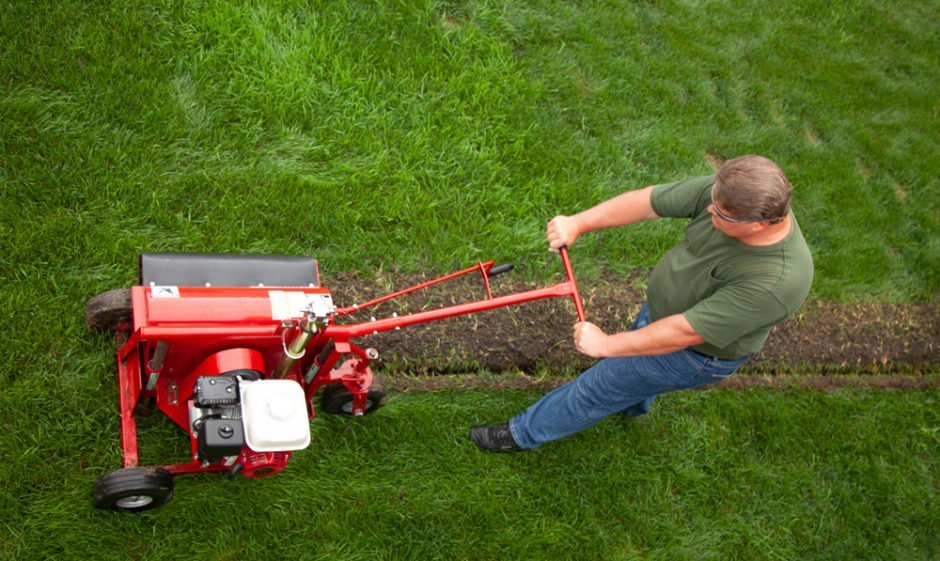
Uncover Versatility with the Kwik-Trench

Uncover Versatility with the Kwik-Trench
Kwik-Trecn mini trencher irrigation line install

In today’s world, versatility is key. Contractors, do-it-yourselfers and golf course superintendents constantly look for ways to reduce expenses and increase productivity for landscaping jobs, sprinkler installation and more. This means, the more applications a product can handle, the more valuable it becomes.

The Kwik-Trench Mini Trencher from Little Beaver is a great example of such a versatile machine. Whether you’re a homeowner or business owner, the Kwik-Trench offers a solution for a wide range of tasks, all in one easy-to-operate package.

Tailored for the Task

The Kwik-Trench is available in two models, the KT200B and the KT2400B. These mini trenchers cater to different jobsite requirements. The KT200B and KT2400B are perfect for projects that require shallow trenches, tight spaces and more maneuverability. The KT200B is a lightweight model and the KT2400B, while still highly maneuverable, is better for jobs that need more power and deeper trenches.

Check out the unique features of the Kwik-Trench below:

  • Cutter Wheel Design

Where other trenchers require teeth to be welded directly onto the cutter wheel, the Kwik-Trench has a bolt-on tooth system. This design speeds up maintenance and allows quick tooth changes to match the application.

  • High-Performance Teeth

The Kwik-Trench’s carbide-tipped, hardened steel teeth can cut through tree roots and easily create trenches for irrigation lines in silty or sandy soil while the specialized Super Xtra Rock Teeth expand trenching capabilities into dense clay, asphalt and rocky soil.

  • Customizable Trench Dimensions

The Kwik-Trench features adjustable widths and depths, allowing operators to adapt to the task at hand and improve overall productivity. The KT200B has width options between 1 to 3 inches and depths down to 8 inches while the KT2400B features width options from 1 to 4 inches and adjustable depths down to 12 inches. This means you can customize the trench dimensions to the specific job. This adaptability minimizes the manual labor often associated with incorrect trench sizes where crews may need to expand or deepen trenches by hand when their trencher doesn’t cut wide enough or deep enough.

Meeting Diverse Applications

The practical design, adjustable settings and model options make the Kwik-Trench an attractive solution for a wide range of users across industries. Here are just a few examples:

  • Landscaping Contractors use the Kwik-Trench for professional edging, installing silt fences and burying wires for landscape lighting.
  • Utility Contractors benefit from the Kwik-Trench’s cutting speeds to quickly bury phone lines, shallow plumbing lines and drainage lines as well as low-voltage wires for satellite dishes, cable or phones.
  • Homeowners find the Kwik-Trench to be user-friendly and simple for installing sprinkler systems or burying an electric dog fence.
  • Golf Course Superintendents depend on the Kwik-Trench’s carbide-tipped, hardened steel teeth to manage problem tree roots and dig clean trenches for irrigation system maintenance.

With its intuitive design, convenient model options and broad application appeal, the Kwik-Trench is a great addition to any landscaper’s toolbox and a cost-effective option for DIY enthusiasts. Both Kwik-Trench models even come with an optional tilt bed utility trailer which makes moving the trencher from job to job easier.

For more ways to maximize your ROI, reach out to Little Beaver’s experts today.

Related Articles

Mechanical vs. Hydraulic Earth Drills: How to Make the Best Choice

Mechanical vs. Hydraulic Earth Drills: How to Make the Best Choice

Factors to Consider

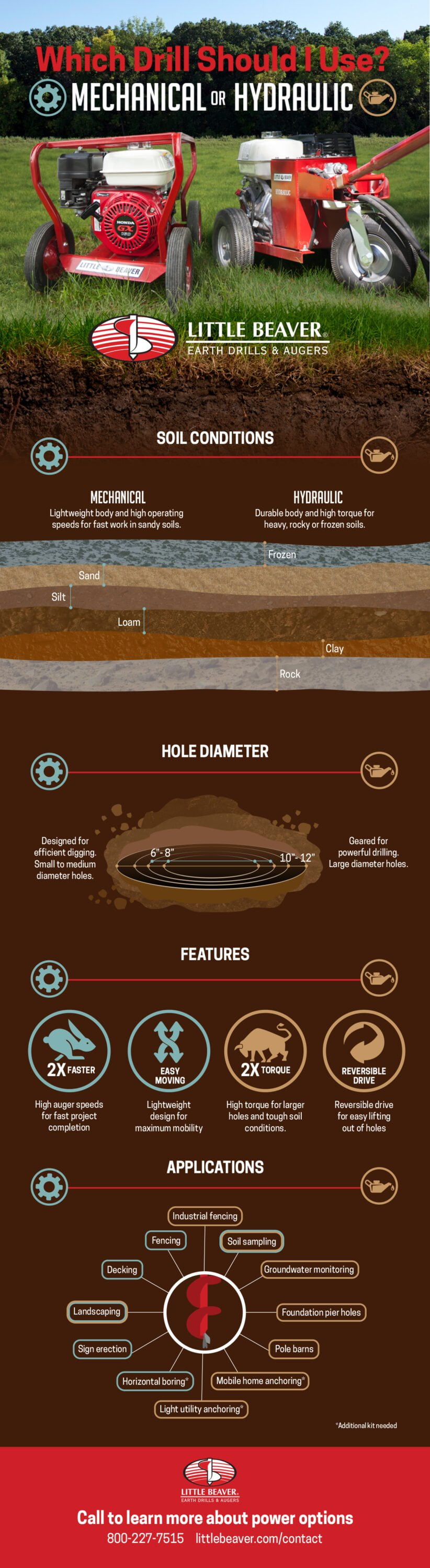
Choosing between mechanical and hydraulic earth drilling equipment is as simple as evaluating the type of work that needs to be done and the environmental conditions that will affect your drilling. Factors like soil type, hole size and auger speed requirements can help you decide whether a Mechanical Earth Drill or Hydraulic Earth Drill will be more effective for your next project.

Explore our infographic below for a quick guide on choosing the right drill for a job, then keep reading to dive into more detail.

Mechanical or hydraulic earth drill

Little Beaver’s Mechanical Earth Drill is your go-to for speed and efficiency. This one-man auger is lightweight, easy to maneuver and makes quick work of sandy soils. Our mechanical drills give you high-speed rotation to the tune of 360 rpm, which delivers clean holes fast. It’s the ideal post hole digger for fence posts, decks and other light-to-medium duty tasks where efficiency matters.

If the scope of your project calls for more power, our Hydraulic Earth Drill is a top choice. It’s built for rocky, clay or frozen soils and can drill large-diameter holes. Hydraulic earth drills operate at a lower speed than mechanical drills but offer more torque for these heavy-duty projects. Despite its robust power, you can easily lift it out of holes using its reversible drive.

While both our mechanical and hydraulic drills are fitted with excellent features to get drilling jobs done, each offers specific benefits to your next project.

Contact our team to learn more about which of our one-man earth drills offers the most efficiency for your operation.

Small Spaces, Big Insights

Small Spaces, Big Insights

Soil sampling in confined spaces is a critical step in construction, urban agriculture and foundation repair projects. However, not every project has the space to accommodate a big soil sampling rig. For projects in confined spaces — such as a basement, backyard or on a sensitive historical site — finding equipment that can dig deep enough while fitting into these tight areas can be a challenge.

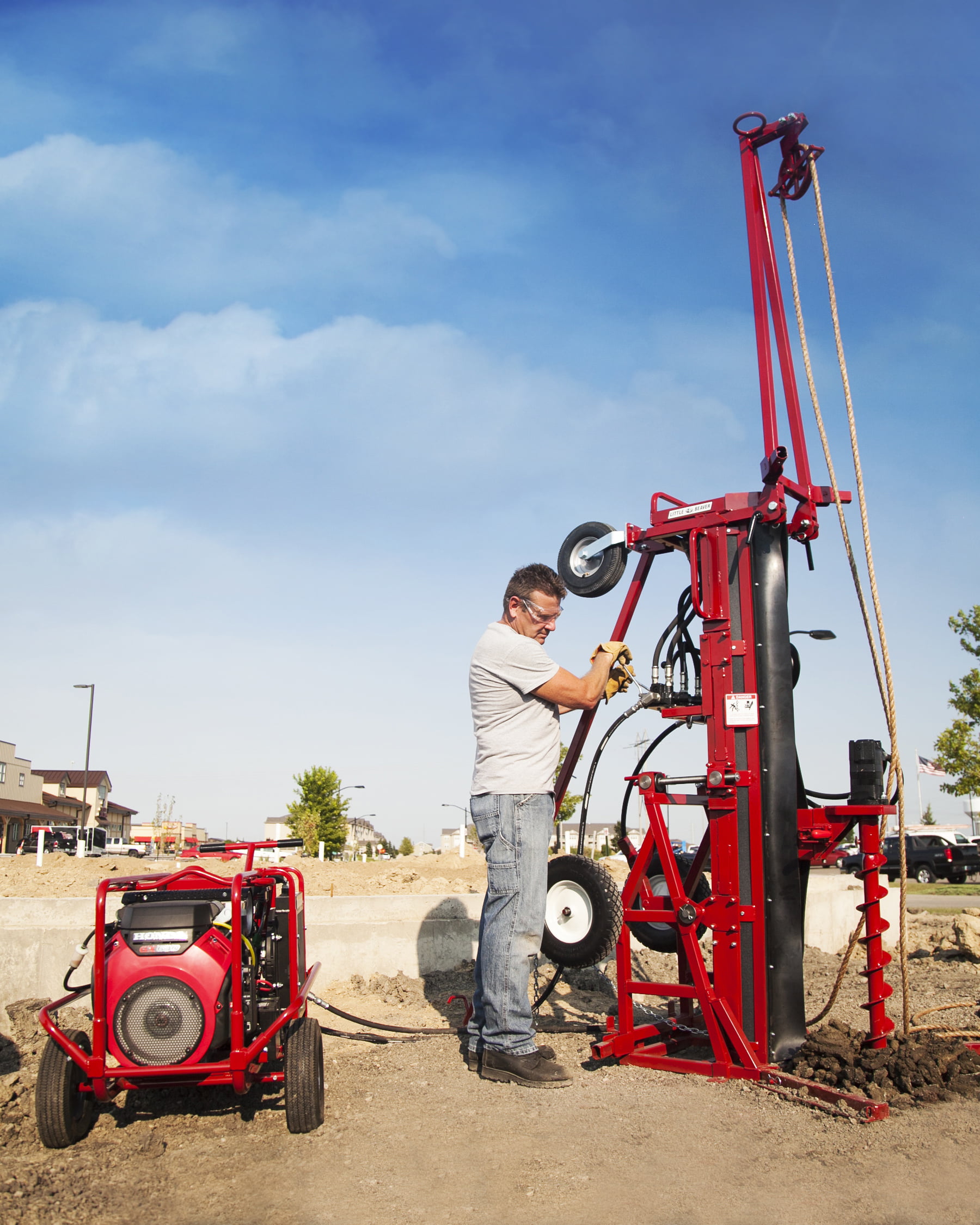
A Big Beaver Earth Drill makes soil sampling easier in restricted access locations by offering a compact, maneuverable design that is precise to control and safe to run with only one operator.

Maneuverability in Tight Spaces

Big Beaver foundation repair drill

The Big Beaver excels at foundation repair, efficiently drilling pier holes up to 16″ in diameter. A simple crank mechanism lets you align the mast in any position up to 15 degrees from vertical.

The right equipment can make or break a soil sampling project with space limitations. Handheld samplers might seem like a good solution for tight spaces, but they don’t always reach deep enough to procure the samples you need. Alternatives, such as automated options, can be costly while truck- or trailer-mounted rigs can’t fit into small work areas.

Another challenge is that these projects often take place in urban developments, near or beside houses and fences. Contractors need portable, gentle equipment that doesn’t damage turf, sod or landscaping with its tires or heavy weight.

The Big Beaver is only 26 inches wide and 80 inches tall, making it compact enough to fit into an elevator and through a doorway or gate and short enough to stand upright under the eaves of a house or other areas with low overhead clearance. The auger tilt angles up to 15 degrees to get as close to a structure as possible. At 675 pounds, the drill is light enough to minimize damage to lawns and landscaping.

Depth Precision

Each soil sampling project requires the soil to be collected at a different depth. Some projects, like soil sampling for a home garden, only require sampling to about 4 inches deep. This can be completed with a simple hand sampler, but many projects require deeper digging. Construction and foundation repair projects can vary between 3 feet deep up to 100 feet deep.

  • Utility: 3-10 feet deep
  • Foundation Repair: 3-30 feet deep
  • Construction: 10-100 feet deep

These depths vary based on soil type, what project is being carried out and local regulations. Some local agencies require certain soil sampling depths to be tested before construction takes place. The Big Beaver can dig to 30 feet with a 16-inch auger and up to 100 feet with a 6-inch auger, depending on the soil conditions.

Safe Drilling

The Big Beaver is a standalone auger drill rig that allows for safe one-man operation. It features a torque tube that redirects dangerous kickback away from the operator to the power source. The torque tube connects to the drill at three different points on the frame, which allows for nine different torque tube positions. This lets operators position the drill in the most convenient way possible.

In basements or other enclosed spaces, operators should place the engine carriage outside with an extension hose running to the drill. Removing the engine from the room protects against dangerous fumes while working in close quarters. When doing so, operators should anchor the drill to the floor with screw or concrete anchors. This protects the operator from counterrotation by preventing the drill from jerking or tipping when encountering an underground obstacle.

Soil Sampling with the Big Beaver

Restricted spaces shouldn’t hold up your soil sampling project. When automated, trailer- and truck-mounted options just don’t work, a Big Beaver earth drill makes projects easier, safer and more precise. Check out our Big Beaver Earth Drill and soil sampling options to learn more.

Learn How to Set Up the Big Beaver

Anchoring Made Easy: 90-Minute Mobile Home Stabilization

Anchoring Made Easy: 90-Minute Mobile Home Stabilization

Hydraulic earth drill mobile home anchoring adaptor

Strong winds and other extreme weather events are potentially frightening, no matter where you live. This is especially true for mobile home owners, who are often more susceptible to storm damage. Mobile home anchoring is one way to secure peace of mind. But depending on the method used, it can be a time-consuming and cumbersome project. There are two main options to complete the work — an earth drill or a pipe thread machine powered by a generator.

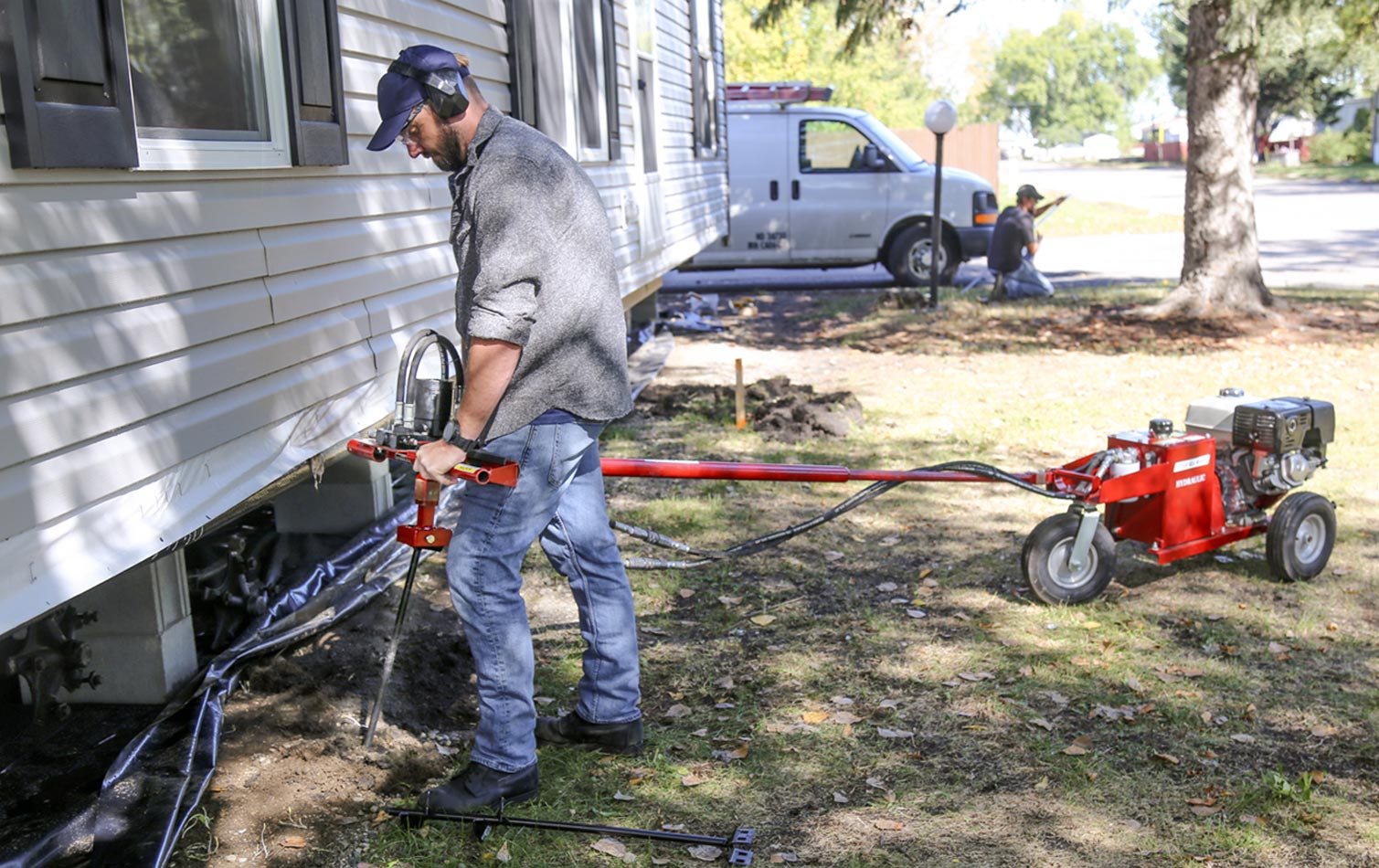
While a pipe thread machine is precise, it’s also expensive, slow and exhausting, resulting in several hours of work to anchor a single home. A Little Beaver Hydraulic Earth Drill, on the other hand, has the torque to punch through tough ground with ease and the maneuverability to do it efficiently and quickly.

Safe and Efficient Anchoring

A Little Beaver anchoring attachment offers three substantial benefits: power, precision and safety. Operating at low speeds with high torque, our hydraulic earth auger consistently delivers quick, accurate results. If you hit a rock or other obstacle during the drilling process, you can easily circumvent it by using the drill’s convenient reverse setting. This work is also made safer thanks to Little Beaver’s steel torque tube, which absorbs kickback and eliminates the need for a second operator.

Save Time and Money

Anchoring a mobile home shouldn’t take longer than watching a standard movie. By pairing the Hydraulic Earth Drill with Little Beaver’s anchor adapters, you can install each anchor in less than two minutes and complete an entire mobile home in as little as 90 minutes.

Check out our website to learn the five easy steps of anchoring a mobile home. Contact us with any questions regarding the process or equipment needed. For additional information on anchoring requirements, consult an experienced installer or your local building inspector.

Augers, Points & Blades Wear Issues

Augers, Points & Blades Wear Issues

Maximize Drill Performance

Earth auger blade replacement

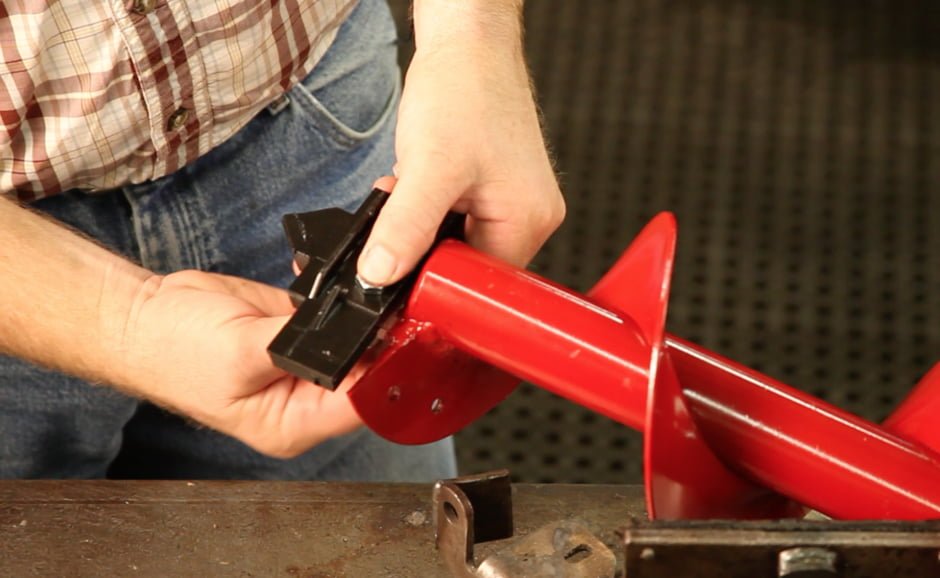
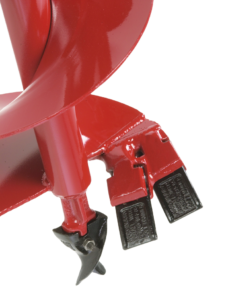
Operators sometimes forget that points and blades need regular maintenance just like an earth drill does. Too often, these small pieces are forgotten in the day-to-day shuffle of drilling projects. However, forgoing routine maintenance on these critical parts can lead to a decline in drilling performance or even a complete breakdown on the jobsite.

Proper maintenance and replacement of common wear parts keeps your earth auger operating at peak performance. Like the drills they are mounted on, augers, points and blades require routine maintenance.

  • Check the placement of the points and blades every day. Misalignment might cause the auger to vibrate excessively or “walk” during use.
  • Ensure you’re using the right points and blades for the soil. Standard options work for loamy soils or areas with few rocks while hard clay or frozen ground requires carbide blades. Having the right points and blades will protect the auger from damage and make your drilling project easier.
  • Replace worn attachable points and blades before they reach the auger flighting. Operators can replace these parts quickly with basic hand tools, such as a wrench or ratchet set. To learn more, check out our video below.
  • If the blades wear down far enough to damage the flighting, operators will need to repair the auger flighting by welding the material or replace the entire auger.
  • A good rule of thumb is to never operate a drill with damaged or missing parts, which includes the auger.
Heavy-Duty Auger Point

Heavy-Duty Auger Point

Our earth augers feature abrasive-resistant steel and hard surfacing on the edges of the points and blades. Another benefit of working with Little Beaver is that our points and blades are reversible, which means you get twice as much work out of one point or blade.

The time put into maintaining smaller wear parts protects against larger repair costs if the drill is damaged or breaks. Keep an eye on maintenance schedules to prolong the life of your Little Beaver earth drills.


SaveSave

SaveSave

Embracing the Benefits of Equipment Rental

Embracing the Benefits of Equipment Rental

Mechanical Earth Drills

Maximize potential while minimizing expenses

Providing quality services while maintaining a healthy bottom line will forever be high on a contractor’s priority list. Renting drilling equipment is one way to maximize productivity and potential while minimizing expenses. For specialty projects and testing the waters on new services, equipment rental can be a cost-efficient option if you’re looking to provide more without over-investing.  

There are endless opportunities that rental centers can help a fencing crew tackle. For example, rental centers offer a range of machines and attachments for safe one-person operation. Availability will vary from center to center, but you can often find our Mechanical and Hydraulic earth drills as well as the Kwik-Trench in a variety of sizes — perfectly scalable for construction and landscape projects.

Drilling Through Soft Soil

Looking for a post-hole auger that is lightweight, high-speed and digs quickly and cleanly? See what your local rental center has for mechanical earth augers. Little Beaver Mechanical Earth Drills power through sand, silt and loam, creating clean 6- to 8-inch diameter holes for applications such as fencing, deck building, landscaping and more. Digging a post hole takes less than a minute, meaning a crew can accomplish a lot with just a two-day rental. Need to bore under something? With Little Beaver’s optional horizontal boring attachments, you can easily rent the equipment to bore under sidewalks and driveways to install landscape lighting, water systems and much more.

Mechanical Earth drill horizontal boring

Tackling Tough Soil

For tougher soils — like clay, rock or frozen ground — a Little Beaver Hydraulic Earth Drill may be the best choice. These machines offer more power than mechanical drills, and our models still allow one-person drilling. With their extra torque, hydraulic earth drills can handle augers up to 16 inches in diameter and can drill depths of up to 30 feet with the right auger. Little Beaver Hydraulic Earth Drills also include a reversible feature that makes them ideal for quick removal from the ground.

Earth Drill used for landscaping

With even more power and potential, UN-Towable and Towable Earth Drills have a balanced torque-free design to enhance operator safety when drilling through uneven terrain. These earth augers are ideal for fencing, landscaping, decks, sign installation and recreational applications.

Effortless Trenching

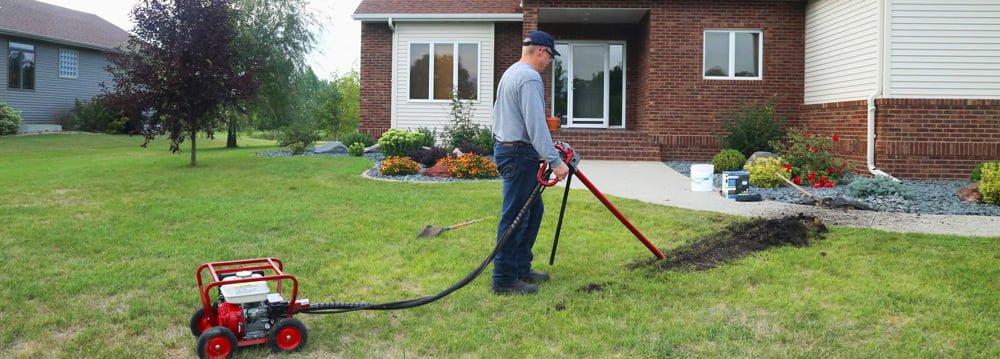
Mini trencher machines at your local rental center are a great solution for digging trenches. Little Beaver’s Kwik-Trench can dig a 12-inch-deep trench at speeds of up to 30 feet per minute. They make installing lawn sprinklers, electric dog fencing, low voltage wiring, plumbing and drainage lines and wire cable the work of an afternoon. Silt fencing, landscape edging, root pruning and bed preparation also become faster and less backbreaking.

Can Renting Work for Me?

When it comes to one-time projects — those special requests that pop up in conjunction with a current project but aren’t something you’re looking to offer regularly — renting lets crews get the job done without a costly, long-term commitment. Depending on the length of the rental, the team can even knock out several small projects with the same machine, optimizing efficiency. Planning will help ensure you get the most out of the rental.

Repeatedly renting the same equipment can also be cost-efficient, to a point. It’s a great way for small businesses looking to expand their services to test out different machines and attachments before committing. For equipment you don’t plan on using every day, renting rather than buying saves money since the rental center takes on the initial cost of the machine and any maintenance needs. However, it’s important to keep in mind there’s a limit to the cost benefits of renting if your crew is frequently using a specific machine.

When used wisely, renting can be a valuable tool for contractors looking to provide more while spending less. The fastest way to assess rental potential is by taking a trip to your local rental center or talking to the manufacturers who supply their equipment. We’re happy to answer your questions. Contact our team today.