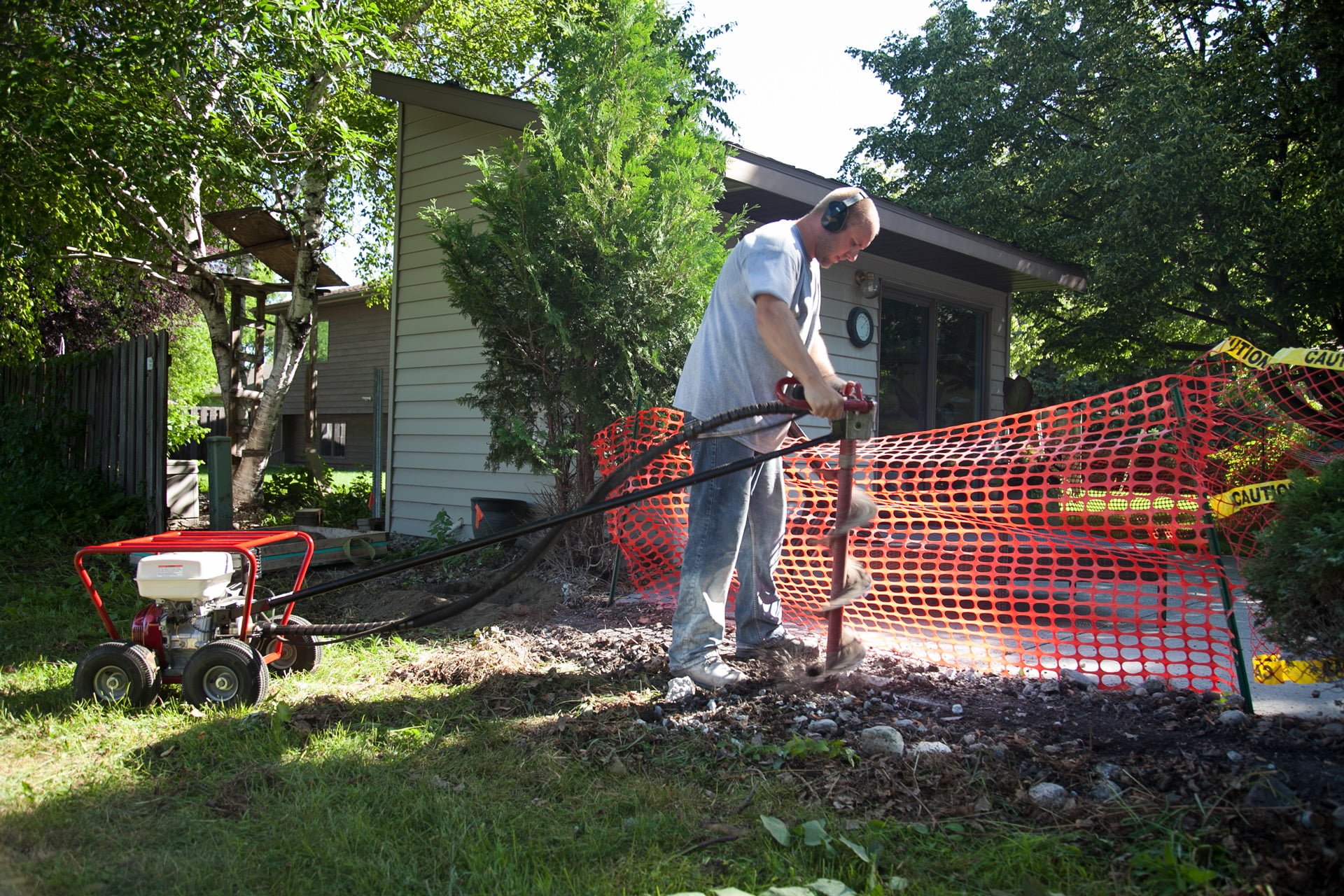
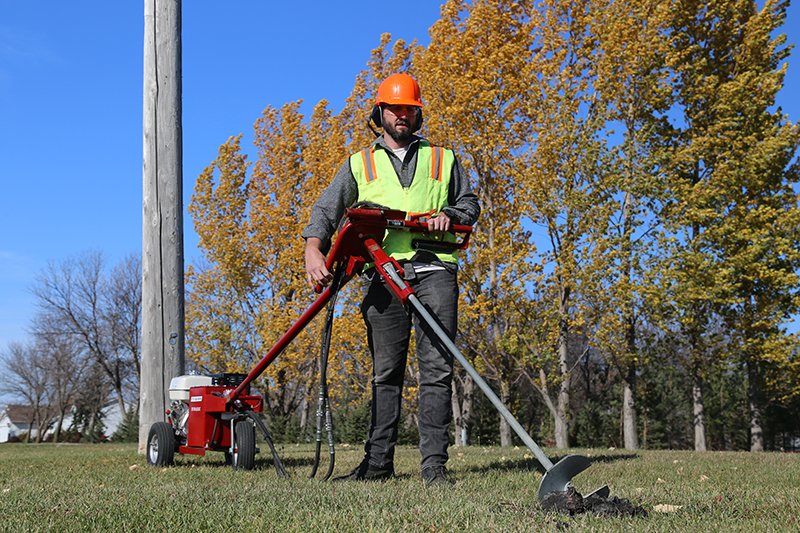
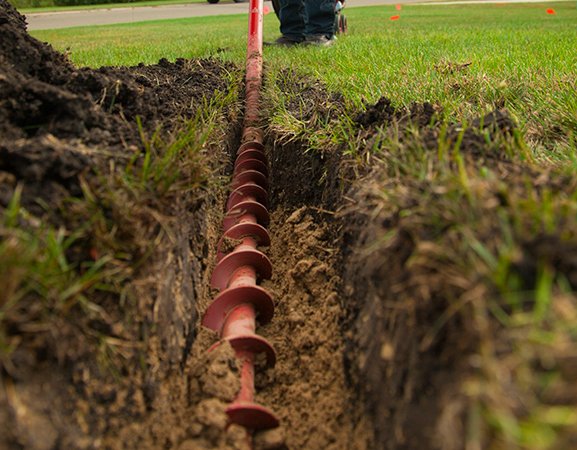
As the end of the busy season wraps up, it’s time to take a closer look at your mechanical earth drill. When it comes to a smooth drilling operation, it’s a matter of a well-operating machine. Yes, choosing a top-performing, reputable drill manufacturer plays a huge role in the success of your drill, but performing routine and end-of-season maintenance is important to prolong the life of your equipment, and ensuring it performs when you really need it.
Routine drill maintenance includes examining, cleaning and lubricating key drill components roughly every 30 days or 40 hours of operation. But what happens at the end of busy season, when your drill makes its way to storage for a few months? Whether owner or a rental center, there are a few steps you can take to ensure a simple transition from storage to usage in the spring.
Inspect the drill
After every use of your earth drill, take a look at all of the components to ensure everything is in working order. End-of-season maintenance includes taking that inspection one step further. Make sure the blades are past the flighting. When the blades start to wear flush with the auger, it’s time to flip the blades or replace them. If the blades wear to the auger flighting and wear the actual flighting, operators will either need to repair the auger flighting or replace the entire auger.
Take a few more steps to complete the detailed inspection. Ensure all bolts are tight, and make sure all carbide blades (used for hard clay, frozen ground, or hard pan soils) are sharp. If the carbide blades feel worn and rounded, sharpen them with a bench grinder. Using a silicone carbide bench grinding wheel, hold the blade at a 5- to 7-degree relief angle to sharpen it.
The push button connector should be in good shape, with no visible rust. Check the throttle lever for damage or wear. Inspect the throttle cable, too. When you pull the lever, the cable should move freely on the other end. If it sticks, replace it. Some users might be able to remove the cable, clean it and reattach, but if the cable is frayed at all it will be difficult to get back in. Replacing is often the best option.
Inspecting your drill’s flex shaft should be done two or three times a year, but is especially important during end of year maintenance. There shouldn’t be any cracks or wires on the outer housing. If it’s in good shape, simply remove the core, clean it, re-lube it and slide it back in. If the flex shaft shows signs of cracks or wires, it should be replaced.
If any parts are in need of replacement, contact Little Beaver. Addressing replacement parts prior to storage is a better alternative to waiting until spring. Store your drill with peace of mind knowing it’ll be ready to operate in the spring, rather than dealing with potential delays waiting for parts.
Replace fluids and filters
Transmission fluid should be replaced regularly. If your fluid has a lot of metal shavings in it, that can be an indication of excessive gear wear or missing teeth. If the fluid is changed regularly, you won’t experience gear wear. If you hold the output shaft and wiggle it, you shouldn’t feel a lot of movement.
Motor oil and filters should be cleaned and changed. Clean filters with an air hose, or if they’re foam filters they can be shaken out.
Clean and prep for storage
Considering the job, it’s natural that earth drills get dirty. Dirt and clay adhere to the blades of the auger, which can diminish the efficiency and performance of the equipment. Not only should your machine be wiped down after every use, it should also undergo a deep cleaning during end of year maintenance.
Remove all debris from the earth blades using warm, soapy water. Avoid using a power washer, as the pressure can damage the equipment.
To prep for storage, disassemble the drill and remove the torque tube and auger. Drain the fuel or add fuel neutralizer before storage.
Always store the drills upright in a dry place because the steel components will eventually rust if left outside or in places with a lot of moisture, such as propped up outside against a building.
Keep in mind the importance of end-of-year maintenance and the role it plays in overall lifespan of the drill. Cleaning and storing the machine properly contributes to the continued success of your drilling operation.
These days, everyone has a side gig — a profitable endeavor outside their normal operation that utilizes the skills and equipment they already have to increase productivity and income. In competitive industries like fencing and landscaping, this kind of versatility is the key to a successful business. Being able to do more with equipment you trust means more opportunities, increased productivity and faster ROI.
Across the country, contractors know Little Beaver products offer optimum power and portability in a single-operator package that won’t break the bank. Whether it’s post hole digging, soil sampling, landscape or industrial fencing applications, they trust our Hydraulic Earth Drills to get the job done.
To help tackle even more projects and allow contractors to get the most out of their machines, we developed a number of attachment kits for our hydraulic earth drills. These accessories make it easy to switch gears from digging holes for fencing and landscape projects to anchoring for light utility and mobile home applications, as well as horizontal boring — increasing the operator’s versatility and potential.
Putting Utility Back in Utility Anchoring
One industry Little Beaver helps contractors explore is utility anchoring. With minimal investment — just a High-Torque Anchor Handle and Utility Anchor Adapter — your Hydraulic Earth Drill becomes a safe, efficient tool for utility applications.
The anchor is attached to the adapter and, using less than 60 rpm, quickly penetrates most soil types for a firm, lasting anchor. Little Beaver’s steel torque tube eliminates kickback, allowing a single operator to complete the job safely and efficiently. And thanks to the Hydraulic Earth Drill’s three-wheel chassis, the drill rig can go wherever it’s needed.
As a supplemental job, utility anchoring offers contractors an efficient use of equipment and manpower. But even for utility companies, Little Beaver’s Utility Anchoring Adapter offers a safer, more efficient alternative to anchor crankers and hand setting. In less than two minutes, an operator can install a utility anchor with a hydraulic earth drill. In less than an hour, they can have an entire pole done and be on the way to the next. Compare that to the hand method which can take over half an hour to set a single anchor. So, whether you’re looking to expand services or just provide more efficient services, Little Beaver helps you adapt.
Bringing It Home
Looking for even more added value applications for your hydraulic earth drill? We also offer a Mobile Home Anchor for securing mobile homes to a foundation.
Like the Utility Anchor, the adapter works with our Hydraulic Earth Drill and High-Torque Handle to quickly and efficiently drive anchors through most soils. In as little as 30 minutes, a single operator can tie down an entire mobile home.
Then when it’s time to pull up stakes and move on, just hit reverse on Little Beaver’s Hydraulic Earth Drill and anchors are removed as easily as they went in. The reverse feature also proves useful with initial anchoring when encountering obstructions or the anchor needs to be removed for any reason.
Anchoring ensures the safety and stability of mobile homes in high winds and other inclement weather. Regardless of how often you perform this application, it’s important to properly secure every anchor every time. With Little Beaver’s Hydraulic Earth Drill and Mobile Home Anchoring Kit you have a reliable partner.
Maximum Versatility for Maximum ROI
Whether it’s a side gig or your bread and butter, Little Beaver Hydraulic Earth Drills and accessory kits let you do more. From anchoring to digging holes and all the groundwork in between, Little Beaver will help take your business where you want to go.
Versatility – for construction companies and DIYers looking to do more with less, versatility is the key to success. Rather than a specialized machine for every job, a basic Mechanical Earth Drill with a range of simple accessories maximizes project potential from fencing to soil sampling and plenty of jobs in between. The same Mechanical Earth Drill you rely on for quick, clean vertical holes with minimum manpower can also help you tackle horizontal applications with the right attachment kit.
Horizontal boring enables operators to bypass surface obstacles like driveways, sidewalks and roads by simply going underground. For contractors and DIYers looking for an easy way to install landscape lighting, irrigation or other shallow utility lines, it is a popular option because it requires less time and labor than traditional methods of pounding rods under these obstructions. With a simple attachment you can bore up to 50 feet, eliminating barriers and opening up your possibilities.
To maximize versatility, Little Beaver offers two choices for horizontal boring kits. Selecting the right kit depends on your project.
Sidewalk Auger Kit
As the name implies, the Sidewalk Auger Kit enables boring short distances – like under sidewalks, paths or residential drainage ditches. It includes a 3-inch by 5-foot auger.
The 3-inch diameter hole is large enough for most low-voltage electrical, plumbing and water lines, making this idea for landscaping, utility and plumbing projects that only need to bore short distances. With the Sidewalk Auger Kit, contractors and homeowners can easily bore under narrow obstacles to install landscape lighting wire, water softener lines, sprinkler systems and gas lines.
Driveway Auger Kit
If you need to cross a road – or a driveway or parking lot – on the other hand, you will need the Driveway Kit. This kit uses a water drill technique to bore up to 50 feet.
It comes with the option of a 2-, 3- or 4-inch water drill bit. As with the Sidewalk Kit, the 3-inch bit creates a large enough hole for the majority of landscaping needs. However, when boring more than 10 or 15 feet, we recommend starting with a 2-inch hole for better control. Follow that up with the 3- or 4-inch bit if you need a larger diameter hole for your project.
For operation, the Driveway Kit requires a garden hose, ¾-inch Schedule 80 water pipe for the length of your bore plus 15 feet and necessary couplings. These are not included with the kit. Unlike the Sidewalk Auger, the Driveway Kit uses water to drill and maintain the bore hole. Low water pressure flushes the dirt and lubricates the hole to avoid collapse. Rental companies often rent the required water pipe with the Mechanical Drill and Driveway Kit, so be sure to inquire at your center before purchasing.
Little Beaver welcomes Joseph Haynes as a product engineer at the company’s manufacturing facility in Livingston, Texas. A fourth-generation Little Beaver team member, Haynes brings a familiarity of the family business, and innovative knowledge of product design processes. “When my grandfather, Newman Haynes, started in the auger industry years ago, he wanted a family-run business that left customers feeling like they were dealing with family,” said Joe Haynes, Little Beaver president. “Joseph grew up around this business and understands our vision for building safe and dependable products, while going the extra mile to serve our customers. He brings a unique experience with 3-D modeling and CAD software, which will enhance our product development process.”
Haynes most recently spent 11 years as a product engineer at a WFI International, a pipe fitting manufacturer. In his previous role, Haynes designed and developed a variety of fittings for different industries including oil and gas, nuclear and fossil fuel power plants as well as the food processing industry. Haynes brings a wealth of manufacturing experience as well as a strong understanding of mechanical engineering and product development to his new role. “I’m looking forward to bringing a fresh perspective and different technological expertise to Little Beaver,” said Joseph Haynes, Little Beaver engineer. “I’m excited to leverage my experience and insight to continue my family’s tradition of providing customer-driven design.” Haynes holds a bachelor’s degree in industrial engineering from Texas A&M University. Little Beaver began in 1947 and quickly became a top choice for hole digging equipment. Contractors in construction, landscape, fencing and many other industries favor the high-quality, versatile product line.
Mobile home anchoring can be a painstaking process if you don’t have the right tools. Manual methods transfer all strain to the worker and pipe thread machines are expensive and clunky. We walk you through four simple steps to efficiently tie down a mobile home with equipment made for the job: Little Beaver Hydraulic earth drills.
We use cookies to ensure that we give you the best experience on our website. If you continue to use this site we will assume that you are happy with it.