Last updated Mar 27, 2026
Little Beaver’s Efficient Tool for Tent Anchoring
As anyone in the event industry knows, there are several different ways to anchor a commercial tent. Weighted options include sandbags and water barrels, as well as concrete and iron blocks. These methods are best deployed when setting up in a parking lot where driving metal anchors into the ground is not feasible; or on soft sandy beaches where an anchor might not hold. Stakes are ideal for smaller outings like tent camping or setting up a backyard canopy to host a family barbecue.
But for those looking to put up a large tent in dense soil covered by grass, gravel or plain dirt, auger anchoring is the best option. It goes without saying that screws hold better than nails. Earth auger anchoring is the most economical and efficient way to secure such a tent.
Unmatched Speed and Efficiency
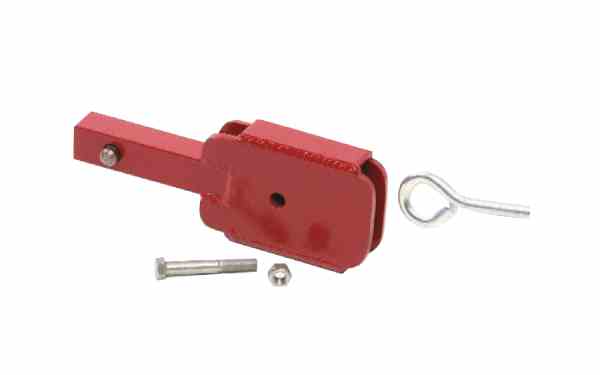
Achieving stable tent placement demands effective options. That’s why we offer a tent anchoring adapter for our Hydraulic Earth Drill. We paired this adapter with a hydraulic drill because it has the torque needed to power through tough sediment. When done properly, each anchor can be set up in as little as two minutes. Our hydraulic drill also offers a reverse option to quickly remove the anchors when the event is over.
Offering this tent anchoring adapter is a no-brainer for rental centers. If you already have a Little Beaver Hydraulic Earth Drill, adding this attachment to your lineup brings excellent potential for a high return on investment, particularly in warmer seasons. It requires minimal upkeep, so you’ll have very little concern until a rental opportunity arises — which probably won’t take long considering how many businesses and organizations use huge outdoor tents for special occasions.
Stand Out from the Crowd
Anchoring adaptors are perfect to set up large tents for county fairs, carnivals, weddings, car shows, outdoor expos and many other types of gatherings. Additionally, many of these venues have the potential to be regular annual customers. Providing a quick setup option will attract new customers for a niche product, keeping your rental center one step ahead of the competition.
To learn more about our earth drills and other equipment, give us a call today at 936-327-3121 or fill out our online contact form and one of our team members will reach out to you.
Last updated Mar 30, 2026
Fences keep children and pets inside your yard while keeping intruders or unwanted critters out. They can also be useful for privacy and noise reduction. Once you’ve decided that you want to build a fence, the biggest question is: do you hire a contractor or do the work yourself?
Do it Yourself, with the Right Equipment
If you choose to install a fence yourself, make sure you have more than enough time to work on it. There’s bound to be unexpected obstacles, so project completion will likely take longer than anticipated. You’ll also need to familiarize yourself with any local zoning ordinances that regulate fencing.
If you go your own way, see if you can find a neighbor, friend or relative who has completed a similar job so you can lean on them for advice and maybe a helping hand. For any DIY fencing project, it is imperative that you call 811 to have underground utilities marked. This will minimize your liability and help keep you safe from dangerous digging accidents.
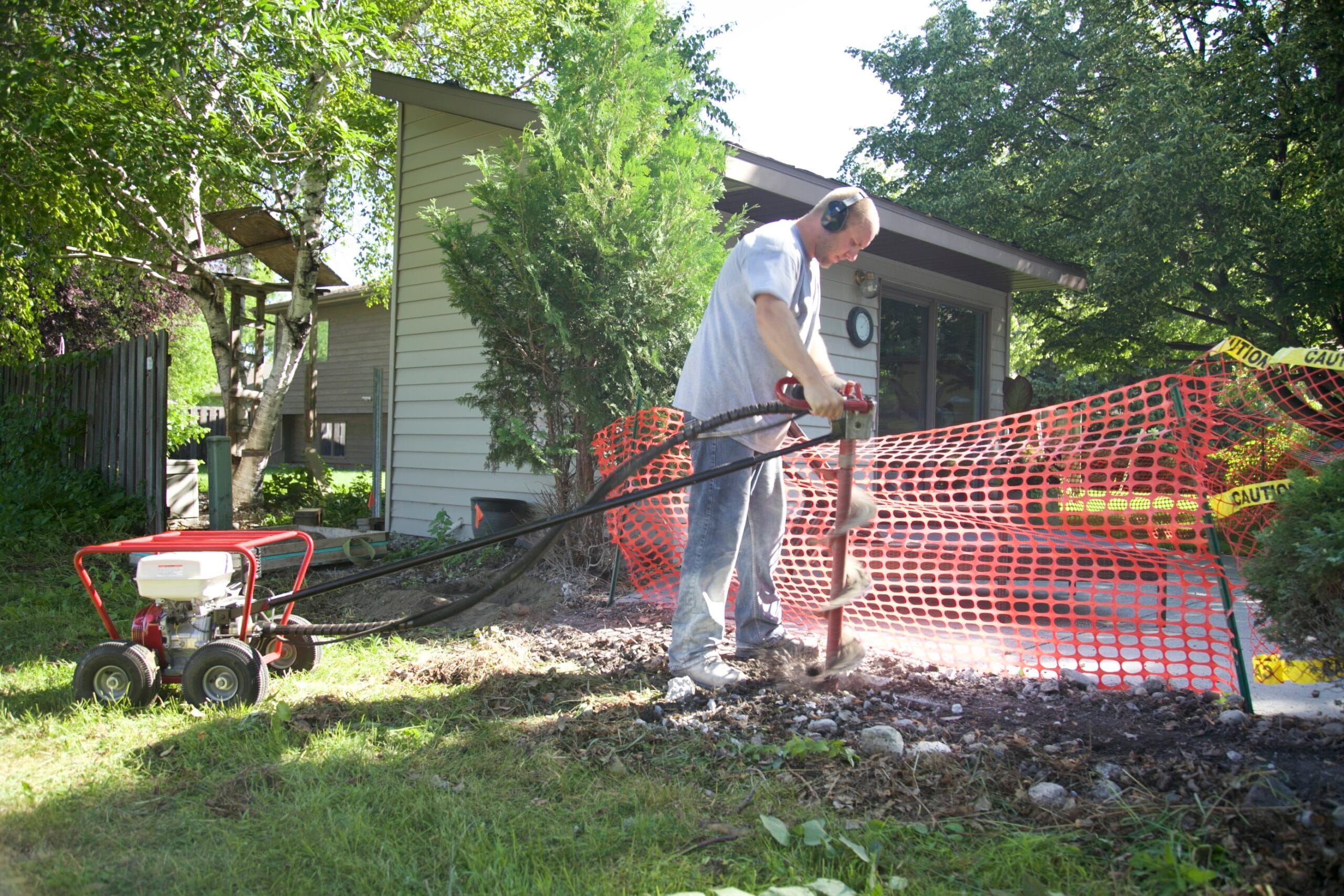
Fencing is hard work, but it’s easier when you have the right equipment. Little Beaver earth drills are versatile, and you may want to consider buying one if you anticipate more projects, such as running wires under your sidewalk for lighting, running pipe under your driveway for irrigation, planting a garden or installing drain tile. But if you only foresee needing an earth drill for this single task, there are rental centers nationwide that offer our equipment.
Mechanical earth drills are the most popular choice among fencing contractors, as they offer swift speed and light weight. This model is ideal for sandy or loamy soils with few obstructions.
Hydraulic earth drills are best for areas with exceptionally rocky sediment or hard clay. Little Beaver Towable Earth Drills can be a convenient option for pulling the equipment right up to your work area, while our UN-Towable Earth Drills can be stowed in the back of a pick-up truck or SUV. Both are hydraulic.
Mechanical and Hydraulic Earth Drills speed up the fencing process as they can drill a hole in less than one minute with minimal effort. Our models also make drilling safer for one person. Little Beaver’s steel torque tube protects the operator from dangerous kickback by transferring that kickback from the auger to the power source.
Hire a Contractor
Naturally, contractors know where to find the highest quality materials, so you’re more likely to get a top-notch product in that regard. Their many years of experience equip them to handle difficult scenarios with ease. Is the area you seek to fence flat or hilly with a steep terrace? This may be difficult to navigate on your own.
Ask yourself if this fence is a temporary fix or a structure that you hope will last for many years to come. An error made during a DIY installation might compromise the integrity of the rest of the fence. Given their level of experience, a contractor is more likely to get it right the first time. If the fence will be especially large or one that requires going deep underground, you might be better off hiring a professional. Read online reviews and seek recommendations from friends to ensure you hire someone who is safe and reliable.
Fencing Finale
There are many factors to consider when deciding between DIY and hiring a contractor for your fencing project: your time, budget and handyman abilities. If you do the work yourself, Little Beaver Earth Drills will help you achieve your project goals effectively. We also have a vast library of informative blogs on our website to help guide you through the process and answer any questions you might have. If you have questions, contact us directly by phone or email.

Last updated Mar 27, 2026
Maximize potential while minimizing expenses
Providing quality services while maintaining a healthy bottom line will forever be high on a contractor’s priority list. Renting drilling equipment is one way to maximize productivity and potential while minimizing expenses. For specialty projects and testing the waters on new services, equipment rental can be a cost-efficient option if you’re looking to provide more without over-investing.
There are endless opportunities that rental centers can help a fencing crew tackle. For example, rental centers offer a range of machines and attachments for safe one-person operation. Availability will vary from center to center, but you can often find our Mechanical and Hydraulic earth drills as well as the Kwik-Trench in a variety of sizes — perfectly scalable for construction and landscape projects.
Drilling Through Soft Soil
Looking for a post-hole auger that is lightweight, high-speed and digs quickly and cleanly? See what your local rental center has for mechanical earth augers. Little Beaver Mechanical Earth Drills power through sand, silt and loam, creating clean 6- to 8-inch diameter holes for applications such as fencing, deck building, landscaping and more. Digging a post hole takes less than a minute, meaning a crew can accomplish a lot with just a two-day rental. Need to bore under something? With Little Beaver’s optional horizontal boring attachments, you can easily rent the equipment to bore under sidewalks and driveways to install landscape lighting, water systems and much more.
Tackling Tough Soil
For tougher soils — like clay, rock or frozen ground — a Little Beaver Hydraulic Earth Drill may be the best choice. These machines offer more power than mechanical drills, and our models still allow one-person drilling. With their extra torque, hydraulic earth drills can handle augers up to 16 inches in diameter and can drill depths of up to 30 feet with the right auger. Little Beaver Hydraulic Earth Drills also include a reversible feature that makes them ideal for quick removal from the ground.
With even more power and potential, UN-Towable and Towable Earth Drills have a balanced torque-free design to enhance operator safety when drilling through uneven terrain. These earth augers are ideal for fencing, landscaping, decks, sign installation and recreational applications.
Effortless Trenching
Mini trencher machines at your local rental center are a great solution for digging trenches. Little Beaver’s Kwik-Trench can dig a 12-inch-deep trench at speeds of up to 30 feet per minute. They make installing lawn sprinklers, electric dog fencing, low voltage wiring, plumbing and drainage lines and wire cable the work of an afternoon. Silt fencing, landscape edging, root pruning and bed preparation also become faster and less backbreaking.
Can Renting Work for Me?
When it comes to one-time projects — those special requests that pop up in conjunction with a current project but aren’t something you’re looking to offer regularly — renting lets crews get the job done without a costly, long-term commitment. Depending on the length of the rental, the team can even knock out several small projects with the same machine, optimizing efficiency. Planning will help ensure you get the most out of the rental.
Repeatedly renting the same equipment can also be cost-efficient, to a point. It’s a great way for small businesses looking to expand their services to test out different machines and attachments before committing. For equipment you don’t plan on using every day, renting rather than buying saves money since the rental center takes on the initial cost of the machine and any maintenance needs. However, it’s important to keep in mind there’s a limit to the cost benefits of renting if your crew is frequently using a specific machine.
When used wisely, renting can be a valuable tool for contractors looking to provide more while spending less. The fastest way to assess rental potential is by taking a trip to your local rental center or talking to the manufacturers who supply their equipment. We’re happy to answer your questions. Contact our team today.
Last updated Mar 27, 2026
Selecting the Best Earth Drill & Accessories for Your Project
 An earth drill is an excellent tool for a variety of projects, from installing fence to planting trees and creating irrigation systems. It can also be used for anchoring mobile homes, large tents and utility poles. Notice the diversity of work that can be accomplished using this singular tool. While these projects may appear similar because they all demand a hole, drill beneath the surface and you’ll find that soil composition makes a big difference in what power option and style of auger is best for the task at hand.
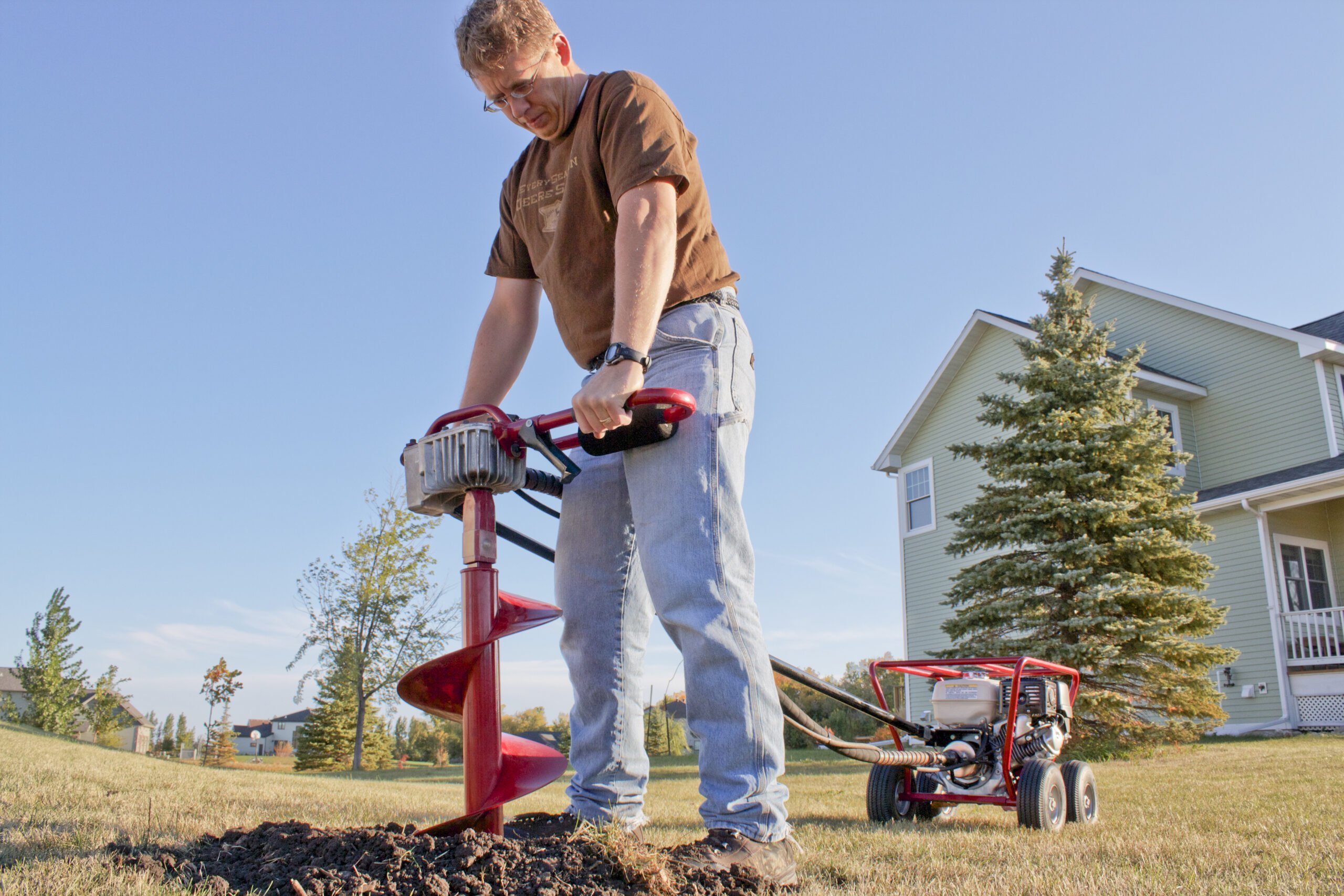
Taking a few minutes to understand the different drill types and components will win you enhanced productivity on the jobsite. You can choose between two types of engine-driven, one-man earth drills: hydraulic or mechanical. They might look alike, but each post hole auger was designed for a distinct purpose.
Hydraulic Power
Hydraulic earth drills are your best option for the toughest layers of sediment, including frozen ground and rocky soil. They have approximately double the torque of mechanical models. Little Beaver’s hydraulic machines have rugged bodies and powerful torque to punch through stony sediment. Precise, low-speed operation coupled with high torque allow the operator to drill clean and accurate holes, even in the most difficult applications.
Hydraulic drills are ideal for single-hole projects such as installing signs and planting trees because they’re compatible with large-diameter augers, some as wide as 16 inches. The torque makes them perfect for quickly anchoring mobile homes. Additionally, the drills typically have a reverse setting so you can safely remove the earth auger if it becomes lodged under a rock or tree root.
Mechanical Speed
Mechanical earth drills are more compact and lightweight, but still pack a powerful punch. When your project needs speed and precision, this drill is up to the task. This transmission-powered unit performs high-speed auger rotations at 360 rpm so you can quickly drill several, narrow holes for a wide range of applications, such as fence post fitting and deck footings, as well as planting flowers. Paired with an effective horizontal boring kit, it can also drill under driveways or sidewalks for a variety of landscaping needs.
Superior Safety
Most drills with 360 rpm speed require two operators to stabilize the unit. Both our mechanical and hydraulic drills have a torque tube that transfers torque from the auger to the power source, drastically reducing the risk of encountering dangerous kickback. This one-of-a-kind invention makes one-man drilling not just possible, but also safe and efficient. The torque tube reduces physical strength on the operator and enables safe operation regardless of drilling experience.
Auger Selection
Once you’ve chosen your drill type, it’s time to pick the auger that matches the required hole diameter. Augers can be as narrow as 1-1/2 inches for smaller jobs like soil sampling, and wide as 16 inches for large applications, such as foundation repair. Little Beaver’s snap-on augers can make changing out the auger or attaching extensions a quick and easy process. They feature a spring-loaded snap button, which secures the auger to the drill head. This reduces set-up and take-down times. This connection method simplifies the process of adding extensions, which enables the operator to dig a few feet deeper without needing to purchase a longer auger.
Contractors and landscapers should also look for augers that have swappable points and blades. Standard blades are ideal for loamy soils or areas with few rocks because of the cold-rolled steel and hard surfacing on the edges. Use Little Beaver’s carbide blades for drilling in denser soils. They equip the earth auger to chop hard clay and frozen ground into pieces. Swap out the blades using an adjustable wrench. These modifications enable an auger to drill more than 100 holes in prime soil conditions before needing service.
An Essential Tool
Whether you are a seasoned construction pro or a do-it-yourself weekend warrior, the one-man auger is a timesaving, indispensable companion in your arsenal of tools. Outfitted with Little Beaver’s patented and reliable drill designs, you can tackle drilling projects in a fraction of the time you would with a shovel.
Last updated Mar 27, 2026
Why the Big Beaver Earth Drill is Ideal for Foundation Repair Projects
The strength of a structure lies in its foundation. Without a strong base, the entire building is at risk. And even though a house may have initially been built with a sufficient base, foundation repair is occasionally unavoidable.
Foundation problems are most commonly a result of soil conditions. Over time, foundations crack and shift, visibly damaging properties. Visual indicators on a house include misaligned doors, cracks in sheetrock and brick separation. Other signs include warped framing, plumbing breaks and tilting chimneys. Foundation repair is best done at the first sign of damage.
While there are many practices and methods of foundation repair, one thing’s certain: if not done correctly, it can cause expensive problems down the line. Little Beaver’s Big Beaver earth drill makes the most common foundation repair method easier by quickly removing dirt to prepare for concrete piers.
The Fine Art of Foundation Repair
Steel and concrete pier supports are popular for repairing foundations because they result in minimal landscape interruption and can be installed faster than other methods. Concrete piers can withstand higher load capacities and tend to be less expensive than their steel counterparts.
The concrete pier foundation repair method requires contractors to push 6-inch round concrete sections directly into the ground. But first, the crew must remove dirt to prepare for the foundation pier. Hand-digging holes can result in little landscape interruption but is much harder on workers. Large equipment options like a mini excavator are less labor-intensive but can result in a torn-up yard and increased project costs.
The Big Beaver Advantage
When installing a drilled concrete pier, hard-working employees are key, but so is finding pieces of machinery that are perfect for the job. Crews can use the Big Beaver’s 12-inch auger to drill a hole anywhere from 12 to 15 feet deep. Depending on the structure and soil conditions, the angle of the pier can range from 10 to 15 degrees, which makes the Big Beaver’s ability to align in any position from vertical critical to the installation process. The drill’s flexible positioning also allows users to get close to structures.
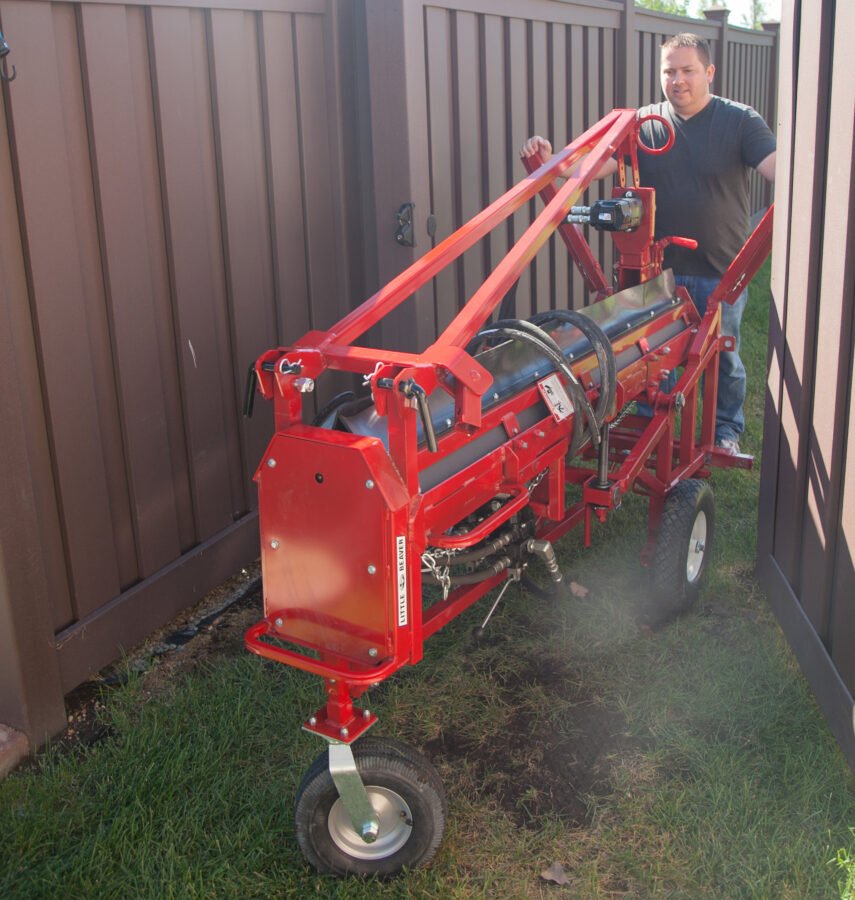
The Big Beaver is Little Beaver’s most powerful earth drill. Its power comes from its Honda engine, which delivers 690 foot-pounds of torque to bore through any soil type. The drill penetrates the soil considerably faster than other augers and still offers safe one-man operation.
Crews can move the Big Beaver into areas inaccessible to truck-mounted units while also leaving landscaping relatively unscathed. At only 26 inches wide and 80 inches high, the Big Beaver fits through doorways and gates and can be operated under eaves or in interior locations. On level ground, the smooth riding pneumatic wheels provide convenient one-man portability. And, when deep holes are required, auger extensions allow for drilling as deep as 60 inches.
The Big Beaver is a great option for making quick work of preparing for concrete foundation piers. Contact us today to learn more.
