Embracing the Benefits of Equipment Rental

Embracing the Benefits of Equipment Rental
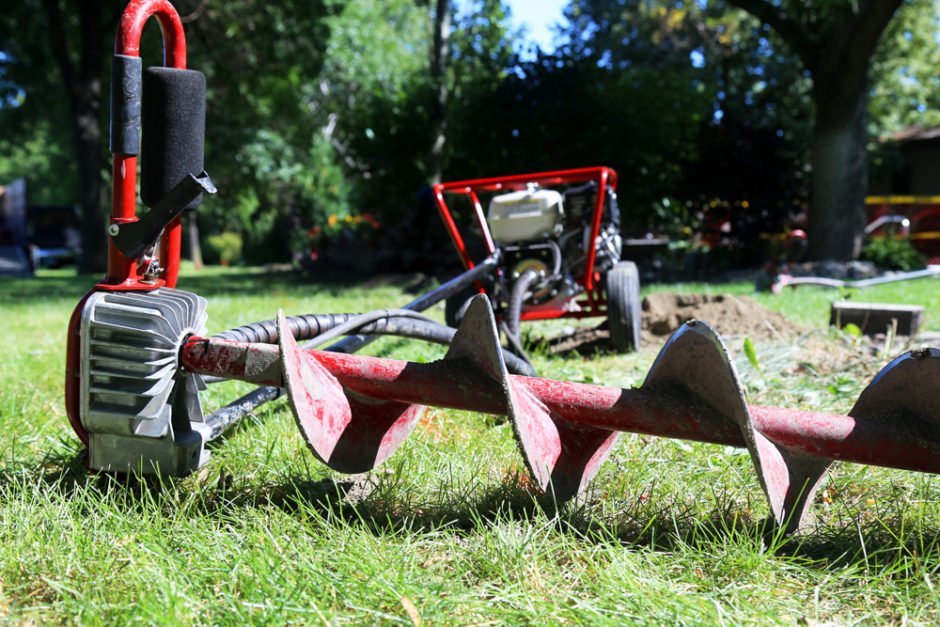
Mechanical Earth Drills

Maximize potential while minimizing expenses

Providing quality services while maintaining a healthy bottom line will forever be high on a contractor’s priority list. Renting drilling equipment is one way to maximize productivity and potential while minimizing expenses. For specialty projects and testing the waters on new services, equipment rental can be a cost-efficient option if you’re looking to provide more without over-investing.  

There are endless opportunities that rental centers can help a fencing crew tackle. For example, rental centers offer a range of machines and attachments for safe one-person operation. Availability will vary from center to center, but you can often find our Mechanical and Hydraulic earth drills as well as the Kwik-Trench in a variety of sizes — perfectly scalable for construction and landscape projects.

Drilling Through Soft Soil

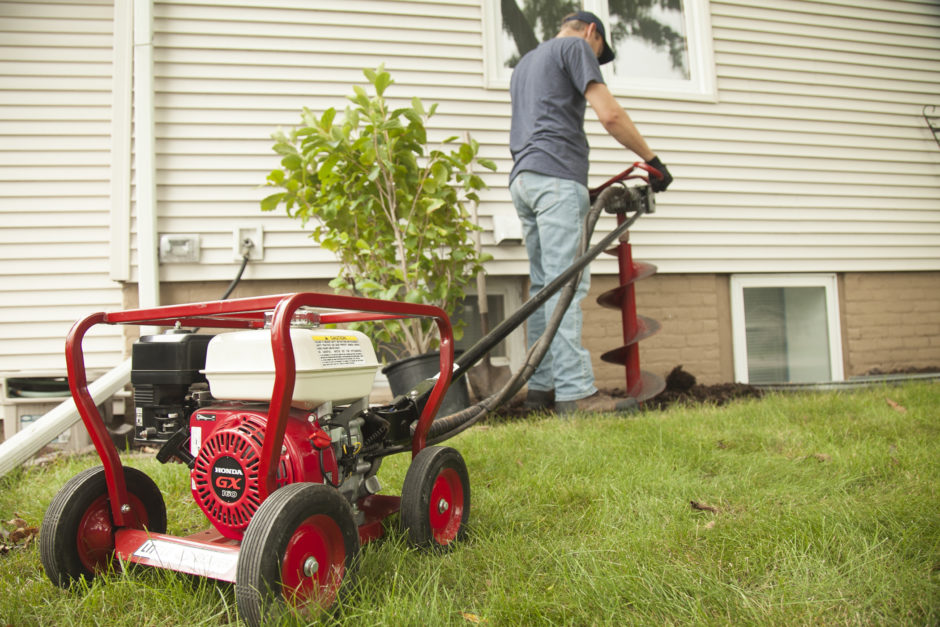
Looking for a post-hole auger that is lightweight, high-speed and digs quickly and cleanly? See what your local rental center has for mechanical earth augers. Little Beaver Mechanical Earth Drills power through sand, silt and loam, creating clean 6- to 8-inch diameter holes for applications such as fencing, deck building, landscaping and more. Digging a post hole takes less than a minute, meaning a crew can accomplish a lot with just a two-day rental. Need to bore under something? With Little Beaver’s optional horizontal boring attachments, you can easily rent the equipment to bore under sidewalks and driveways to install landscape lighting, water systems and much more.
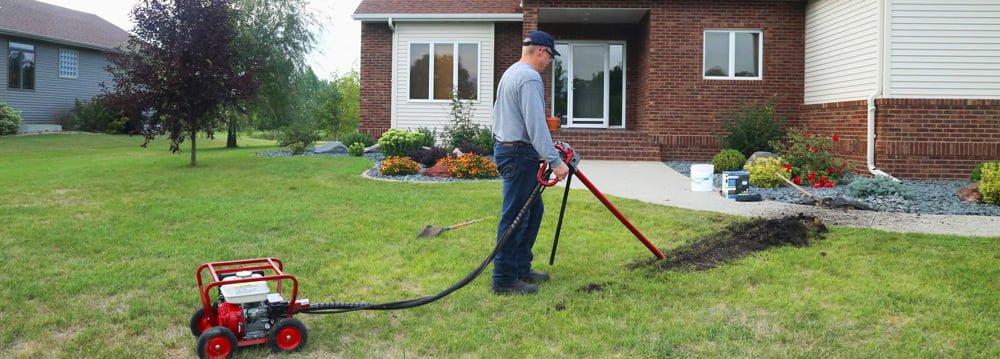
Mechanical Earth drill horizontal boring

Tackling Tough Soil

For tougher soils — like clay, rock or frozen ground — a Little Beaver Hydraulic Earth Drill may be the best choice. These machines offer more power than mechanical drills, and our models still allow one-person drilling. With their extra torque, hydraulic earth drills can handle augers up to 16 inches in diameter and can drill depths of up to 30 feet with the right auger. Little Beaver Hydraulic Earth Drills also include a reversible feature that makes them ideal for quick removal from the ground.
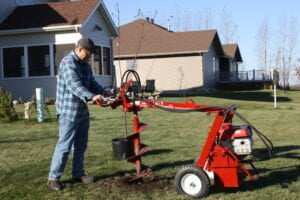
Earth Drill used for landscaping

With even more power and potential, UN-Towable and Towable Earth Drills have a balanced torque-free design to enhance operator safety when drilling through uneven terrain. These earth augers are ideal for fencing, landscaping, decks, sign installation and recreational applications.

Effortless Trenching

Mini trencher machines at your local rental center are a great solution for digging trenches. Little Beaver’s Kwik-Trench can dig a 12-inch-deep trench at speeds of up to 30 feet per minute. They make installing lawn sprinklers, electric dog fencing, low voltage wiring, plumbing and drainage lines and wire cable the work of an afternoon. Silt fencing, landscape edging, root pruning and bed preparation also become faster and less backbreaking.

Can Renting Work for Me?

When it comes to one-time projects — those special requests that pop up in conjunction with a current project but aren’t something you’re looking to offer regularly — renting lets crews get the job done without a costly, long-term commitment. Depending on the length of the rental, the team can even knock out several small projects with the same machine, optimizing efficiency. Planning will help ensure you get the most out of the rental.

Repeatedly renting the same equipment can also be cost-efficient, to a point. It’s a great way for small businesses looking to expand their services to test out different machines and attachments before committing. For equipment you don’t plan on using every day, renting rather than buying saves money since the rental center takes on the initial cost of the machine and any maintenance needs. However, it’s important to keep in mind there’s a limit to the cost benefits of renting if your crew is frequently using a specific machine.

When used wisely, renting can be a valuable tool for contractors looking to provide more while spending less. The fastest way to assess rental potential is by taking a trip to your local rental center or talking to the manufacturers who supply their equipment. We’re happy to answer your questions. Contact our team today.

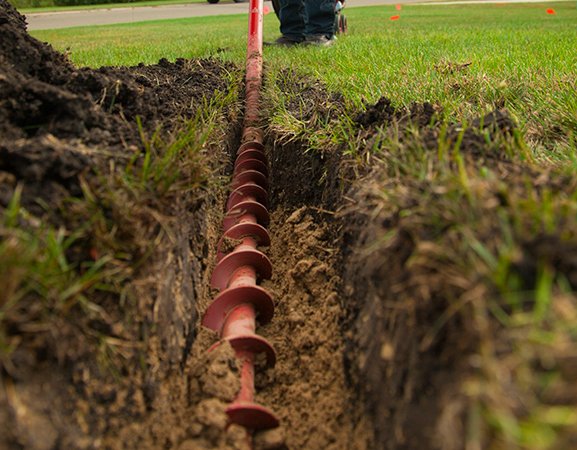
Horizontal Applications That Are Anything But Boring

Horizontal Applications That Are Anything But Boring

Earth drill horizontal boring kits

Expand Your Mechanical Earth Drill Capabilities

Versatility – for construction companies and DIYers looking to do more with less, versatility is the key to success. Rather than a specialized machine for every job, a basic Mechanical Earth Drill with a range of simple accessories maximizes project potential from fencing to soil sampling and plenty of jobs in between. The same Mechanical Earth Drill you rely on for quick, clean vertical holes with minimum manpower can also help you tackle horizontal applications with the right attachment kit.

Horizontal boring enables operators to bypass surface obstacles like driveways, sidewalks and roads by simply going underground. For contractors and DIYers looking for an easy way to install landscape lighting, irrigation or other shallow utility lines, it is a popular option because it requires less time and labor than traditional methods of pounding rods under these obstructions. With a simple attachment you can bore up to 50 feet, eliminating barriers and opening up your possibilities.

To maximize versatility, Little Beaver offers two choices for horizontal boring kits. Selecting the right kit depends on your project.

Sidewalk Auger Kit

Horizontal boring sidewalk auger kit

The Sidewalk Auger Kit uses a 3″ diameter auger and wiggle joint extension to quickly bore under sidewalks up to 5′ long.

As the name implies, the Sidewalk Auger Kit enables boring short distances – like under sidewalks, paths or residential drainage ditches. It includes a 3-inch by 5-foot auger.

The 3-inch diameter hole is large enough for most low-voltage electrical, plumbing and water lines, making this idea for landscaping, utility and plumbing projects that only need to bore short distances. With the Sidewalk Auger Kit, contractors and homeowners can easily bore under narrow obstacles to install landscape lighting wire, water softener lines, sprinkler systems and gas lines.

Driveway Auger Kit

Horizontal boring driveway kit

The Driveway Auger Kit is used for horizontal boring under driveways or parking lots up to a distance of 50′.

If you need to cross a road – or a driveway or parking lot – on the other hand, you will need the Driveway Kit. This kit uses a water drill technique to bore up to 50 feet.

It comes with the option of a 2-, 3- or 4-inch water drill bit. As with the Sidewalk Kit, the 3-inch bit creates a large enough hole for the majority of landscaping needs. However, when boring more than 10 or 15 feet, we recommend starting with a 2-inch hole for better control. Follow that up with the 3- or 4-inch bit if you need a larger diameter hole for your project.

For operation, the Driveway Kit requires a garden hose, ¾-inch Schedule 80 water pipe for the length of your bore plus 15 feet and necessary couplings. These are not included with the kit. Unlike the Sidewalk Auger, the Driveway Kit uses water to drill and maintain the bore hole. Low water pressure flushes the dirt and lubricates the hole to avoid collapse. Rental companies often rent the required water pipe with the Mechanical Drill and Driveway Kit, so be sure to inquire at your center before purchasing.

To find out how to maximize your versatility with horizontal boring, contact a Little Beaver expert.

Little Beaver Celebrates Four Generations With The Addition Of Joseph Haynes

Little Beaver Celebrates Four Generations With The Addition Of Joseph Haynes

Joseph Haynes, Product Engineer

Joseph Haynes, Product Engineer

Haynes Joins Company as Product Engineer

Little Beaver welcomes Joseph Haynes as a product engineer at the company’s manufacturing facility in Livingston, Texas. A fourth-generation Little Beaver team member, Haynes brings a familiarity of the family business, and innovative knowledge of product design processes. “When my grandfather, Newman Haynes, started in the auger industry years ago, he wanted a family-run business that left customers feeling like they were dealing with family,” said Joe Haynes, Little Beaver president. “Joseph grew up around this business and understands our vision for building safe and dependable products, while going the extra mile to serve our customers. He brings a unique experience with 3-D modeling and CAD software, which will enhance our product development process.”

Haynes most recently spent 11 years as a product engineer at a WFI International, a pipe fitting manufacturer. In his previous role, Haynes designed and developed a variety of fittings for different industries including oil and gas, nuclear and fossil fuel power plants as well as the food processing industry. Haynes brings a wealth of manufacturing experience as well as a strong understanding of mechanical engineering and product development to his new role. “I’m looking forward to bringing a fresh perspective and different technological expertise to Little Beaver,” said Joseph Haynes, Little Beaver engineer. “I’m excited to leverage my experience and insight to continue my family’s tradition of providing customer-driven design.” Haynes holds a bachelor’s degree in industrial engineering from Texas A&M University. Little Beaver began in 1947 and quickly became a top choice for hole digging equipment. Contractors in construction, landscape, fencing and many other industries favor the high-quality, versatile product line.

Listen to Your Earth Drill

Listen to Your Earth Drill

Tips For Preventing and Diagnosing Mechanical Earth Drills Issues

Mechanical drills’ high operating speeds

Mechanical drills’ high operating speeds and compact sizes make them a popular choice for contractors and rental centers — and ideal for drilling holes quickly. Although these transmission-powered machines have significantly more moving parts than their more costly hydraulic counterparts, simple knowledge of how to prevent and diagnose common problems will keep your drill running efficiently. Below are answers to questions we get often and some tips to help you achieve better ROI.

What steps can I take to minimize the risk of damaging the drill?

Start by choosing a unit with the correct gear ratio and auger for your soil. For soil with minimal rocks and few roots, a 10:1 gear ratio with a standard auger will provide fast and efficient results. For drilling in clay or other difficult conditions, a 10:1 gear ratio will still work, but switch from a standard to carbide blade to effectively cut through the soil. If you’re working in an area with rocks exceeding 3 inches in diameter, choose a drill with a 20:1 gear ratio reduction and a heavy-duty auger. The gear reduction slows the auger from 360 to 180 rpm and will pop the rocks out of the soil and continue spinning.

Should I be concerned that the gearbox is hot or making an unusual sound?

The gearbox will always be hot to the touch when the drill is operating. However, if the transmission is extremely hot, smells like burned oil or starts making unusual sounds, check the oil level. Oil leaks can occur around the seal, lower output shaft or the top of the transmission, and will lead to drill damage if ignored. Low oil also increases the risk of premature bearing wear, which can result in excessive heat and unusual sounds. To prevent early wear, check the transmission oil level and condition monthly or every 40 hours of operation.

Mechanical earth drill flex shaft maintenance

It’s important to clean, examine and grease the flex shaft every 50 hours of operation to prevent damage.

The engine is running, so why won’t the auger turn?

A problem with the drivetrain, most likely along the flexible drive shaft, is to blame. To pinpoint the issue, start by inspecting the end fittings for cracks or breaks. If there are broken wires or sharp kinks, it’s time to replace the shaft housing. If things appear fine from the outside, remove the flex shaft for further inspection. To prevent flex shaft damage, clean, examine and grease the flex shaft every 50 hours of operation. Check your owner’s manual to determine the correct procedure for greasing the flex shaft.

Why does the clutch slip or cause the drill to jerk during operation?

Over time, a drill’s clutch padding wears, resulting in reduced performance when engaging the auger or accelerating the engine from idle to full speed. The clutch will continue to run, even if the padding is completely gone, leading to easily detectable problems. It’s best to inspect the clutch every 30 days or any time you lubricate the flexible drive shaft. Regular checks will help you track the wear so you can replace the clutch pads before the drill loses performance.

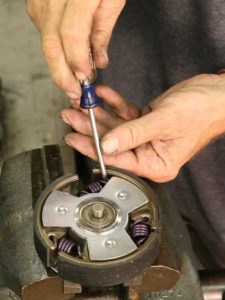
Centrifugal clutch spring replacement

Spring damage can cause the clutch to overheat and may result in the auger spinning when the engine is idling. If this occurs, replace the springs immediately.

Why is the drill less efficient than it used to be despite everything working properly?

Too often, operators allow the points and blades to wear beyond the point of being effective. The drill can run perfectly and spin all day, but if the blades and points are worn, the unit will become less and less effective.

Where can I find additional resources?

Information is always available at your fingertips, including comprehensive maintenance brochures and video tutorials. These helpful tools are excellent resources and often include visuals as well as step-by-step instructions.

Knowing your drill, keeping up with maintenance and accessing additional resources when questions arise will go a long way toward successful drilling.