Last updated Mar 27, 2026
In today’s world, versatility is key. Contractors, do-it-yourselfers and golf course superintendents constantly look for ways to reduce expenses and increase productivity for landscaping jobs, sprinkler installation and more. This means, the more applications a product can handle, the more valuable it becomes.
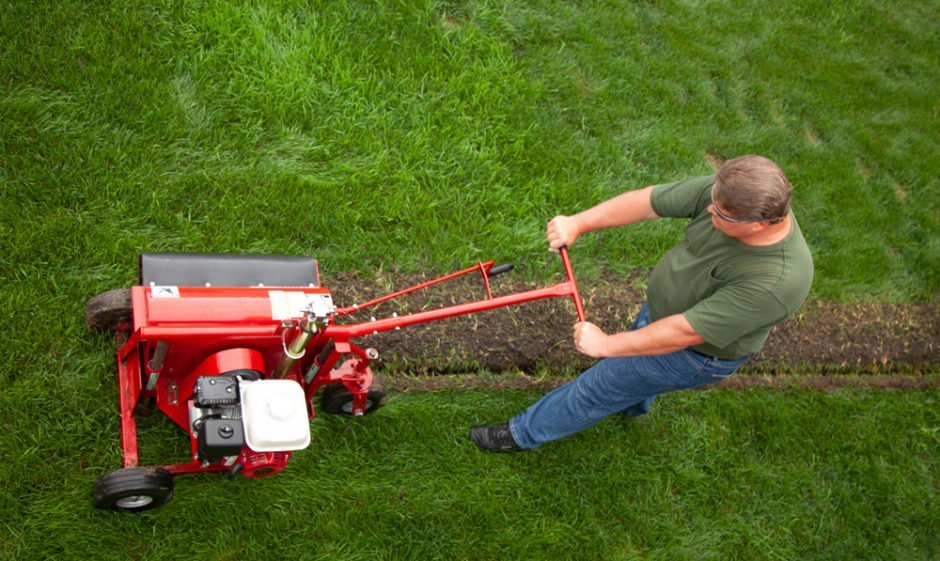
The Kwik-Trench Mini Trencher from Little Beaver is a great example of such a versatile machine. Whether you’re a homeowner or business owner, the Kwik-Trench offers a solution for a wide range of tasks, all in one easy-to-operate package.
Tailored for the Task
The Kwik-Trench is available in two models, the KT200B and the KT2400B. These mini trenchers cater to different jobsite requirements. The KT200B and KT2400B are perfect for projects that require shallow trenches, tight spaces and more maneuverability. The KT200B is a lightweight model and the KT2400B, while still highly maneuverable, is better for jobs that need more power and deeper trenches.
Check out the unique features of the Kwik-Trench below:
Where other trenchers require teeth to be welded directly onto the cutter wheel, the Kwik-Trench has a bolt-on tooth system. This design speeds up maintenance and allows quick tooth changes to match the application.
The Kwik-Trench’s carbide-tipped, hardened steel teeth can cut through tree roots and easily create trenches for irrigation lines in silty or sandy soil while the specialized Super Xtra Rock Teeth expand trenching capabilities into dense clay, asphalt and rocky soil.
- Customizable Trench Dimensions
The Kwik-Trench features adjustable widths and depths, allowing operators to adapt to the task at hand and improve overall productivity. The KT200B has width options between 1 to 3 inches and depths down to 8 inches while the KT2400B features width options from 1 to 4 inches and adjustable depths down to 12 inches. This means you can customize the trench dimensions to the specific job. This adaptability minimizes the manual labor often associated with incorrect trench sizes where crews may need to expand or deepen trenches by hand when their trencher doesn’t cut wide enough or deep enough.
Meeting Diverse Applications
The practical design, adjustable settings and model options make the Kwik-Trench an attractive solution for a wide range of users across industries. Here are just a few examples:
- Landscaping Contractors use the Kwik-Trench for professional edging, installing silt fences and burying wires for landscape lighting.
- Utility Contractors benefit from the Kwik-Trench’s cutting speeds to quickly bury phone lines, shallow plumbing lines and drainage lines as well as low-voltage wires for satellite dishes, cable or phones.
- Homeowners find the Kwik-Trench to be user-friendly and simple for installing sprinkler systems or burying an electric dog fence.
- Golf Course Superintendents depend on the Kwik-Trench’s carbide-tipped, hardened steel teeth to manage problem tree roots and dig clean trenches for irrigation system maintenance.
With its intuitive design, convenient model options and broad application appeal, the Kwik-Trench is a great addition to any landscaper’s toolbox and a cost-effective option for DIY enthusiasts. Both Kwik-Trench models even come with an optional tilt bed utility trailer which makes moving the trencher from job to job easier.
For more ways to maximize your ROI, reach out to Little Beaver’s experts today.
Last updated Mar 27, 2026
Equipment for Unique Fence Installation Jobs
Little Beaver is known in fencing circles for fast and efficient posthole diggers, like our Mechanical and Hydraulic Earth Drills. But our equipment’s capabilities don’t stop there. We know that your projects can vary and expand beyond setting traditional fences — like installing a dog fence or shallow electrical lines that run along a fence. That’s why we offer multiple equipment options for fencing, landscaping and more.
Here’s how our equipment can help streamline your projects:
Underground Fencing
Some fencing projects, like pet fencing, involve digging underground lines around the perimeter of a yard. Digging by hand makes the project longer and harder to complete. But what other option do you have?
Well, there’s our Kwik-Trench mini trencher. We offer two options: the KT 200B and the KT 2400B. The KT 200B is built for lighter-duty jobs and smaller yards while the KT 2400B is for more demanding applications in tougher soils. Here are the overall benefits of both options:
- Minimal turf disturbance
- Trenching speed up to 30 feet per minute
- Trench depth range of 6-12 inches
- Compact with a practical cutter wheel design
- Maneuverable for tight spaces
The Kwik-Trench offers a safe, easy way to dig a uniform trench with consistent depth and size. For fencing contractors, a mini trencher saves hours of hand digging, significantly speeding up trenching tasks. It also creates the opportunity to support other projects, like installing electrical lines for landscape lighting.
Crossing Under Obstacles
Sometimes, underground fencing and electrical lines need to go underneath an obstacle, such as a sidewalk or a driveway. This task traditionally requires manual tunneling or cutting through the concrete to the ground below. Both of these options are time consuming, and breaking through the concrete diminishes the strength of the entire slab.
If you’re already using our Mechanical Earth Drill for fence installation, or if you’re considering adding one to your fleet, remember that it can be more than just a posthole digger. Our Horizontal Boring Kits pair with your Little Beaver Mechanical Earth Drill and bore cleanly underneath obstacles without disturbing the surface. There are two kits to choose from: a sidewalk boring kit and a driveway boring kit.
The sidewalk boring kit is a dry boring solution that’s perfect for smaller spans like those underneath sidewalks and includes a 5-foot auger with a 3-inch diameter bit and a 5-foot extension with a universal wiggle joint. The driveway boring kit is a wet boring solution and bores up to 50 feet underneath driveways or parking lots. The kit includes the option of a 2-, 3- or 4-inch drill bit as well as a swivel adapter, swivel assembly and horizontal boring key. To complete the kit, operators will need to use a garden hose, 3/4-inch Schedule 80 water pipe and 3/4-inch pipe collar. Both kits connect to our Mechanical Earth Drill.
Expand Your Capabilities
An earth drill isn’t the only piece of equipment from our line that can help optimize your projects. Once you’ve invested in an earth drill, you can expand outward with other solutions to boost your productivity and expand your capabilities. Contact our experts today to learn more about how our equipment can be used for fencing and landscaping.
Last updated Mar 27, 2026
Maximize potential while minimizing expenses
Providing quality services while maintaining a healthy bottom line will forever be high on a contractor’s priority list. Renting drilling equipment is one way to maximize productivity and potential while minimizing expenses. For specialty projects and testing the waters on new services, equipment rental can be a cost-efficient option if you’re looking to provide more without over-investing.
There are endless opportunities that rental centers can help a fencing crew tackle. For example, rental centers offer a range of machines and attachments for safe one-person operation. Availability will vary from center to center, but you can often find our Mechanical and Hydraulic earth drills as well as the Kwik-Trench in a variety of sizes — perfectly scalable for construction and landscape projects.
Drilling Through Soft Soil
Looking for a post-hole auger that is lightweight, high-speed and digs quickly and cleanly? See what your local rental center has for mechanical earth augers. Little Beaver Mechanical Earth Drills power through sand, silt and loam, creating clean 6- to 8-inch diameter holes for applications such as fencing, deck building, landscaping and more. Digging a post hole takes less than a minute, meaning a crew can accomplish a lot with just a two-day rental. Need to bore under something? With Little Beaver’s optional horizontal boring attachments, you can easily rent the equipment to bore under sidewalks and driveways to install landscape lighting, water systems and much more.
Tackling Tough Soil
For tougher soils — like clay, rock or frozen ground — a Little Beaver Hydraulic Earth Drill may be the best choice. These machines offer more power than mechanical drills, and our models still allow one-person drilling. With their extra torque, hydraulic earth drills can handle augers up to 16 inches in diameter and can drill depths of up to 30 feet with the right auger. Little Beaver Hydraulic Earth Drills also include a reversible feature that makes them ideal for quick removal from the ground.
With even more power and potential, UN-Towable and Towable Earth Drills have a balanced torque-free design to enhance operator safety when drilling through uneven terrain. These earth augers are ideal for fencing, landscaping, decks, sign installation and recreational applications.
Effortless Trenching
Mini trencher machines at your local rental center are a great solution for digging trenches. Little Beaver’s Kwik-Trench can dig a 12-inch-deep trench at speeds of up to 30 feet per minute. They make installing lawn sprinklers, electric dog fencing, low voltage wiring, plumbing and drainage lines and wire cable the work of an afternoon. Silt fencing, landscape edging, root pruning and bed preparation also become faster and less backbreaking.
Can Renting Work for Me?
When it comes to one-time projects — those special requests that pop up in conjunction with a current project but aren’t something you’re looking to offer regularly — renting lets crews get the job done without a costly, long-term commitment. Depending on the length of the rental, the team can even knock out several small projects with the same machine, optimizing efficiency. Planning will help ensure you get the most out of the rental.
Repeatedly renting the same equipment can also be cost-efficient, to a point. It’s a great way for small businesses looking to expand their services to test out different machines and attachments before committing. For equipment you don’t plan on using every day, renting rather than buying saves money since the rental center takes on the initial cost of the machine and any maintenance needs. However, it’s important to keep in mind there’s a limit to the cost benefits of renting if your crew is frequently using a specific machine.
When used wisely, renting can be a valuable tool for contractors looking to provide more while spending less. The fastest way to assess rental potential is by taking a trip to your local rental center or talking to the manufacturers who supply their equipment. We’re happy to answer your questions. Contact our team today.
Last updated Mar 27, 2026
Utilizing a Mini-Trencher to Bury Dog Fence Wire
Wired electric dog fences are growing in popularity as a way to safely contain your dog without the hassle of installing a traditional fence. In addition to increasing curb appeal, electric dog fences work well for odd-shaped yards, create a stronger signal than wireless fences and can be easily expanded with the addition of more wire.
When it comes to installing electric dog fence wire, there are a variety of ways to do it. Instead of straining your back with manual installation methods, we recommend renting a mini-trencher like the Kwik-Trench to get the job done. Here are the steps to complete the work as easily as possible.
What You’ll Need:
- Dog fence containment system
- Kwik-Trench mini trencher
- Twisted wire
- Wire cutters
- An electric drill (optional)
- Splicing kits
- Shovel
Establish the Boundaries
Once you have everything you need, plan the boundary for your dog. Whether that’s sectioning out a dog-free area or laying boundaries in a large yard, it’s important to plan just how much access to give your dog. Make sure to check the manual that came with your electric dog fence during this step for any restrictions or local guidelines.
You’ll need to make note of a few areas to consider while establishing this boundary. The first is to find an electrical outlet where the transmitter box will be located. Many homeowners choose their garage or shed. The other area to mark is where you want your dog to be able to cross the wire safely, such as through doorways.
Create Crossing Points
To create points where your dog can cross safely, use a pair of wire cutters to snip the wire in the location you need. Make sure to also disconnect the wire from the transmitter box by removing the pin of wire. Then, take some twisted wire and twist it together with the dog fence wire so there is around one twist per inch of wire. A good rule of thumb is the more rotations the better. If you’re hoping to create a lot of cross points for your dog, using an electric drill for this step can make things easier.
Once the cross points have been twisted, splice the twisted wire and place it back inside the boundary loop. We suggest a splicer kit for this step to make the process easier. Then, connect the twisted wire to the transmitter box.
Time to Trench
It’s worth noting that some will try to staple the electric wire above ground for an easy solution, but this will shorten the lifespan of the wire when rodents, the dog or weather degrade the wire. It can also pose a tripping hazard or get caught in lawnmowers. A better solution is digging a trench to bury the wire, and renting a mini-trencher is both easier and more efficient than manual methods. Dog fence wire should be buried 3 to 5 inches below the ground. This is deep enough to protect the wire from animals and weather but shallow enough to maintain a strong signal.
To get started with a mini trencher like the Kwik-Trench, watch this helpful video for how to operate the machine. As the trencher is warming up, make sure to lock the swivel wheel to trench straight lines. Once the swivel lock is in place and the trencher is warmed up, use the manual crank control to adjust the cutting depth and simply push the trencher forward. With a mini-trencher like the Kwik-Trench, you can dig up to 30-feet of trench per minute. If your trench needs to follow curved lines in some areas, simply unlock the swivel wheel to easily move around small yards or hard-to-access areas.
Backfill it Up
Once the trench has been dug, place your dog fence wire inside and get ready to backfill. When using a Kwik-Trench, backfilling is easier than ever because the machine neatly deposits the soil right next to the trench so you can simply push it back in with a shovel. An added benefit of using a Kwik-Trench for burying dog fence wire is the pneumatic tires that won’t damage turf. This means after backfilling your trench, your job is complete – no additional clean-up necessary!
If you have any additional questions about how to dig a trench for an electric dog fence, don’t hesitate to reach out to your local rental center or a Little Beaver expert. We are happy to help make your project go as smoothly as possible!
Last updated Mar 27, 2026
How to Use a Kwik-Trench for DIY Projects
If you have a project that requires shallow trenching such as installing electric dog fencing, landscape edging or lawn sprinkler systems, you might be trying to determine the fastest way to dig a trench. Instead of using manual methods like drainage spades and trenching hoes, renting a mini-trencher like Little Beaver’s Kwik-Trench is an option to make do-it-yourself (DIY) trenching quicker and easier than ever. But before you make a trip to your nearest rental center, there are a few things to know about trenchers.
What is a Trencher?
A trencher is a type of earth-moving equipment that uses a metal chain or a wheel with steel teeth to rip into the ground. Trenchers come in a variety of sizes and models for applications ranging from installing electrical cables and drainage to landscape projects around the house.
Types of Landscape Trenchers
The trenchers used for landscaping are very different than the trenchers that are used for farming or utility trenching. While there are trencher attachments that can be combined with large machines or ride-on trenchers, there is also a whole class of landscaping trenchers which are perfect for DIY yard projects. These compact trenchers maximize features such as maneuverability and versatility. When reviewing the different types of landscape trenchers, it’s important to understand what each option offers so you can select the best trencher for the job.
Handheld Trenchers
These types of trenchers look like a chainsaw and can trench up to 16 to 27 inches deep, which makes them great for deeper landscaping projects. Renting a handheld trencher is less labor-intensive than using different types of shovels and spades involved in manual methods. However, safety can be a concern with handheld trenchers as well. When a handheld trencher hits a rock, the kickback can cause serious injury to the operator if their hand slips. Additionally, flying debris from the spinning blade can cause injuries if proper safety equipment is not worn.
Walk-Behind Trenchers
Walk-behind landscape trenchers make the job easier than using handheld trenchers. Instead of straining your back with a handheld trencher, walk-behind trenchers allow the operator to stand while trenching and guide the trencher as it does the work. If you choose to go this route, here’s what to look for.
Choose a trencher you feel comfortable operating. Unlike the name implies, most walk-behind trenchers require the operator to slowly walk backwards as the trencher digs, but the backward pulling movement is so slow it appears that the operator is “walking behind” the machine. If walking backward while trenching seems like a safety risk because you can’t see what’s in your way, there are other options available that maximize convenience and safety. For example, the Kwik-Trench mini-trencher from Little Beaver is a revolutionary walk-behind trencher with a simple, push forward design that makes it one of the safest, fastest and easiest to use trenchers on the market. In fact, it can reach cutting speeds of up to 30 feet per minute.
Maneuverability is also an important factor to consider with landscape trenching machines. Look for a mini-trencher with compact construction for maneuvering around obstacles like landscape settings, fences, gates and vegetation. To make the clean-up process easier, we suggest getting a mini-trencher with pneumatic tires to easily glide over grass without ripping it up. Some mini-trenchers like our Kwik-Trench are also designed to neatly deposit soil next to the trench for neat, easy backfilling.
Choosing Your Trencher
For more information about the Kwik-Trench, check out our blog on Kwik-Trench Do’s and Don’ts. Otherwise, if any additional questions come up as you’re researching mini-trenchers, don’t hesitate to contact Little Beaver or your local rental center for tips and ideas. We want your DIY project to go as smoothly as possible and are happy to offer any advice on the equipment you need to make it happen.
Last updated Mar 27, 2026
How Earth Drills and Mini-Trenchers Can Streamline Yard Projects
Landscaping keeps your lawn protected, healthy and looking great. Whether you’re doing a full landscaping project or just adding a sprinkler system, Little Beaver has tools that can help speed up your work. Keep reading to learn how our Mechanical earth drills and Kwik-Trench mini-trenchers can help your next project go quickly and smoothly.
Mechanical Earth Drills
Mechanical earth drills cut down on the time you spend digging holes. If you’ll be planting trees or shrubs, or installing mailboxes or fence posts, you’ll find that using an earth drill significantly speeds up the process while creating consistent holes that meet the size requirements of your project.
Little Beaver Mechanical earth drills combine a compact, lightweight design with additional safety features to allow safe and efficient one-man operation. Our torque tube reroutes kickback from the drill away from the operator, making it one of the safest drills for single person operation. One-man drilling projects can be dangerous, but Little Beaver earth drills help ensure your project is done efficiently and safely.
Kwik-Trench Mini-Trencher
Traditionally, landscapers have used shovels and other gardening tools to break up soil to dig trenches for edging or underground wiring or sprinkler lines. This process is time-consuming and physically grueling. That’s why Little Beaver offers a mini-trencher.
The Kwik-Trench features a simple, push-forward design for easy operation and enhanced operator safety compared to competitive pull-back models. This mini-trencher cuts trenches up to 12 inches deep and 4 inches wide, neatly depositing the soil on one side of the trench to make backfill quick and easy.
Horizontal Boring Kit
When installing underground wiring or sprinklers, you might need to run a portion of the line underneath a driveway or sidewalk. To do so, you’ll need a reliable, safe equipment option to easily bore underneath the concrete or asphalt. Little Beaver’s horizontal boring kits attach to our Mechanical earth drill providing both dry and wet boring opportunities.
The sidewalk boring kit includes a 5-foot auger with a 3-inch diameter bit, a horizontal drill key and a 5-foot extension with a universal wiggle joint. Once connected to a drill, the horizontal boring kit can bore underneath a standard sidewalk. If you need to bore a longer distance, we also offer the driveway boring kit. The driveway boring kit includes a 2-, 3-, or 4-inch water drill bit with a swivel adapter that connects through swivel assembly and a horizontal drill key. This kit can bore up to 50 feet under driveways or parking lots.
No matter what landscaping project you have planned Little Beaver can help. Let us help you choose the best Little Beaver product for your landscaping project. Contact us today!