Last updated Sep 30, 2026
Modern residential lots have small yards, narrow gates and limited access, which makes confined access earth drills essential for landscaping tasks. Whether you’re using these drills for fence post installation, tree planting or deck footings, choosing the best earth drill for a tight space makes the work safer and more efficient. So, how do you select drilling equipment for backyard access? Here are a few considerations to keep in mind:
1. Choosing the Right Size Earth Drill for Limited Access
Backyard gates are often between 36 and 48 inches wide, which makes it difficult to transport a skid steer or other compact tool carrier into these areas. Landscaping features can further reduce maneuverability in a yard. Often, machines that are too large to fit through a fence gate are also too heavy or too disruptive to the lawn or turf to make for a good drilling option.
Our Mechanical and Hydraulic Earth Drills can take on everything from soft soil to dense, rocky soil applications for drilling small- to medium-diameter holes between 1.5 to 16 inches. They weigh between 145 and 325 pounds with a width up to 33 inches, able to fit through standard fence gates. The Mechanical drill’s high auger speeds — up to 360 rpm — make for fast project completion while the lightweight design maximizes mobility in tight spaces with narrow gates.
2. Considering Safety Features for Tight-Space Earth Drilling
Safety features are critical to protect operators and improve productivity. Compact earth drills often rely on two operators to protect against kickback when the auger hits an obstacle, but this means that contractors or homeowners need two people to dig. This might not be ideal when the earth drill needs to get into a tight spot where multiple people might not fit.
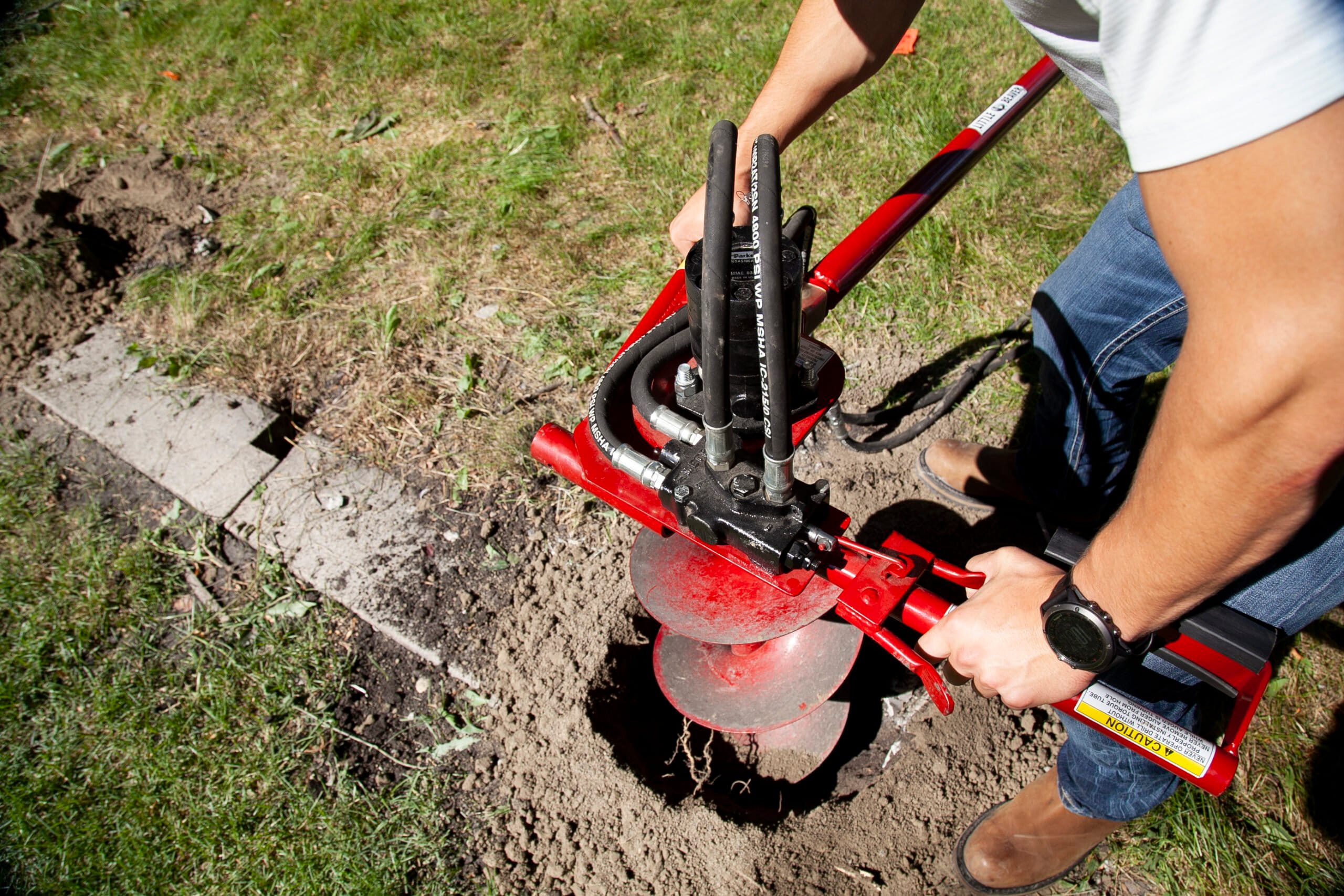
One way to get around needing two operators is to make sure that the drill you’re considering has a torque tube. A torque tube directs kickback away from the operator, along the torque bar to the engine carriage. This design makes the drill safe and efficient for one-man drilling, reducing the space needed to drill next to a wall, in small yards or near existing structures.
3. Picking an Earth Drill for Different Soil Conditions
In narrow spaces, you might not have a lot of options in terms of the makeup of the soil where you’re digging. Contractors and homeowners might default to larger equipment in these instances, assuming that bigger equipment will cut through harder soils more easily. However, that isn’t always true.
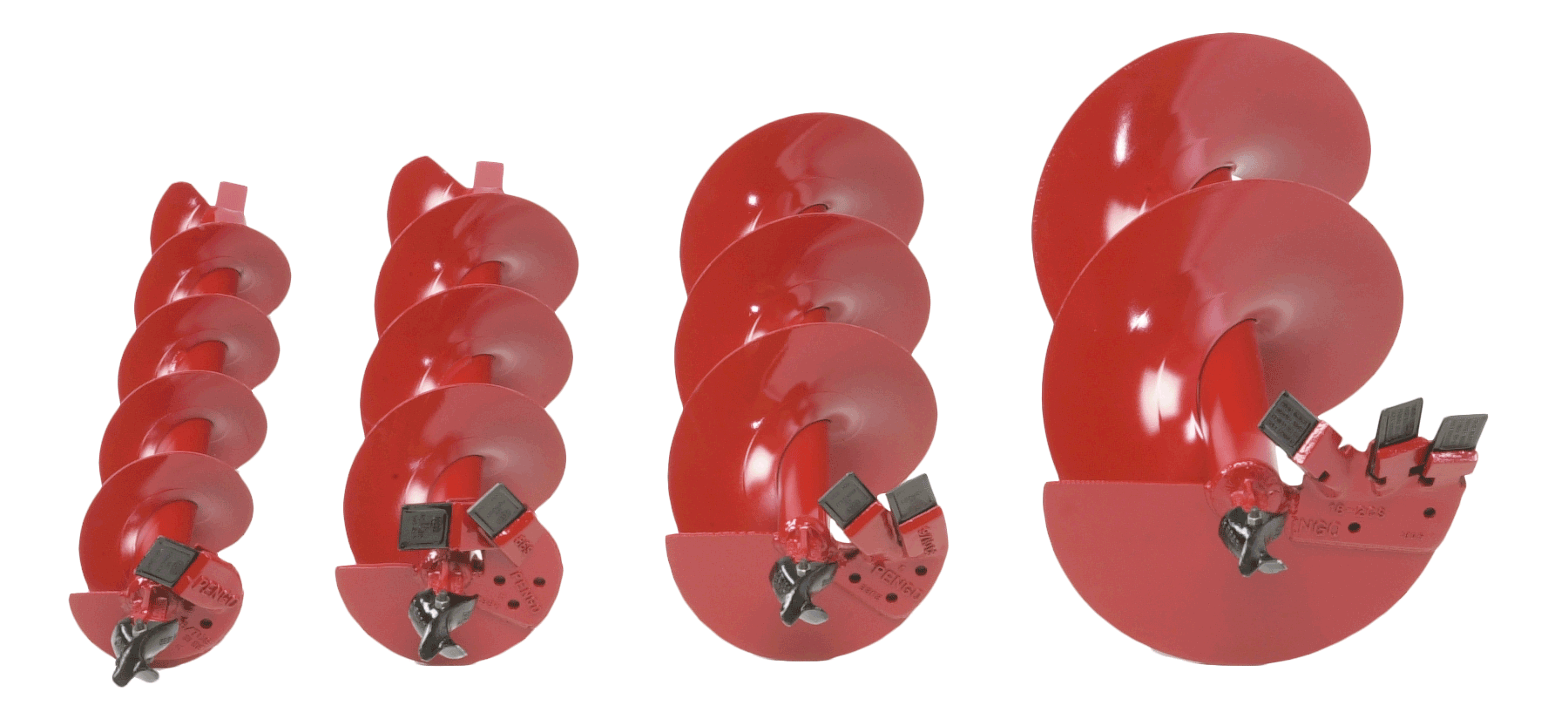
Roughly 80% of projects can be completed with standard augers and standard points and blades, which work best in loamy, sandy soil. If there’s rocky soil where you’re drilling a posthole, it’s best to have a variety of options for the drill’s augers, points and blades. Augers, points and blades help match your earth drill to the conditions to maximize drilling efficiency in different soil types.
Tougher ground requires more specialized equipment. Use a carbide blade with a rugged auger for clay and hard rock formations instead of a skid-steer mounted auger attachment. Heavy-duty augers also feature larger flighting and tougher cutting blades with optional heavy-duty points and blades for harder ground.
Small yards and narrow access points make larger compact equipment impractical for drilling projects. Look for a portable earth drill that operates safely and efficiently in tight spaces, allowing precision that can’t be matched with skid steer or compact loader attachments. To learn more about our limited access earth drilling solutions for backyard projects like fence post installation, deck footings or landscaping, contact our experts today.
Quick Specs to look for in Earth Drills for Tight Spaces:
- Minimum gate clearance: 36 inches
- Maximum digging depth: 36 inches
- Auger diameter: 1.5-16 inches
Last updated Mar 27, 2026
Maximize Drill Performance
Operators sometimes forget that points and blades need regular maintenance just like an earth drill does. Too often, these small pieces are forgotten in the day-to-day shuffle of drilling projects. However, forgoing routine maintenance on these critical parts can lead to a decline in drilling performance or even a complete breakdown on the jobsite.
Proper maintenance and replacement of common wear parts keeps your earth auger operating at peak performance. Like the drills they are mounted on, augers, points and blades require routine maintenance.
- Check the placement of the points and blades every day. Misalignment might cause the auger to vibrate excessively or “walk” during use.
- Ensure you’re using the right points and blades for the soil. Standard options work for loamy soils or areas with few rocks while hard clay or frozen ground requires carbide blades. Having the right points and blades will protect the auger from damage and make your drilling project easier.
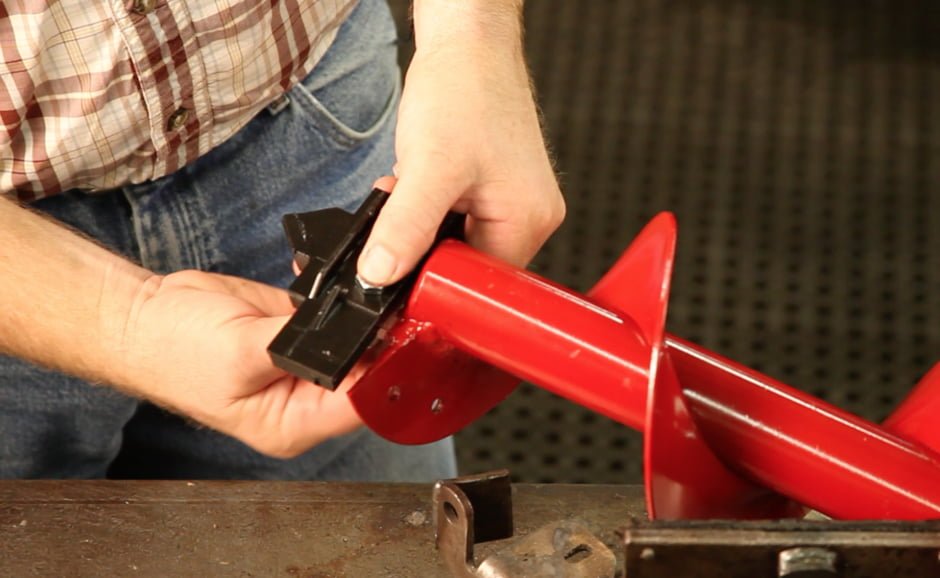
- Replace worn attachable points and blades before they reach the auger flighting. Operators can replace these parts quickly with basic hand tools, such as a wrench or ratchet set. To learn more, check out our video below.
- If the blades wear down far enough to damage the flighting, operators will need to repair the auger flighting by welding the material or replace the entire auger.
- A good rule of thumb is to never operate a drill with damaged or missing parts, which includes the auger.
Our earth augers feature abrasive-resistant steel and hard surfacing on the edges of the points and blades. Another benefit of working with Little Beaver is that our points and blades are reversible, which means you get twice as much work out of one point or blade.
The time put into maintaining smaller wear parts protects against larger repair costs if the drill is damaged or breaks. Keep an eye on maintenance schedules to prolong the life of your Little Beaver earth drills.
Last updated Mar 27, 2026
Whether you’re a DIY’er looking to complete one simple backyard project or a contractor tackling customer jobs, choosing the correct drill type and auger for a project significantly increases the ease and efficiency of your drilling job. Let’s explore which choices are the best for your project.
Mechanical or Hydraulic?
Depending on the project, you might find that a mechanical earth drill performs better than a hydraulic earth drill. However, the best option comes down to a few different factors including borehole diameter, soil type and maneuverability needs.
Our Mechanical Earth Drills are ideal for drilling relatively small holes, ranging from 1.5 to 12-inch diameters, in sandy or loamy soil profiles. You might use this drill for landscaping, erecting signs or installing fence posts. DIY’ers often find the Mechanical Earth Drill to be the superior option for home improvement projects. With additional kits, these drills extend past simple post hole drilling. Little Beaver Mechanical Earth Drills offer the option to pair with a horizontal boring kit to bore up to 50 feet under driveways, sidewalks and parking lots.
Our Hydraulic Earth Drills have twice the torque of our mechanical models, which makes them better for tasks demanding larger holes up to 16 inches. This could include projects like building a pole barn or monitoring groundwater. These high-powered machines are optimal for use in frozen soil, clay and rocky sediments.
Both earth drill options feature compact, lightweight designs that give them a small footprint and allow them to reach areas where larger models and skid steers can’t go.
Hydraulic Earth Drills can take mobility one step further. Our Towable Earth Drill conveniently attaches to a trailer hitch for hauling to and from the jobsite while the UN-Towable can fit in the back of most SUVs and pickup trucks. They’re also able to drill right next to buildings and other structures. For the toughest jobs, we offer the Big Beaver. Rental centers often choose to stock both mechanical and hydraulic earth drills to appeal to a wider audience of users, including DIY’ers and contractors.
Selecting an Auger
Auger selection can be just as important as drill selection. Roughly 80% of projects will use a standard auger with standard points and blades, which work best in loamy, sandy soil profiles. Typically, these augers range in size between 1.5 to 16 inches, reaching depths of up to 36 inches. Some manufacturers offer additional points and blades that help to expand the use of the standard auger. For example, a carbide blade is best for the toughest types of ground, such as asphalt, dense clay and frozen dirt.
When there’s harsh, rocky terrain underfoot, you need an equally rugged auger. Heavy-duty augers are designed with features like larger flighting and tougher cutting blades. Little Beaver also has heavy-duty points and blades to slice through harder ground, like gravel.
To choose the best auger for your project, it’s important to understand the terrain you will be drilling in. It’s also important to recognize if you’re going to be using the same drill for more than one project. While a post hole might be drilled in an area with loamy soil, a sign might be installed in harsher soil conditions, which will require different auger types and, possibly, different auger diameters.
Making the Best of Your Project
Little Beaver offers an expansive library of informational resources to help you make your project a success. In the FAQ section of our website, you can find detailed answers to questions that may arise as you drill deeper into a project. We’re also happy to have you contact us directly by email or phone.
Last updated Mar 27, 2026
Selecting the Best Earth Drill & Accessories for Your Project
 An earth drill is an excellent tool for a variety of projects, from installing fence to planting trees and creating irrigation systems. It can also be used for anchoring mobile homes, large tents and utility poles. Notice the diversity of work that can be accomplished using this singular tool. While these projects may appear similar because they all demand a hole, drill beneath the surface and you’ll find that soil composition makes a big difference in what power option and style of auger is best for the task at hand.
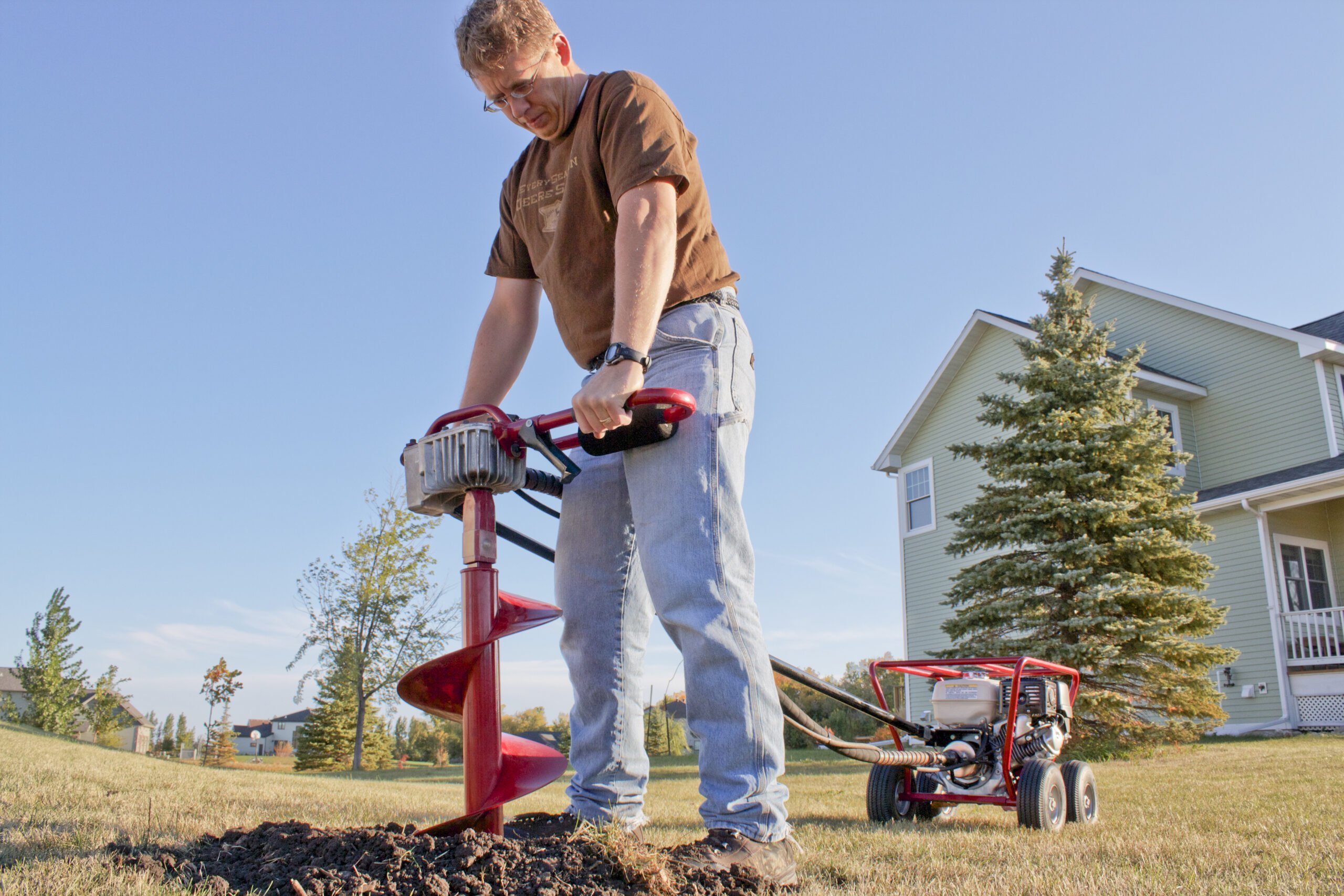
Taking a few minutes to understand the different drill types and components will win you enhanced productivity on the jobsite. You can choose between two types of engine-driven, one-man earth drills: hydraulic or mechanical. They might look alike, but each post hole auger was designed for a distinct purpose.
Hydraulic Power
Hydraulic earth drills are your best option for the toughest layers of sediment, including frozen ground and rocky soil. They have approximately double the torque of mechanical models. Little Beaver’s hydraulic machines have rugged bodies and powerful torque to punch through stony sediment. Precise, low-speed operation coupled with high torque allow the operator to drill clean and accurate holes, even in the most difficult applications.
Hydraulic drills are ideal for single-hole projects such as installing signs and planting trees because they’re compatible with large-diameter augers, some as wide as 16 inches. The torque makes them perfect for quickly anchoring mobile homes. Additionally, the drills typically have a reverse setting so you can safely remove the earth auger if it becomes lodged under a rock or tree root.
Mechanical Speed
Mechanical earth drills are more compact and lightweight, but still pack a powerful punch. When your project needs speed and precision, this drill is up to the task. This transmission-powered unit performs high-speed auger rotations at 360 rpm so you can quickly drill several, narrow holes for a wide range of applications, such as fence post fitting and deck footings, as well as planting flowers. Paired with an effective horizontal boring kit, it can also drill under driveways or sidewalks for a variety of landscaping needs.
Superior Safety
Most drills with 360 rpm speed require two operators to stabilize the unit. Both our mechanical and hydraulic drills have a torque tube that transfers torque from the auger to the power source, drastically reducing the risk of encountering dangerous kickback. This one-of-a-kind invention makes one-man drilling not just possible, but also safe and efficient. The torque tube reduces physical strength on the operator and enables safe operation regardless of drilling experience.
Auger Selection
Once you’ve chosen your drill type, it’s time to pick the auger that matches the required hole diameter. Augers can be as narrow as 1-1/2 inches for smaller jobs like soil sampling, and wide as 16 inches for large applications, such as foundation repair. Little Beaver’s snap-on augers can make changing out the auger or attaching extensions a quick and easy process. They feature a spring-loaded snap button, which secures the auger to the drill head. This reduces set-up and take-down times. This connection method simplifies the process of adding extensions, which enables the operator to dig a few feet deeper without needing to purchase a longer auger.
Contractors and landscapers should also look for augers that have swappable points and blades. Standard blades are ideal for loamy soils or areas with few rocks because of the cold-rolled steel and hard surfacing on the edges. Use Little Beaver’s carbide blades for drilling in denser soils. They equip the earth auger to chop hard clay and frozen ground into pieces. Swap out the blades using an adjustable wrench. These modifications enable an auger to drill more than 100 holes in prime soil conditions before needing service.
An Essential Tool
Whether you are a seasoned construction pro or a do-it-yourself weekend warrior, the one-man auger is a timesaving, indispensable companion in your arsenal of tools. Outfitted with Little Beaver’s patented and reliable drill designs, you can tackle drilling projects in a fraction of the time you would with a shovel.
Last updated Mar 27, 2026
No matter the soil type where you’re digging Little Beaver has the point and blade combination to get the job done. Use the guide below to determine what is best for your area of operation.
Last updated Mar 27, 2026
Snap-On Connections Offer Quick and Easy Auger Changes
One of the ways to maximize efficiency and get the most out of your earth drill is to use augers that you can change quickly as project requirements change. Traditionally, augers were screwed into the drill with a specific thread size that varies between brands. This connection was chosen for its secure attachment; however, it’s a time-consuming process that doesn’t allow for quick auger changes.
At Little Beaver, we offer snap-on auger connections for our earth drills to ensure you’re getting the strongest and easiest-to-use connection, so you can cut back on downtime and increase productivity in the field. A snap-on auger connection offers a quick and easy method to change augers on your earth drill while providing the strength required to hold up against rough terrain drilling.
Snap-On Augers
Snap-on augers eliminate the need for long auger changeout times by featuring a convenient spring-loaded snap button that secures the auger to the drill head. Little Beaver offers 36-inch and 42-inch auger length options with 13 different diameters, so you can quickly change to the right auger for your project.
A standard snap-on auger excels in soft soils and can also bore through clay, frozen ground and hardpan soil when paired with the right points and blades. Standard snap-on augers are used for most projects. However, for rocky soils, we recommend our heavy-duty snap-on augers to avoid damage.
When a deeper hole is required, extensions make it easier to dig to your desired depth. Our auger extensions also feature the snap-on connection and are available in full flighted and tube versions, at both 18-inch and 36-inch lengths. Full-flighted extensions are available in diameters between three inches and 14 inches.
Hex Augers with Snap-On Adaptor
Smaller augers – between one to three inches in diameter – are too small to be made with the snap-on connector itself. So, our hex augers come standard with a snap-on hex adaptor. This adaptor connects the auger to the drill with a snap button connection, making the attachment quick and easy to use. These smaller augers are commonly used for soil sampling.
D-Series Augers
While a snap-on connection is ideal for many situations, some drilling applications, like soil sampling or foundation repair, require a stronger connection to match the drill’s higher torque. Little Beaver D-series augers connect to the Big Beaver drill and the Lone Star Drills line of soil sampling drills with a strong drive pin connection. This rugged alternative to snap-on augers provides an option to ensure the optimal match between auger and drill.
No matter what project you have in mind, we are here to help you get the best drill and auger combination for your application. Contact Little Beaver today!


 An earth drill is an excellent tool for a variety of projects, from