Mechanical Drill Maintenance: End-of-Year Care

Mechanical Drill Maintenance: End-of-Year Care

Mechanical Drill Maintenance

Preparing Your Drill for Off-Season Storage

As the end of the busy season wraps up, it’s time to take a closer look at your mechanical earth drill. When it comes to a smooth drilling operation, it’s a matter of a well-operating machine. Yes, choosing a top-performing, reputable drill manufacturer plays a huge role in the success of your drill, but performing routine and end-of-season maintenance is important to prolong the life of your equipment, and ensuring it performs when you really need it.

Routine drill maintenance includes examining, cleaning and lubricating key drill components roughly every 30 days or 40 hours of operation. But what happens at the end of busy season, when your drill makes its way to storage for a few months? Whether owner or a rental center, there are a few steps you can take to ensure a simple transition from storage to usage in the spring.

Inspect the drill

After every use of your earth drill, take a look at all of the components to ensure everything is in working order. End-of-season maintenance includes taking that inspection one step further. Make sure the blades are past the flighting. When the blades start to wear flush with the auger, it’s time to flip the blades or replace them. If the blades wear to the auger flighting and wear the actual flighting, operators will either need to repair the auger flighting or replace the entire auger.

Take a few more steps to complete the detailed inspection. Ensure all bolts are tight, and make sure all carbide blades (used for hard clay, frozen ground, or hard pan soils) are sharp. If the carbide blades feel worn and rounded, sharpen them with a bench grinder. Using a silicone carbide bench grinding wheel, hold the blade at a 5- to 7-degree relief angle to sharpen it.

The push button connector should be in good shape, with no visible rust. Check the throttle lever for damage or wear. Inspect the throttle cable, too. When you pull the lever, the cable should move freely on the other end. If it sticks, replace it. Some users might be able to remove the cable, clean it and reattach, but if the cable is frayed at all it will be difficult to get back in. Replacing is often the best option.

Inspecting your drill’s flex shaft should be done two or three times a year, but is especially important during end of year maintenance. There shouldn’t be any cracks or wires on the outer housing. If it’s in good shape, simply remove the core, clean it, re-lube it and slide it back in. If the flex shaft shows signs of cracks or wires, it should be replaced.

If any parts are in need of replacement, contact Little Beaver. Addressing replacement parts prior to storage is a better alternative to waiting until spring. Store your drill with peace of mind knowing it’ll be ready to operate in the spring, rather than dealing with potential delays waiting for parts.

Replace fluids and filters

Transmission fluid should be replaced regularly. If your fluid has a lot of metal shavings in it, that can be an indication of excessive gear wear or missing teeth. If the fluid is changed regularly, you won’t experience gear wear. If you hold the output shaft and wiggle it, you shouldn’t feel a lot of movement.

Motor oil and filters should be cleaned and changed. Clean filters with an air hose, or if they’re foam filters they can be shaken out.

Clean and prep for storage

Considering the job, it’s natural that earth drills get dirty. Dirt and clay adhere to the blades of the auger, which can diminish the efficiency and performance of the equipment. Not only should your machine be wiped down after every use, it should also undergo a deep cleaning during end of year maintenance.

Remove all debris from the earth blades using warm, soapy water. Avoid using a power washer, as the pressure can damage the equipment.

To prep for storage, disassemble the drill and remove the torque tube and auger. Drain the fuel or add fuel neutralizer before storage.

Always store the drills upright in a dry place because the steel components will eventually rust if left outside or in places with a lot of moisture, such as propped up outside against a building.

Keep in mind the importance of end-of-year maintenance and the role it plays in overall lifespan of the drill. Cleaning and storing the machine properly contributes to the continued success of your drilling operation.

If you have a maintenance issue or question, make sure to reference Little Beaver’s online parts and operators’ manualonline service videos or contact us for in-house technical consultation.
Horizontal Applications That Are Anything But Boring

Horizontal Applications That Are Anything But Boring

Earth drill horizontal boring kits

Expand Your Mechanical Earth Drill Capabilities

Versatility – for construction companies and DIYers looking to do more with less, versatility is the key to success. Rather than a specialized machine for every job, a basic Mechanical Earth Drill with a range of simple accessories maximizes project potential from fencing to soil sampling and plenty of jobs in between. The same Mechanical Earth Drill you rely on for quick, clean vertical holes with minimum manpower can also help you tackle horizontal applications with the right attachment kit.

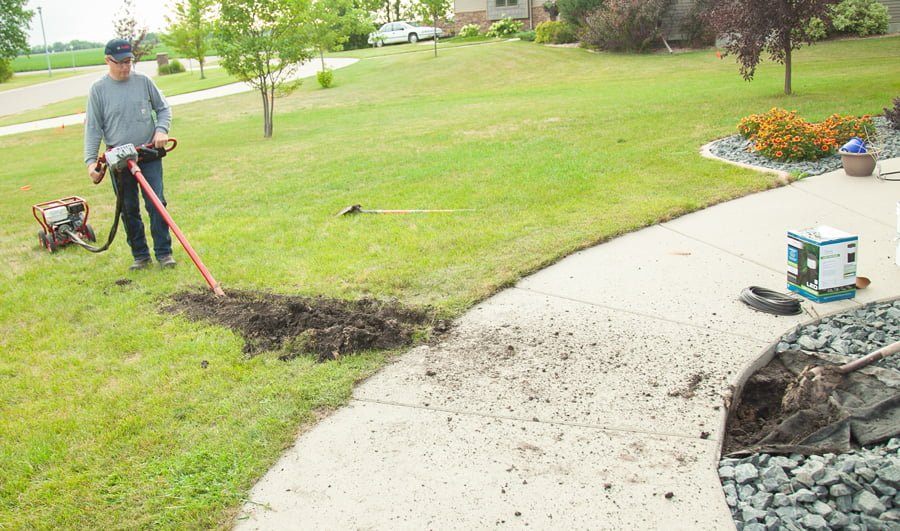
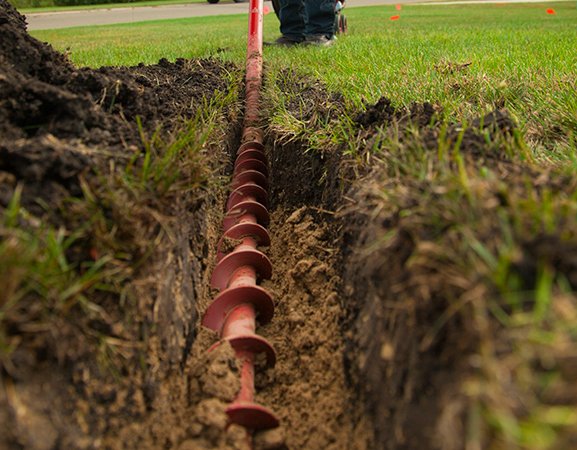
Horizontal boring enables operators to bypass surface obstacles like driveways, sidewalks and roads by simply going underground. For contractors and DIYers looking for an easy way to install landscape lighting, irrigation or other shallow utility lines, it is a popular option because it requires less time and labor than traditional methods of pounding rods under these obstructions. With a simple attachment you can bore up to 50 feet, eliminating barriers and opening up your possibilities.

To maximize versatility, Little Beaver offers two choices for horizontal boring kits. Selecting the right kit depends on your project.

Sidewalk Auger Kit

Horizontal boring sidewalk auger kit

The Sidewalk Auger Kit uses a 3″ diameter auger and wiggle joint extension to quickly bore under sidewalks up to 5′ long.

As the name implies, the Sidewalk Auger Kit enables boring short distances – like under sidewalks, paths or residential drainage ditches. It includes a 3-inch by 5-foot auger.

The 3-inch diameter hole is large enough for most low-voltage electrical, plumbing and water lines, making this idea for landscaping, utility and plumbing projects that only need to bore short distances. With the Sidewalk Auger Kit, contractors and homeowners can easily bore under narrow obstacles to install landscape lighting wire, water softener lines, sprinkler systems and gas lines.

Driveway Auger Kit

Horizontal boring driveway kit

The Driveway Auger Kit is used for horizontal boring under driveways or parking lots up to a distance of 50′.

If you need to cross a road – or a driveway or parking lot – on the other hand, you will need the Driveway Kit. This kit uses a water drill technique to bore up to 50 feet.

It comes with the option of a 2-, 3- or 4-inch water drill bit. As with the Sidewalk Kit, the 3-inch bit creates a large enough hole for the majority of landscaping needs. However, when boring more than 10 or 15 feet, we recommend starting with a 2-inch hole for better control. Follow that up with the 3- or 4-inch bit if you need a larger diameter hole for your project.

For operation, the Driveway Kit requires a garden hose, ¾-inch Schedule 80 water pipe for the length of your bore plus 15 feet and necessary couplings. These are not included with the kit. Unlike the Sidewalk Auger, the Driveway Kit uses water to drill and maintain the bore hole. Low water pressure flushes the dirt and lubricates the hole to avoid collapse. Rental companies often rent the required water pipe with the Mechanical Drill and Driveway Kit, so be sure to inquire at your center before purchasing.

To find out how to maximize your versatility with horizontal boring, contact a Little Beaver expert.

One Man Earth Drill Operation

One Man Earth Drill Operation

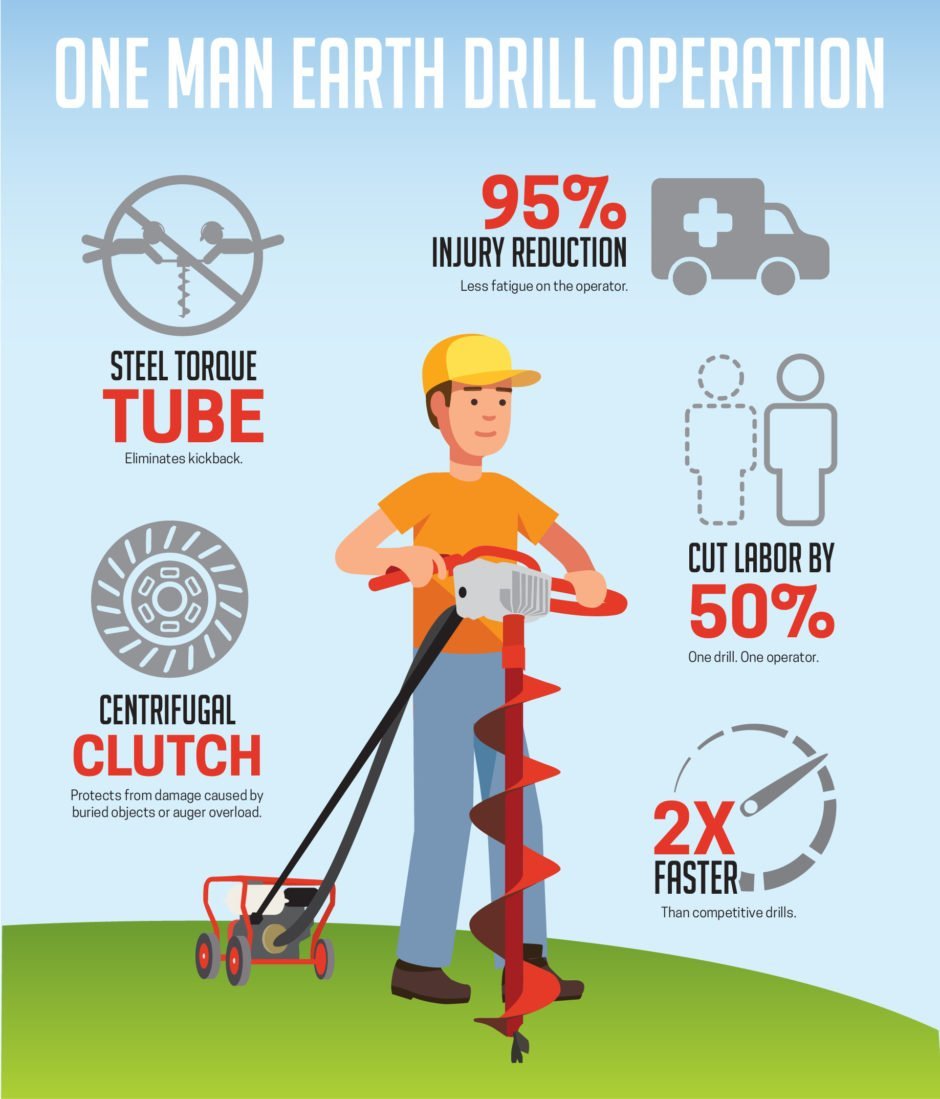
Little Beaver Earth Drills are designed to be safely operated by just one person. What does that mean for your business? More efficient labor utilization. Faster job completion. Fewer injuries. More profit on every job.

Check out the infographic below to learn how Little Beaver Earth Drills can double your productivity and maximize jobsite safety.

Little Beaver One Earth Drill Infographic
The Invention That Tackled Torque

The Invention That Tackled Torque

One-of-a-Kind Feature Improves Operator Safety

In the mid-1970s, Van Cox set out to solve one of earth drilling’s most punishing problems — auger torque. Cox, an engineer for Little Beaver, soon completed a design and secured a patent for what is now known as the torque tube. The one-of-a-kind invention protects operators from the harmful effects of a drill’s torque by transferring kickback from the auger to the power source.

More than 40 years later, deck builders, fence contractors, landscapers and rental customers continue to enjoy torque-free drilling as well as the labor-saving benefits made possible by safe, one-person drilling.

Mechanical earth drill torque tube

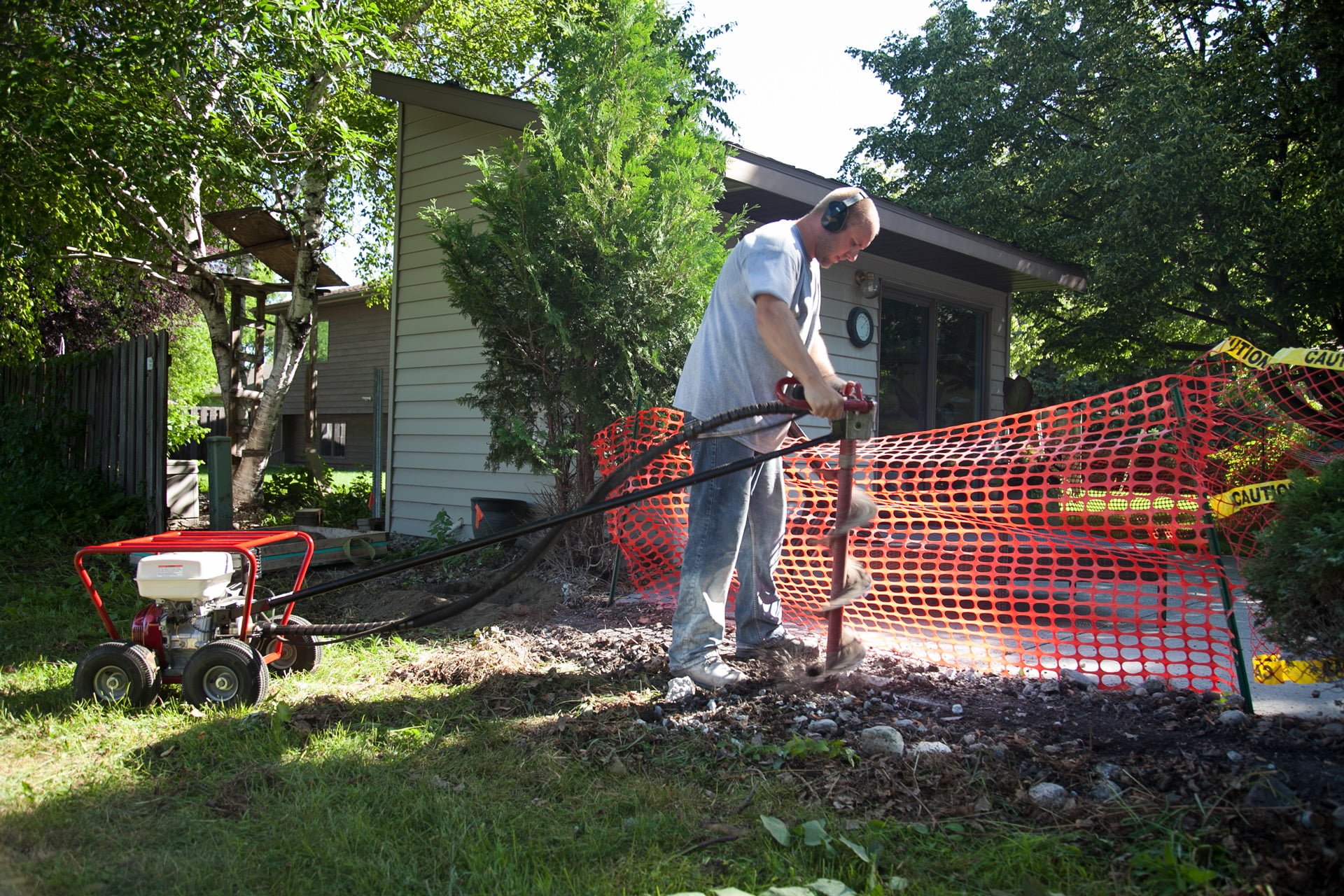
By transferring dangerous kickback to the engine carriage as opposed to the handles, one person can safely operate a Little Beaver drill.

The invention remains a defining feature on Little Beaver’s of mechanical and hydraulic earth drills, and it continues to make life easier for business owners and drill operators thanks to the many benefits of torque-free drilling.

Less Manpower: By transferring dangerous kickback to the engine carriage as opposed to the handles, one person can safely operate a Little Beaver drill. Most drills without torque protection require two operators for safe use. One-person drilling frees up the second individual to work on other tasks so jobs are completed in less time.

Fewer Strains: Kickback on traditional drills can jar an operator’s body, causing strains and injuries, which lead to time off and worker’s compensation costs. Even minor injuries, ones that don’t result in time away from work, can slow individuals down, decreasing overall production.

Easier Use: Since the torque tube absorbs kickback, operators don’t need to work as hard to control the machine. This significantly reduces fatigue while allowing operators of any age or experience level to easily handle the drill.

If you’re still not convinced of the benefits of Van Cox’s invention, see Little Beaver’s solutions for yourself.

Who Needs Horizontal Boring Equipment?

Who Needs Horizontal Boring Equipment?

Horizontal boring kit

Keep Projects Going When Up Against Pavement

From landscape lighting installation to irrigation system maintenance, horizontal boring is highly valuable for keeping projects going when up against pavement. As a result, many landscaping professionals and homeowners find a fast return on investment in horizontal boring equipment. But others fail to realize the benefits due to misconceptions that boring machines are too expensive to rent or purchase or are limited in use.

The applications for boring equipment in landscaping are actually quite diverse. Horizontal boring is highly valuable for every job from landscape lighting line installation to irrigation system maintenance. And whether it’s contractors with their own equipment or rental centers serving landscapers, homeowners and do-it-yourselfers, most already have machines that can pair with boring attachments and accessories, maximizing their fleet efficiency with multi-purpose equipment that can be used every day and on every job.

Little Beaver’s horizontal boring kit turns a traditional earth drill into an economical boring solution. Though inherently more limited than a large dedicated boring machine, the Little Beaver Boring system easily completes the jobs landscapers and homeowners tackle.

Solutions for the homeowner

A Little Beaver earth drill fitted with the horizontal boring attachment is a perfect fit for the do-it-yourselfer. The drill and attachment are lightweight and safely operated by just one person. And because it’s a cost-effective alternative to renting larger boring machines, it’s an ideal solution for cost-conscious homeowners.

Homeowners and DIYers use the horizontal boring kit to install and maintain:

  • Sprinkler systems
  • Water softener lines
  • Landscape lighting lines
  • Gas lines

Fast ROI for the contractor

Professional landscape contractors are often faced with small- to medium-size projects that do not require the industrial capacity of expensive and heavy directional drilling equipment. While moles are geared for this size of project, they are expensive to buy or rent, complicated to use, and typically require at least two people to operate.

A horizontal boring attachment is an inexpensive way for contractors to efficiently install or maintain:

  • Fiber optic lines
  • Gas lines
  • Irrigation systems
  • Conduit pipe

For more ways to improve landscaping efficiency, contact a Little Beaver expert.