Uncover Versatility with the Kwik-Trench

Uncover Versatility with the Kwik-Trench
Kwik-Trecn mini trencher irrigation line install

In today’s world, versatility is key. Contractors, do-it-yourselfers and golf course superintendents constantly look for ways to reduce expenses and increase productivity for landscaping jobs, sprinkler installation and more. This means, the more applications a product can handle, the more valuable it becomes.

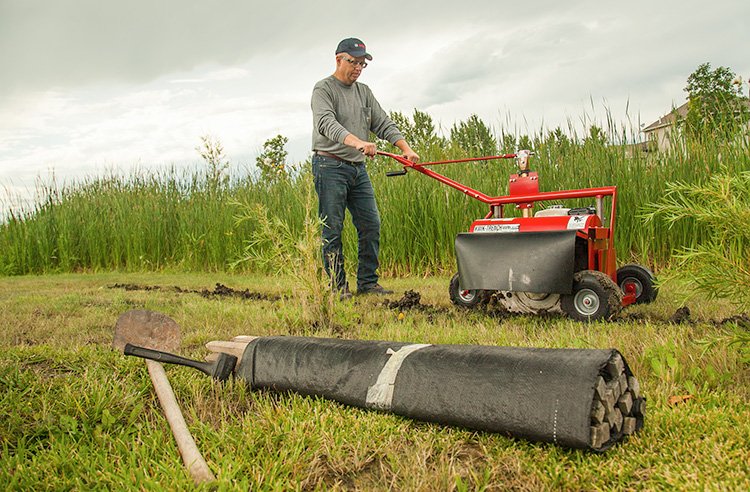
The Kwik-Trench Mini Trencher from Little Beaver is a great example of such a versatile machine. Whether you’re a homeowner or business owner, the Kwik-Trench offers a solution for a wide range of tasks, all in one easy-to-operate package.

Tailored for the Task

The Kwik-Trench is available in two models, the KT200B and the KT2400B. These mini trenchers cater to different jobsite requirements. The KT200B and KT2400B are perfect for projects that require shallow trenches, tight spaces and more maneuverability. The KT200B is a lightweight model and the KT2400B, while still highly maneuverable, is better for jobs that need more power and deeper trenches.

Check out the unique features of the Kwik-Trench below:

  • Cutter Wheel Design

Where other trenchers require teeth to be welded directly onto the cutter wheel, the Kwik-Trench has a bolt-on tooth system. This design speeds up maintenance and allows quick tooth changes to match the application.

  • High-Performance Teeth

The Kwik-Trench’s carbide-tipped, hardened steel teeth can cut through tree roots and easily create trenches for irrigation lines in silty or sandy soil while the specialized Super Xtra Rock Teeth expand trenching capabilities into dense clay, asphalt and rocky soil.

  • Customizable Trench Dimensions

The Kwik-Trench features adjustable widths and depths, allowing operators to adapt to the task at hand and improve overall productivity. The KT200B has width options between 1 to 3 inches and depths down to 8 inches while the KT2400B features width options from 1 to 4 inches and adjustable depths down to 12 inches. This means you can customize the trench dimensions to the specific job. This adaptability minimizes the manual labor often associated with incorrect trench sizes where crews may need to expand or deepen trenches by hand when their trencher doesn’t cut wide enough or deep enough.

Meeting Diverse Applications

The practical design, adjustable settings and model options make the Kwik-Trench an attractive solution for a wide range of users across industries. Here are just a few examples:

  • Landscaping Contractors use the Kwik-Trench for professional edging, installing silt fences and burying wires for landscape lighting.
  • Utility Contractors benefit from the Kwik-Trench’s cutting speeds to quickly bury phone lines, shallow plumbing lines and drainage lines as well as low-voltage wires for satellite dishes, cable or phones.
  • Homeowners find the Kwik-Trench to be user-friendly and simple for installing sprinkler systems or burying an electric dog fence.
  • Golf Course Superintendents depend on the Kwik-Trench’s carbide-tipped, hardened steel teeth to manage problem tree roots and dig clean trenches for irrigation system maintenance.

With its intuitive design, convenient model options and broad application appeal, the Kwik-Trench is a great addition to any landscaper’s toolbox and a cost-effective option for DIY enthusiasts. Both Kwik-Trench models even come with an optional tilt bed utility trailer which makes moving the trencher from job to job easier.

For more ways to maximize your ROI, reach out to Little Beaver’s experts today.

Related Articles

Reimagine Your Fencing Capabilities

Reimagine Your Fencing Capabilities

Equipment for Unique Fence Installation Jobs

Little Beaver is known in fencing circles for fast and efficient posthole diggers, like our Mechanical and Hydraulic Earth Drills. But our equipment’s capabilities don’t stop there. We know that your projects can vary and expand beyond setting traditional fences — like installing a dog fence or shallow electrical lines that run along a fence. That’s why we offer multiple equipment options for fencing, landscaping and more.

Here’s how our equipment can help streamline your projects:

Underground Fencing

Some fencing projects, like pet fencing, involve digging underground lines around the perimeter of a yard. Digging by hand makes the project longer and harder to complete. But what other option do you have?

Well, there’s our Kwik-Trench mini trencher. We offer two options: the KT 200B and the KT 2400B. The KT 200B is built for lighter-duty jobs and smaller yards while the KT 2400B is for more demanding applications in tougher soils. Here are the overall benefits of both options:Mini-trencher silt fence installation

  • Minimal turf disturbance
  • Trenching speed up to 30 feet per minute
  • Trench depth range of 6-12 inches
  • Compact with a practical cutter wheel design
  • Maneuverable for tight spaces

The Kwik-Trench offers a safe, easy way to dig a uniform trench with consistent depth and size. For fencing contractors, a mini trencher saves hours of hand digging, significantly speeding up trenching tasks. It also creates the opportunity to support other projects, like installing electrical lines for landscape lighting.

Crossing Under Obstacles

Horizontal boring applicationsSometimes, underground fencing and electrical lines need to go underneath an obstacle, such as a sidewalk or a driveway. This task traditionally requires manual tunneling or cutting through the concrete to the ground below. Both of these options are time consuming, and breaking through the concrete diminishes the strength of the entire slab.

If you’re already using our Mechanical Earth Drill for fence installation, or if you’re considering adding one to your fleet, remember that it can be more than just a posthole digger. Our Horizontal Boring Kits pair with your Little Beaver Mechanical Earth Drill and bore cleanly underneath obstacles without disturbing the surface. There are two kits to choose from: a sidewalk boring kit and a driveway boring kit.

The sidewalk boring kit is a dry boring solution that’s perfect for smaller spans like those underneath sidewalks and includes a 5-foot auger with a 3-inch diameter bit and a 5-foot extension with a universal wiggle joint. The driveway boring kit is a wet boring solution and bores up to 50 feet underneath driveways or parking lots. The kit includes the option of a 2-, 3- or 4-inch drill bit as well as a swivel adapter, swivel assembly and horizontal boring key. To complete the kit, operators will need to use a garden hose, 3/4-inch Schedule 80 water pipe and 3/4-inch pipe collar. Both kits connect to our Mechanical Earth Drill.

Expand Your Capabilities

An earth drill isn’t the only piece of equipment from our line that can help optimize your projects. Once you’ve invested in an earth drill, you can expand outward with other solutions to boost your productivity and expand your capabilities. Contact our experts today to learn more about how our equipment can be used for fencing and landscaping.

Landscaping with Little Beaver

Landscaping with Little Beaver

How Earth Drills and Mini-Trenchers Can Streamline Yard Projects

Landscaping keeps your lawn protected, healthy and looking great. Whether you’re doing a full landscaping project or just adding a sprinkler system, Little Beaver haMechanical Earth Drill horizontal borings tools that can help speed up your work. Keep reading to learn how our Mechanical earth drills and Kwik-Trench mini-trenchers can help your next project go quickly and smoothly.

Mechanical Earth Drills

Mechanical earth drills cut down on the time you spend digging holes. If you’ll be planting trees or shrubs, or installing mailboxes or fence posts, you’ll find that using an earth drill significantly speeds up the process while creating consistent holes that meet the size requirements of your project.

Little Beaver Mechanical earth drills combine a compact, lightweight design with additional safety features to allow safe and efficient one-man operation. Our torque tube reroutes kickback from the drill away from the operator, making it one of the safest drills for single person operation. One-man drilling projects can be dangerous, but Little Beaver earth drills help ensure your project is done efficiently and safely.

Kwik-Trench Mini-Trencher

Traditionally, landscapers have used shovels and other gardening tools to break up soil to dig trenches for edging or underground wiring or sprinkler lines. This process is time-consuming and physically grueling. That’s why Little Beaver offers a mini-trencher.

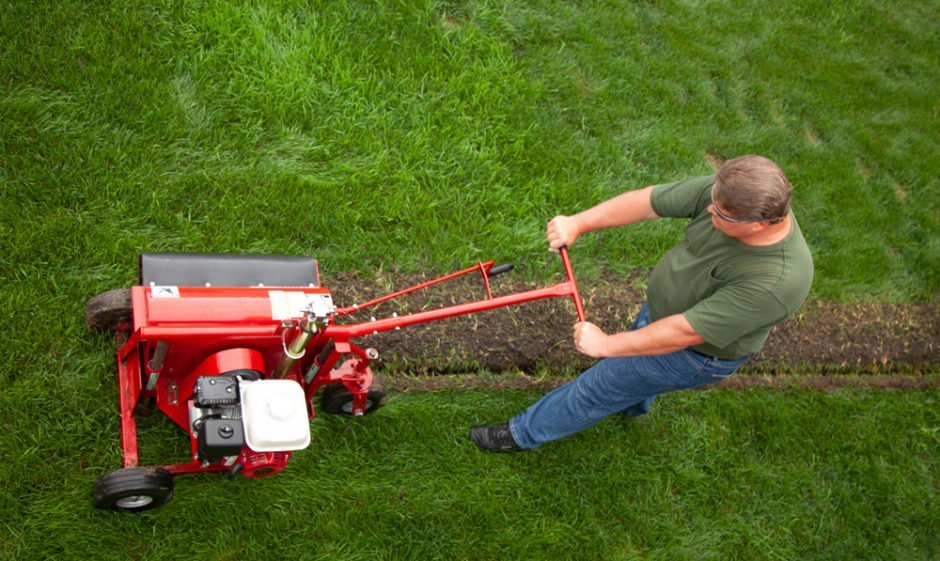
The Kwik-Trench features a simple, push-forward design for easy operation and enhanced operator safety compared to competitive pull-back models. This mini-trencher cuts trenches up to 12 inches deep and 4 inches wide, neatly depositing the soil on one side of the trench to make backfill quick and easy.

Kwik-Trench mini-trencher

Horizontal Boring Kit

When installing underground wiring or sprinklers, you might need to run a portion of the line underneath a driveway or sidewalk. To do so, you’ll need a reliable, safe equipment option to easily bore underneath the concrete or asphalt. Little Beaver’s horizontal boring kits attach to our Mechanical earth drill providing both dry and wet boring opportunities.

The sidewalk boring kit includes a 5-foot auger with a 3-inch diameter bit, a horizontal drill key and a 5-foot extension with a universal wiggle joint. Once connected to a drill, the horizontal boring kit can bore underneath a standard sidewalk. If you need to bore a longer distance, we also offer the driveway boring kit. The driveway boring kit includes a 2-, 3-, or 4-inch water drill bit with a swivel adapter that connects through swivel assembly and a horizontal drill key. This kit can bore up to 50 feet under driveways or parking lots.

No matter what landscaping project you have planned Little Beaver can help. Let us help you choose the best Little Beaver product for your landscaping project. Contact us today!

Kwik-Trench Do’s and Don’ts

Kwik-Trench Do’s and Don’ts

Tips for getting the most out of your Kwik-Trench

Whether you have owned a Kwik-Trench for years or you’re renting one for the first time, there are a few dos and don’ts that are important to know beyond the guidelines for basic operation. From safety precautions to backfilling advice, we put together a list of tips to keep in mind for your next project.

1. Do Select the Right Trencher for the Job

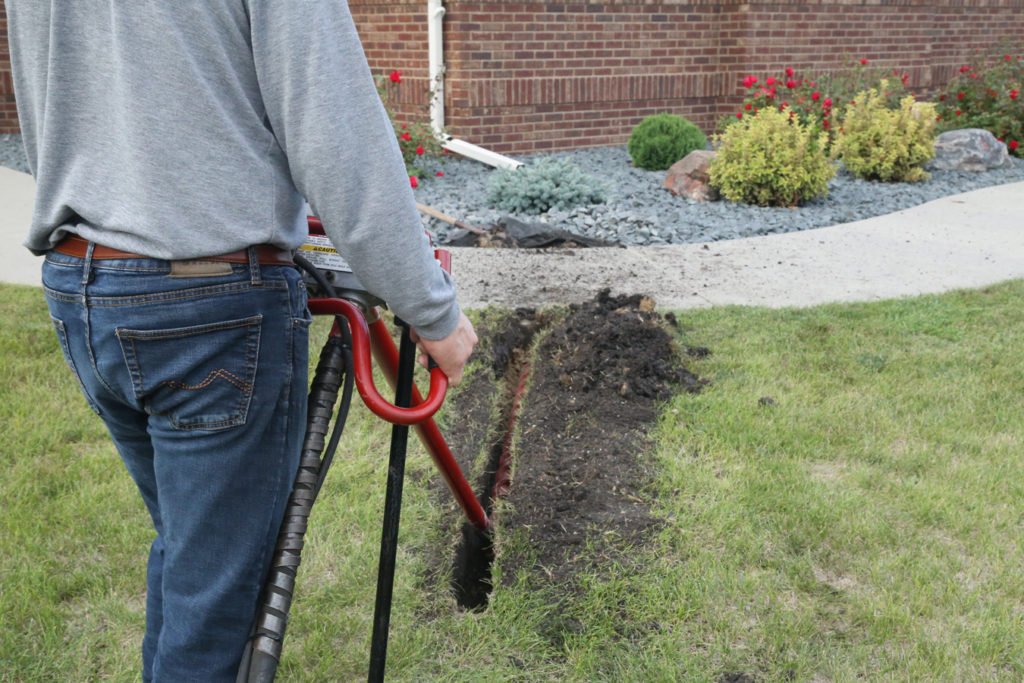
Kwik-Trench leaves a clean cut with dirt deposited on one side of the trenchIf you’re wondering how to choose the right trencher, you’re not alone. With so many options available, it’s helpful to narrow down your search using important criteria such as the size of the project, the soil type and how deep and wide you’ll be trenching.

Mini trenchers like the Kwik-Trench can cut up to 30 feet per minute and dig up to 12 inches deep, making them an excellent choice for the shallow trenching needs of rental stores, landscape contractors, golf courses and more. The Kwik-Trench not only has a compact size that can get to places larger trenchers can’t, its pneumatic tires also help to preserve your lawn. With the ability to easily saw through a variety of tough materials like compacted clay, road fill, asphalt and tree roots up to 10 inches thick, the Kwik-Trench is a great choice for almost any landscape project.

2. Don’t Forget to Call Before you Dig

Making sure to call 811 at least three business days before starting your project is a crucial step when it comes to safety and preventing damage to underground utilities. This free service, available in the United States and Canada, sends professionals to your property to mark the location of underground utility lines including water, power and gas so you can know where to dig and what to avoid.

3. Do Plan Your Path

Another helpful tip is to use marking paint to map the path for your trench after the utilities are marked. This is an easy way to save time and be sure you stay on track. Complete a visual assessment to understand the soil you will be digging through and to check for any obstacles, such as tree roots, that you might encounter along the way. When preparing to trench along a straight path, lock the rear swivel wheel of the Kwik-Trench into position to easily guide the trencher straight ahead. 

4. Do Use a Proper Method for Backfilling

Properly backfilling a trench will prevent sinking and settling later. A Kwik-Trench simplifies the backfill process by creating narrower trenches and depositing the soil neatly on one side of the trench. This allows you to backfill 50% faster than models that deposit soil on both sides. Backfill 4 to 6 inches at a time, making sure the soil is level and free of debris. This will prevent the occurrence of cupping as the dirt settles.

5. Do Stop and Troubleshoot if Your Machine isn’t Working

If you notice your Kwik-Trench isn’t working properly, make sure to stop and check out the Kwik-Trench FAQ page to troubleshoot. For example, if the cutter wheel quits turning when you push forward, that usually means the clutch mechanism or drive belts are slipping. In very hard clay soils, you can prevent this problem by pushing slowly and letting the machine cut at a slower rate. If your machine binds when you try to raise or lower it, cleaning the guide tubes and lubricating with a graphite or silicon spray should do the trick. For Kwik-Trench owners, staying on top of routine maintenance is a good bet to ensure optimal performance.

At Little Beaver, we’re committed to your success no matter the size of your project. If you have additional questions regarding your Kwik-Trench, don’t hesitate to contact us or check out our FAQs.

For the Best Curb Appeal Upgrades, Get the Right Tools

For the Best Curb Appeal Upgrades, Get the Right Tools

Home with beautiful front yardBy Ryan Tollefsen Realtor,
Keller Williams Realty Alaska Group

When homeowners make a plan for a curb appeal upgrade, there is often a lot of discussion about what is necessary and which ideas are practical. Having the proper tools for any home improvement project is crucial for its success. Since curb appeal is so important for home value, homeowners want to be sure they can do it right the first time. Here are a few tips (and tools) that ensure greater accuracy and make the whole project easier.

Why Every Home Needs Curb Appeal

Although some homeowners do not think about curb appeal until they want to sell a home, many choose to maintain or improve their exterior systematically over time.

The view of the home in relation to other homes in the neighborhood is what makes up what is called, “curb appeal.” Why does one home look better than others on the block? Curb appeal is a vital part of the home’s overall value. Even if homeowners have just moved in and do not plan to sell for many years, preserving home value should always be on their minds. They may need it if they want to refinance their mortgages, get a home equity loan for other improvements, or sell the home unexpectedly.

Here are two high-impact improvements to consider when looking to boost a home’s curb appeal:

Highlighting With Landscape & Outdoor Recreational Lighting

There are many things that homeowners can do for their properties to accentuate the wonderful aspects that are already there. Lighting is a good example. Landscape lighting is an excellent way to make the perfect look for the property at night. Lighting can also be used for outdoor recreational lighting to entertain guests or simply enjoy a change of scenery at night.

 Kwik-Trench mini-trencher

Little Beaver’s Kwik-Trench mini-trencher saves homeowners time when it comes to digging electrical lines for installing lighting.

Of course, installing lighting outside often involves digging the electrical lines for the lighting. Doing this by hand, homeowners could spend hours putting strain on their backs digging down 6 to 12 inches so that they can install their sidewalk lighting. Alternatively, they could use a Little Beaver Kwik-Trench mini-trencher to save their backs and a great deal of time. The Kwik-Trench allows homeowners to:

  • set the perfect depth for the trench
  • move at a rapid pace
  • reach spots that a larger trencher cannot access

Installing landscape lighting should not have to be a task that takes days or weeks. With this tool, the job will be done much more quickly.

Building the Ideal Perimeter Fence

Curb appeal concerns more than just the home and garden. That is why homeowners often look for ways to create attractive fencing or barriers surrounding the edges of the property. When homeowners need to install trees, vegetation or fences, they usually need to drill or dig using an auger. The best augers make it simple for people to dig a hole through any type of soil, of any width and a variety of depths. Snap-on augers offer exactly what homeowners need, with a design that is practical for almost anyone to use.

Planning Into the Future

Homeowners may be surprised with just how many projects they can accomplish with the right tools. Homeowners who used a trencher to install lighting might decide to call on it again to build a new garden, or change up their landscaping design. An auger with removable blades is a useful implement to keep on hand for landscape maintenance and other digging projects.

Building curb appeal for a home is less a single task than it is a state of mind. Taking advantage of tools that simplify the work allows people to ensure their homes look great every year without wasting time or effort. When homeowners use the right tools it creates the opportunity to do much more, both inside and outside the home.

Related Articles

Kwik-Trench Operation

Kwik-Trench Operation

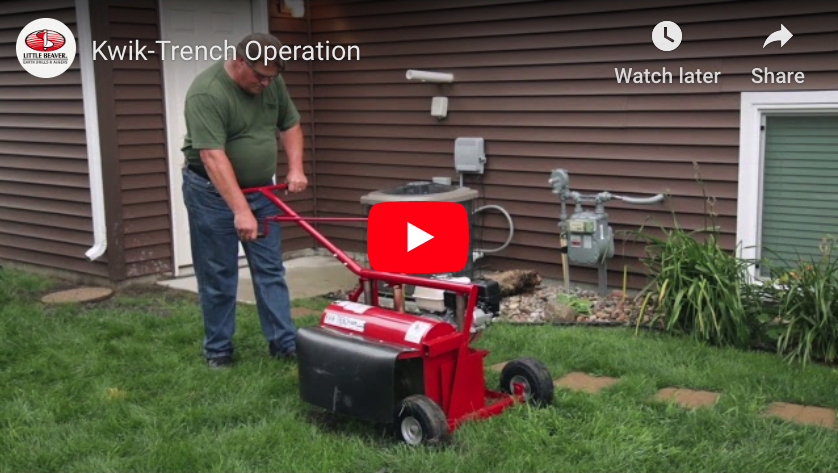
Learn how to efficiently cut clean, narrow trenches with your Kwik-Trench mini trencher. The unit’s push-forward design makes it a safe, easy-to-operate solution for installing sprinkler lines, low-voltage wiring and landscape edging.

Related Articles