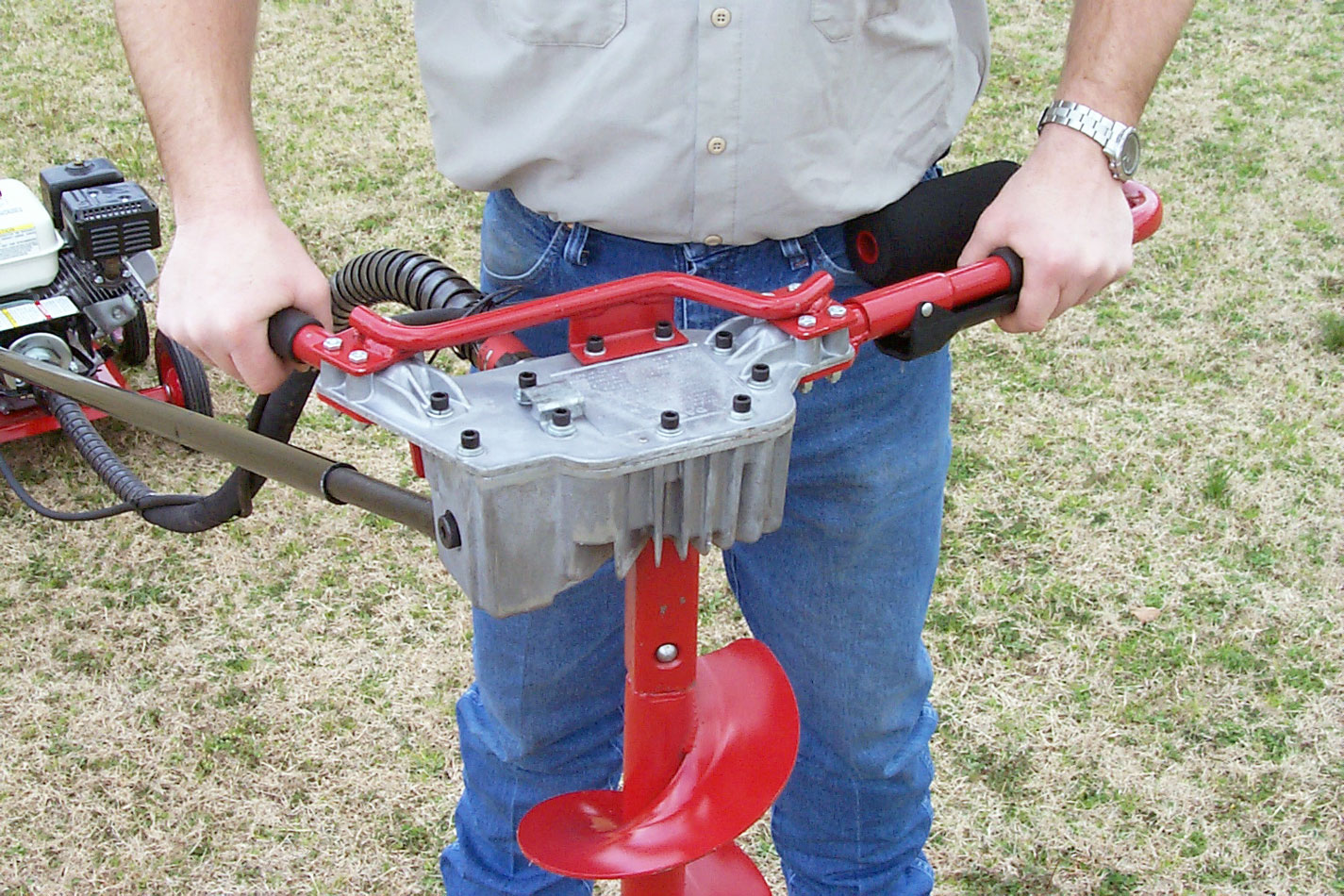
Rental Centers Dig up Additional Revenue

Rental Centers Dig up Additional Revenue

Rental centers demand for Kwik-Trench mini-trenchers

Discover the Value of Mini-Trenchers

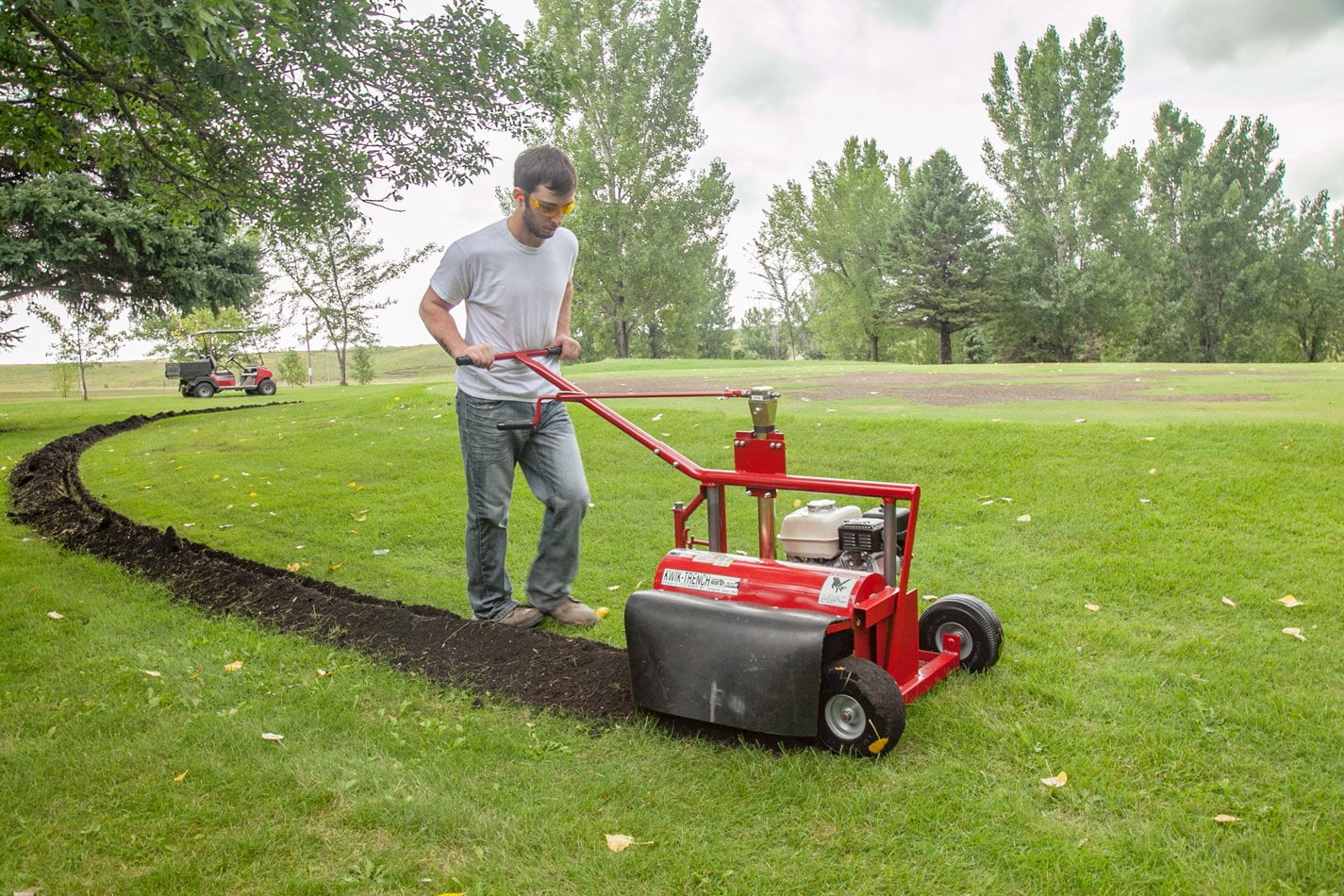
An increasing number of rental centers are unearthing a demand for Kwik-Trench mini-trenchers. The Kwik-Trench Earth Saw from Little Beaver is easy to use and ideal for a variety of applications, including installing sprinkler systems, electronic dog fences, landscape edging and cables. With its safe, compact, push-forward design, Kwik-Trench has proven to be the fastest and most economical mini-trencher on the market.

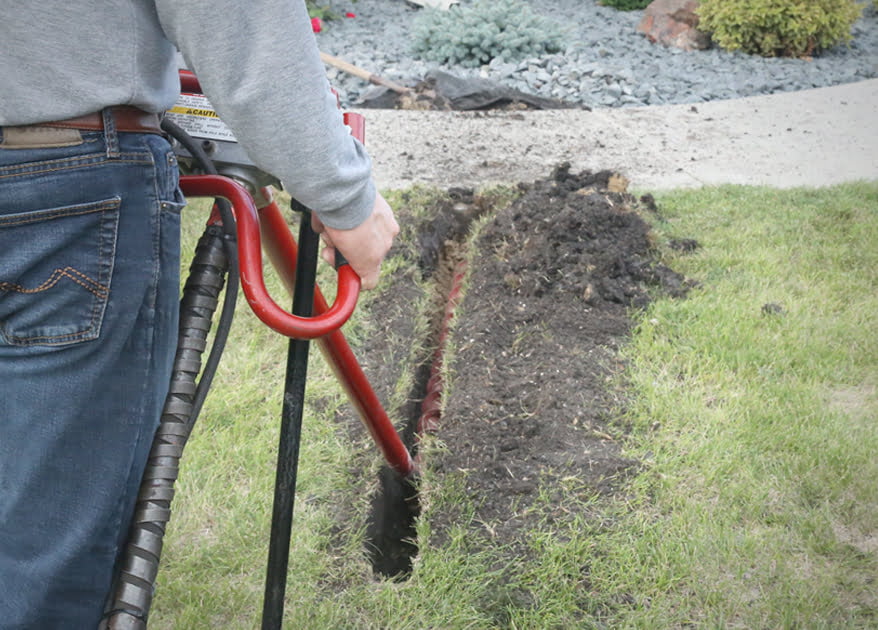
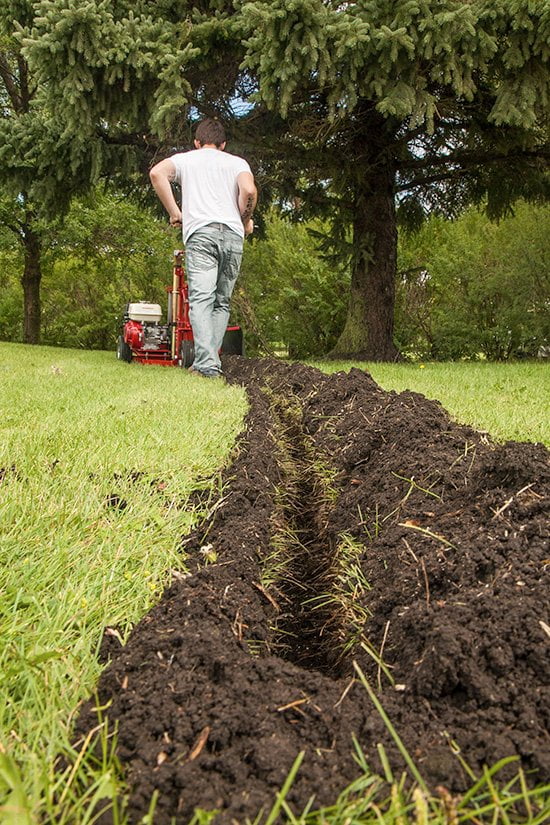
Along with being fast and user-friendly, Kwik-Trench allows renters to dig in areas that are inaccessible to large trenchers. Kwik-Trench also minimizes cleanup and simplifies backfill by depositing soil neatly along the edge of the trench.

Capable of cutting up to 30 feet per minute, and digging as deep as 12 inches, Kwik-Trench can conquer many of the jobs that renters would typically use a large trencher for. Plus, it requires less maintenance than bigger trenchers, so it’s ready to re-rent faster.

With a smaller price tag and the ability to handle a wide range of trenching applications, rental centers are Kwikly discovering the value of mini-trenchers. To locate a dealer, contact sales@littlebeaver.com.

Related Articles

Master Horizontal Boring: Pro Tips & Solutions

Master Horizontal Boring: Pro Tips & Solutions

Horizontal Boring Tips and Best Practices

Achieve Project Success with the Right Methods and Equipment

If you’ve installed landscape lighting, underground sprinkler systems or drain tile running through a lawn, you understand the demanding work caused by a sidewalk or driveway blocking your path. Boring under cement may not be a part of every job you do, but it’s nice to know you have a solution available for this situation.

With help from Little Beaver’s horizontal boring attachments, you can get underneath almost any concrete obstacle to install conduit, pipe and irrigation systems. The attachments pair with our Mechanical Earth Drills. Before you start your next project that involves burying lines, consider your horizontal boring options and learn best practices.

Sidewalk or Driveway

The first step is to evaluate the size of the project. This will help you determine the equipment best suited for your needs. Smaller jobs, such as boring under sidewalks to connect a water line or run wires for lighting, are best done with a sidewalk boring kit that easily bores up to 5 feet.

Larger projects — as long as 50 feet — can be tackled with the driveway boring kit. This attachment bores smoothly under a street or driveway, which makes it ideal for installing underground irrigation systems. After choosing the proper attachment, you can get started with your boring project.

Digging In

First, gather your horizontal boring kit, mechanical drill and either a trenching machine or a round point hand shovel and spade. For wet drilling you will also need a garden hose, 3/4-inch Schedule 80 water pipe and 3/4-inch pipe couplings.

Then, dig a small starter trench so that you can reach the correct depth and angle as you start to bore. The dry boring kit requires a 6-foot-long trench 6 inches below the bottom of the concrete slab. When using the wet auger kit, dig a trench 15 feet long. Trench depth is important, as a deeper trench will greatly reduce the risk of cracking concrete while boring. Then move to the opposite side of the pavement and dig a shorter trench to receive the drill as it passes from under the pavement.

Since this is such a low-torque job, the torque tube is not needed. Disable it by attaching the horizontal drill key to the tube connector, which activates the safety interlock. Drill setup varies slightly for each auger kit, so follow the instruction manual for finer details. Before you begin, call 811 to verify there are no existing utilities in the digging area and follow all other safety precautions.

Here to Serve You

Little Beaver Mechanical Earth Drills are designed to make horizontal boring easier so you can take on more boring projects in a shorter period of time. To complete your next horizontal boring job quickly, efficiently and safely, watch our attachments in action. Then contact us to get the horizontal boring attachment that fits your next project. Do not let sidewalks and driveways get in your way.

Kwik and Easy Trenching: Golf Course Maintenance

Kwik and Easy Trenching: Golf Course Maintenance

Boost Productivity Without Tearing Up Greens

Kwik-Trench leaves a clean cut with dirt deposited on one side of the trenchLooks matter — especially in the golf course industry. Maintenance and landscaping improvements are ongoing, but finding an equipment solution that provides maximum efficiency with minimal disruption to the green is key to maintaining that country club appearance. Little Beaver’s Kwik-Trench mini trenchers — the KT 200B and KT 2400B — are the ideal solution for boosting productivity without tearing up your greens.

Little Beaver understands that your golf course requires:

Efficiency

Save yourself from backbreaking and time-consuming work. The Kwik-Trench effortlessly cuts 30 feet of trench per minute. Powered by a 5.5-horsepower Honda engine, the KT 200B achieves 8-inch depths and its carbide-tipped teeth produce a trench from 1 to 3 inches wide. An 8-horsepower Honda engine powers the KT 2400B for cutting trenches as deep as 12 inches while its carbide tipped teeth produce a trench 1 to 4 inches wide. Both models make backfill 50 percent faster by directing soil to one side of the trench, instead of both sides.

Enhanced aesthetics

Protect your course’s beauty against soil cupping that can occur after backfilling wide trenches. The narrow trenches created by the Kwik-Trench require minimal backfill, which reduces the chance of cupping and helps ensure consistent grass growth. Designed with your turf’s appearance in mind, mini trenchers also feature pneumatic tires that virtually eliminate damage caused by tracked machine or skid-steer type trenchers.

Kwik-Trench mini-trencher

Easy use

Its compact body and push-forward capability allow greenskeepers to maneuver easily in tight spaces while pruning tree roots as thick as 10 inches in diameter. The push-forward operation also enhances safety by giving the operator a clear view of what’s ahead. By contrast, trenchers that require the operator to pull it while walking backwards add the risk of tripping and falls, which might cause costly workers’ compensation cases.

Easy maintenance

Little Beaver designs the Kwik-Trench for minimal maintenance by protecting key components. Its built-in slip clutch, for example, protects the drive train from shock if the trencher hits a rock or other obstacle. Maintenance is further reduced with blades that are quick and easy to replace. The Kwik-Trench also features Little Beaver’s Super Blade Plus and Super Xtra Rock Teeth, which bolt on to the cutting wheel making replacing the teeth simple and inexpensive. Other manufactures weld teeth directly on the cutting wheel causing the entire wheel to need replacement when a single tooth is damaged. The Kwik-Trench also features a triple V-belt system that maintains positive traction if the trencher encounters an obstruction. This reduces wear on belts as well as need for frequent belt replacements.

Improve your course’s quality in minutes with a Little Beaver Kwik-Trench. Contact us for questions.

Related Articles

To The Next Yard And Beyond

To The Next Yard And Beyond

Hydraulic earth drill tree planting5 Ways Earth Drills Increase Your Productivity

Never let poor productivity of handheld equipment and the risk of disturbing the turf with skidsteer tracks slow down your landscaping business. Whether you’re installing fence posts, planting trees or soil sampling, using an earth drill helps you work faster with minimal impact to the customer’s lawn. Here’s how earth drills maximize your productivity.

  • Features that protect the operator and equipment also save your budget.
    Paying workers’ compensation, or shop repairs can have a huge impact on your bottom line. Avoid dangerous kickback to the operator with a steel torque tube on mechanical and hydraulic models. The torque tube transfers drilling torque from the drill head to the engine carriage, virtually eliminating the risk of kickbacks to the operator as well as damage to the transmission and drive cable. Traditionally, contractors used two-man hole diggers, but choosing a model with a torque tube cuts labor costs in half. Another safety feature found on hydraulic units is a pressure-relief valve to stop the machine if hydraulic pressure reaches unsafe levels. More safety and less downtime equals greater productivity.
  • Accuracy and speed are fundamental for completing more projects.
    Manually digging holes is a tedious and inefficient process. Drill several feet deep in seconds rather than minutes with Little Beaver’s mechanical and hydraulic drills. Mechanical drills achieve speeds as fast as 360 RPM and hydraulic drills reach 285 RPM.
  • Little Beaver hydraulic drill torque tubeComfortable and convenient features lead to more productivity.
    Avoid throwing the towel in early due to operator aches and pains. If you hit an obstacle, hydraulic earth drills feature a comfortable one-touch reverse control to help you back out without having to manually lift the dirt and auger on your own. And, padded handles, easy access to the throttle controls and on/off switches on mechanical and hydraulic earth drills ensure a comfortable operation.
  • Simple maintenance equals less downtime.
    Easy servicing ensures that equipment is always ready to go and helps protect your equipment against wear. An earth auger with easily replaceable and reversible points and blades keeps the project running smoothly by cutting through a variety of soils and extends the auger’s service life.
  • Easy maneuverability is key to getting around the worksite.
    Bulky equipment, such as skid steers, are difficult to maneuver through tight spaces and might require following up with handheld tools to get the job done, which can eat up valuable work hours. Compact mechanical or hydraulic earth drills with wheeled power sources, on the other hand, easily access narrow side yards. The pneumatic tires, coupled with the drills’ light weight, prevent lawn damage and make them easy to move. Save valuable truck or trailer space for hydraulic earth drills by using a 2-inch ball hitch for transporting. Or, for additional hauling options, cut the weight in half by unhooking the removable power pack for easy loading and unloading.

Here are some products that can help you be faster and safer as well as grow your job list. Have more questions? Contact us.

Hercules and the Hurricanes

Hercules and the Hurricanes

Hercules Fence

Little Beaver’s hydraulic drills easily bore hundreds of holes for the Hercules Fence crew as they set miles of fence that were destroyed by Hurricane Katrina and Hurricane Rita in the Gulf Coast.

Fencing Company Always Ready to Fight Back with Mechanical Earth Drills

It was a crushing one-two combination. In the fall of 2005, Hurricanes Katrina and Rita beat down the Gulf Coast within weeks of each other, leaving splinters of devastation in the wake of their Category 5 forces.

It didn’t take long after the floodwaters receded from New Orleans and surrounding communities for the phone to start ringing at Hercules Fence. One call became a deluge, and for the next three years the fence replacement jobs kept the Lake Charles, Louisiana company working nearly double-time days, with their mechanical earth drills setting thousands of holes. Company owner Charles Harris never appreciated their dependability, power and versatility more than he did in the aftermath of the storms.

Six Decades of Posts

Hercules is a family-owned business that has been installing fences for more than 60 years. There was a time when the work suited the name: crew members dug all the holes by hand, muscling through the toughest soils with manual augers. But for nearly five decades now, Little Beaver mechanical earth drills have been driving the company’s installations because of the drills’ power, reliability and safety. Today, Hercules owns three MDL-8H mechanical drills and uses them for chain link, ornamental, wood and vinyl fences on residential and commercial projects. They’re the most efficient option for bread-and-butter jobs that cover 200-600 feet of fence with 30-60 holes that are 3 feet deep.

Hercules does more expansive commercial and industrial projects, too, installations as long as 25,000 feet that require as many as 2,500 holes up to 12 inches in diameter and 42 inches deep. Because of the sheer scope of the jobs, the crew uses a skid steer equipped with a drill to do the bulk of the digging work. Even for those larger and more challenging projects, the small but mighty Little Beaver machines never get left behind. That’s because for areas with soft soils, a skid steer may get stuck but a couple of workers can get in with a mechanical drill, do the work and get out again.

Workers Use Drills With Skills While Putting Others First

Because of the tremendous amount of devastation from sister hurricanes, Hercules Fence once again turned to the Little Beaver to help them quickly complete the many landscaping projects on their list. The destruction started with Hurricane Katrina, which not only destroyed businesses, homes and infrastructure in the area; it also took out nearly every fence. Making an already horrible situation worse, Rita blew through a couple of weeks later adding to the destruction, even claiming Harris’ own house.

Despite their own devastating losses, Harris and his crew members helped others rebuild. Over the year and a half following Rita, they replaced fences that provided hard-hit residents and companies with the extra measure of privacy and security they’d lost. It was a huge undertaking, but day in and day out, the crew of three men put all three of their Little Beaver drills to work.

The highly efficient Little Beaver drills rotate at up to 360 rpm to quickly bring spoil to the surface and leave clean holes. The fast operation allowed the Hercules crew to work quickly so they could complete as many projects as possible each day. And with the torque tube, one person could safely operate each drill, even when digging with large diameter augers, without getting fatigue from drill kickback.

Hercules and their drills were again put to the test almost three years to the day after Rita roared through, when Hurricane Ike pounded the Lake Charles area. It took more than a year, but once again the Hercules crew worked long days to restore the area’s fences.

Since then the workday hours have backed down to their normal eight, and Harris found the time to rebuild in Lake Charles. The threat of a hurricane will be there every year. But if and when the next hurricane throws some punches, Hercules will be there, armed with Little Beaver mechanical earth drills to sink the holes and put the pieces back together.

Navigating Mechanical Drill Maintenance

Navigating Mechanical Drill Maintenance

Mechanical Drill Maintenance

Minimize Downtime with Proactive Maintenance

A little maintenance work goes a long way to decrease costs, expand the lifespan and enhance the power of your earth drill. Contractors choose our Mechanical Earth Drills for high power in a variety of applications such as fence installationdeck installation or landscaping. Like most equipment, a mechanical drill requires simple, routine maintenance to stay up and running. By maximizing uptime, you’ll generate higher profits across the board from your landscaping projects.

Earth Auger Maintenance Basics:

  • Transmission/gearbox: Every 30 days, or after 40 hours of use, verify the transmission oil level offers adequate lubrication. Low oil can cause excessive gear wear.
  • Flexible Drive Shaft: Examine, clean and grease the flexible drive shaft after every 50 hours of operation. Apply sufficient grease so that it’s not gumming up the flex shaft but not so little that it’s dry and puts the cable at risk of breaking.
  • Clutch: Check the clutch every 30 days or when you lubricate the flexible drive shaft. Clean the shoes and drums and replace if any clutch padding is missing. A worn clutch can slip or cause the drill to jerk. Worn springs might result in the auger spinning at idle or overheating.

A Comprehensive Approach

While these are the most frequent maintenance areas, it’s important to keep other components on your radar, as well. Be sure to monitor other parts, including the throttle, torque tube, augers, points and blades, and the engine to identify any potential issues.

To learn more about warning signs and maintenance tips, check out our online service videos. They offer step-by-step guidance on Little Beaver maintenance protocols. You can find further advice in our product manuals as well as our blogs.

You can also contact us directly regarding any technical issues. Our dedicated support team is just a click or phone call away.