
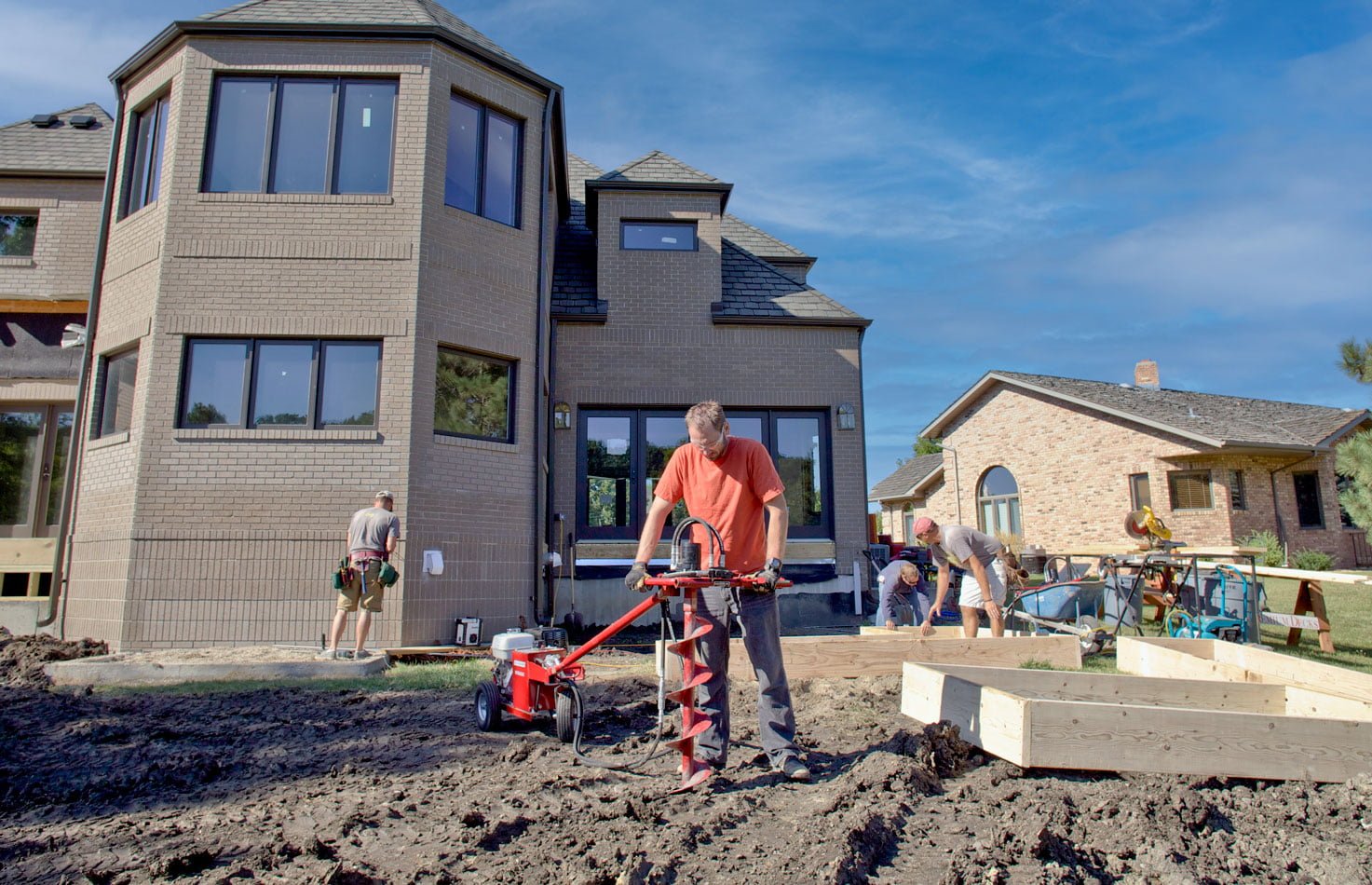
Modern residential lots have small yards, narrow gates and limited access, which makes confined access earth drills essential for landscaping tasks. Whether you’re using these drills for fence post installation, tree planting or deck footings, choosing the best earth drill for a tight space makes the work safer and more efficient. So, how do you select drilling equipment for backyard access? Here are a few considerations to keep in mind:
1. Choosing the Right Size Earth Drill for Limited Access
Backyard gates are often between 36 and 48 inches wide, which makes it difficult to transport a skid steer or other compact tool carrier into these areas. Landscaping features can further reduce maneuverability in a yard. Often, machines that are too large to fit through a fence gate are also too heavy or too disruptive to the lawn or turf to make for a good drilling option.
Our Mechanical and Hydraulic Earth Drills can take on everything from soft soil to dense, rocky soil applications for drilling small- to medium-diameter holes between 1.5 to 16 inches. They weigh between 145 and 325 pounds with a width up to 33 inches, able to fit through standard fence gates. The Mechanical drill’s high auger speeds — up to 360 rpm — make for fast project completion while the lightweight design maximizes mobility in tight spaces with narrow gates.
2. Considering Safety Features for Tight-Space Earth Drilling
Safety features are critical to protect operators and improve productivity. Compact earth drills often rely on two operators to protect against kickback when the auger hits an obstacle, but this means that contractors or homeowners need two people to dig. This might not be ideal when the earth drill needs to get into a tight spot where multiple people might not fit.
One way to get around needing two operators is to make sure that the drill you’re considering has a torque tube. A torque tube directs kickback away from the operator, along the torque bar to the engine carriage. This design makes the drill safe and efficient for one-man drilling, reducing the space needed to drill next to a wall, in small yards or near existing structures.
3. Picking an Earth Drill for Different Soil Conditions
In narrow spaces, you might not have a lot of options in terms of the makeup of the soil where you’re digging. Contractors and homeowners might default to larger equipment in these instances, assuming that bigger equipment will cut through harder soils more easily. However, that isn’t always true.
Roughly 80% of projects can be completed with standard augers and standard points and blades, which work best in loamy, sandy soil. If there’s rocky soil where you’re drilling a posthole, it’s best to have a variety of options for the drill’s augers, points and blades. Augers, points and blades help match your earth drill to the conditions to maximize drilling efficiency in different soil types.
Tougher ground requires more specialized equipment. Use a carbide blade with a rugged auger for clay and hard rock formations instead of a skid-steer mounted auger attachment. Heavy-duty augers also feature larger flighting and tougher cutting blades with optional heavy-duty points and blades for harder ground.
Small yards and narrow access points make larger compact equipment impractical for drilling projects. Look for a portable earth drill that operates safely and efficiently in tight spaces, allowing precision that can’t be matched with skid steer or compact loader attachments. To learn more about our limited access earth drilling solutions for backyard projects like fence post installation, deck footings or landscaping, contact our experts today.
Quick Specs to look for in Earth Drills for Tight Spaces:
- Minimum gate clearance: 36 inches
- Maximum digging depth: 36 inches
- Auger diameter: 1.5-16 inches