Last updated Mar 27, 2026
Hydraulic Earth Drill Maintenance
It’s easy to neglect little things we should do each day, like eating breakfast, drinking enough water or flossing our teeth. We tell ourselves it’s not a big deal if we forget, but doing so affects our overall health in the long run.
The same goes for hydraulic earth drill maintenance. Since hydraulic drills withstand extra tough conditions and have few moving parts, we assume we don’t have to worry about checking them often. But misuse and irregular maintenance significantly impact the health of a drill.
Neglecting hydraulic drill maintenance can lead to declined performance or, worse yet, a complete breakdown during hole digging projects. Keep your drill healthy by paying attention to these hydraulic wear parts.
1. Hydraulic Fluid & Motor Oil
Before starting the engine, check that the power pack’s hydraulic oil reservoir is filled to the top of the sight gauge. Keep the hydraulic oil and return line filter clean at all times, and change both after the first 15 hours of operation. From then on, change the filter and oil every three months or after 100 hours of operation.
Along with the hydraulic fluid, check the engine crankcase oil levels and ensure that all nuts, fasteners and fittings stay tight. A loose engine or tank mounting bolts can cause premature wear.
2. Quick Disconnects & Hoses
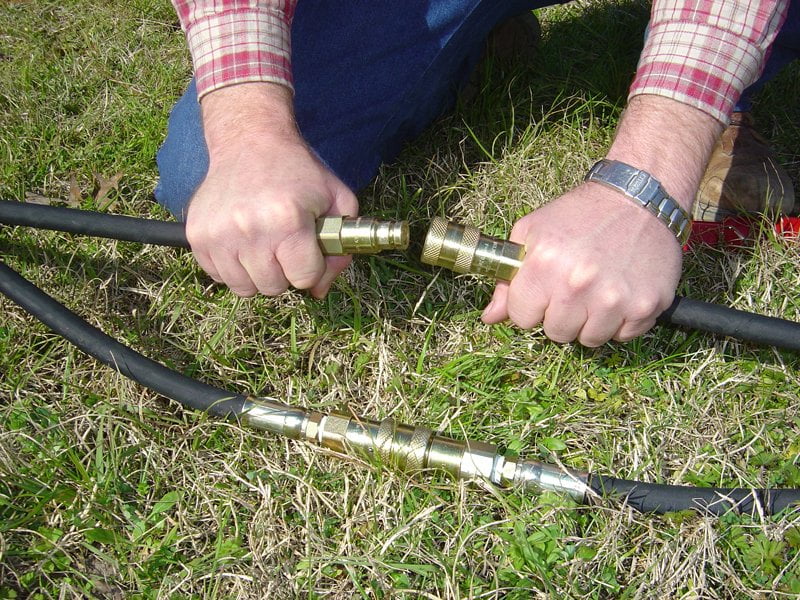
Regularly clean the hoses’ quick disconnects before and after drilling. After a job is complete and you begin to take the drill apart, attach the disconnect from the drill’s hydraulic output hose onto its input coupler and vice versa on its power pack. This prevents dirt from getting inside the hydraulic system. If one of the quick disconnect fittings begins leaking, the quick disconnect coupling needs replacement.
Examine hydraulic drill hoses and pipes for leaks, cracks and abrasions and replace if necessary. Keep hose connections tight and fitted for optimum performance.
3. Other Wear Parts
- Replaceable Points and Blades on the Auger: Your earth auger’s points and blades need replacement if dull or worn. Always check before and after drilling each hole. If a worn blade isn’t replaced it might damage the auger flighting, which requires either a costly repair or a total auger replacement.
- Torque Tube: Inspect the tube for cracks before each use. Check that the spring-button attachment is securely snapped into place and replace the attachment if it is bent or broken.
- Control Valve: If operators encounter any hydraulic oil leakage, they should shut down the power source and relieve the hydraulic pressure by moving the control valve in both directions, which opens the hydraulic oil flow. Tighten the screw-on fittings on the end of each hose. Replace the related hose assembly if the leakage continues. If the control valve leaks around the spool shaft, replace the seal kit.
When putting drills away for the off-season, remember that proper storage contributes to overall maintenance. Drain the gas or put recommended additive in the fuel, whichever the manufacturer suggests. Always store the drills in a dry place because the steel components will eventually rust if left outside or in places with a lot of moisture, such as propped up outside against a building.
Regular maintenance prolongs the life of your digging equipment, boosting your productivity and efficiency. If you have a maintenance issue or question, make sure to reference Little Beaver’s online parts and operators’ manual, online service videos or contact us for in-house technical consultation.

Last updated Mar 27, 2026
Add Horsepower Behind Hydraulic Tools
The newly redesigned PS-20HC is the latest addition to Little Beaver’s line of hydraulic power sources. With a powerful Honda GX630 engine and a 10-gallon-per-minute hydraulic flow, it can easily power any hydraulic hand tool or equipment that requires hydraulic power for extended periods of time.
“The PS-20HC is the next generation of the PS-20HA hydraulic power source,” explained Little Beaver President Joe Haynes. “The most recent improvements to the unit were increasing the size of the hydraulic oil reservoir and fuel tank to a 5-gallon capacity for extended use.”
The power source’s 5-gallon hydraulic oil reservoir is twice the size of the previous model and uses a larger radiator and electric fan to reduce the heat generated from the 10-gallon-per-minute flow. This allows it to deliver robust power for Little Beaver’s Big Beaver auger drill rig or one of its Lone Star Drill rigs. Because of its versatility, it can also power a wide range of other hydraulic tools, such as jackhammers, chain saws, and post drivers.
A Honda GX630 engine with electric starter powers the PS20HC for dependable, easy starts. Little Beaver also offers the PS-20HC with a Kohler diesel engine for remote sites where diesel is more available than gasoline.
The PS-20HC is an environmentally sound hydraulic power source for markets with strict, clean air regulations. Non-permeable fuel tanks and fuel lines, a vapor recovery system and a special, ratcheting gas cap prevent harmful volatile organic compounds found in gasoline and diesel fuel from escaping the PS-20HC. Little Beaver also offers an optional charcoal recovery canister that captures additional particulates and meets California EPA emission standards.
The PS-20HC comes mounted to a three-wheeled steel carriage for easy maneuverability to, from and around the job site.
Last updated Mar 27, 2026
Selecting the Best Earth Drill & Accessories for Your Project
 An earth drill is an excellent tool for a variety of projects, from installing fence to planting trees and creating irrigation systems. It can also be used for anchoring mobile homes, large tents and utility poles. Notice the diversity of work that can be accomplished using this singular tool. While these projects may appear similar because they all demand a hole, drill beneath the surface and you’ll find that soil composition makes a big difference in what power option and style of auger is best for the task at hand.
Taking a few minutes to understand the different drill types and components will win you enhanced productivity on the jobsite. You can choose between two types of engine-driven, one-man earth drills: hydraulic or mechanical. They might look alike, but each post hole auger was designed for a distinct purpose.
Hydraulic Power
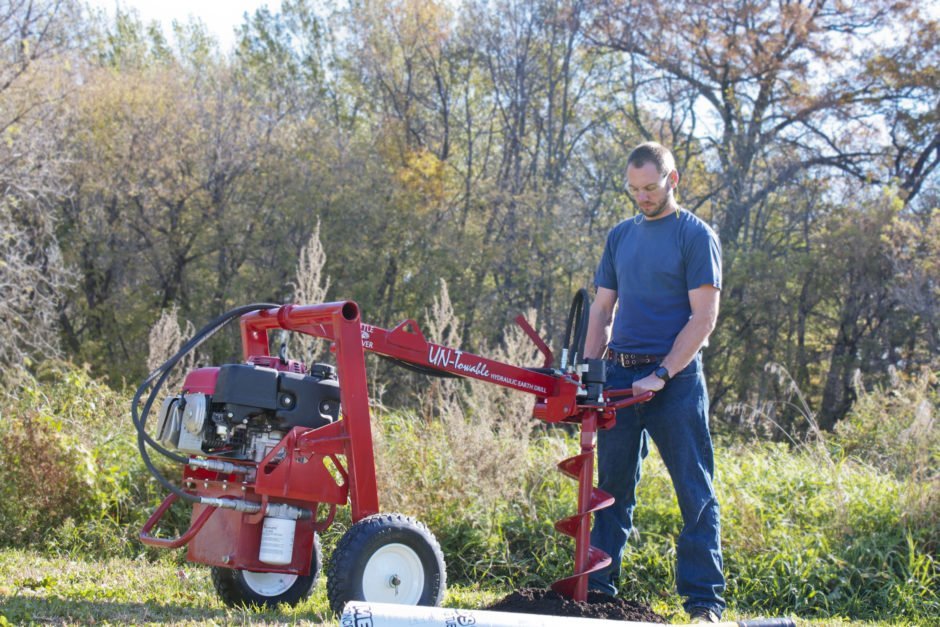
Hydraulic earth drills are your best option for the toughest layers of sediment, including frozen ground and rocky soil. They have approximately double the torque of mechanical models. Little Beaver’s hydraulic machines have rugged bodies and powerful torque to punch through stony sediment. Precise, low-speed operation coupled with high torque allow the operator to drill clean and accurate holes, even in the most difficult applications.
Hydraulic drills are ideal for single-hole projects such as installing signs and planting trees because they’re compatible with large-diameter augers, some as wide as 16 inches. The torque makes them perfect for quickly anchoring mobile homes. Additionally, the drills typically have a reverse setting so you can safely remove the earth auger if it becomes lodged under a rock or tree root.
Mechanical Speed
Mechanical earth drills are more compact and lightweight, but still pack a powerful punch. When your project needs speed and precision, this drill is up to the task. This transmission-powered unit performs high-speed auger rotations at 360 rpm so you can quickly drill several, narrow holes for a wide range of applications, such as fence post fitting and deck footings, as well as planting flowers. Paired with an effective horizontal boring kit, it can also drill under driveways or sidewalks for a variety of landscaping needs.
Superior Safety
Most drills with 360 rpm speed require two operators to stabilize the unit. Both our mechanical and hydraulic drills have a torque tube that transfers torque from the auger to the power source, drastically reducing the risk of encountering dangerous kickback. This one-of-a-kind invention makes one-man drilling not just possible, but also safe and efficient. The torque tube reduces physical strength on the operator and enables safe operation regardless of drilling experience.
Auger Selection
Once you’ve chosen your drill type, it’s time to pick the auger that matches the required hole diameter. Augers can be as narrow as 1-1/2 inches for smaller jobs like soil sampling, and wide as 16 inches for large applications, such as foundation repair. Little Beaver’s snap-on augers can make changing out the auger or attaching extensions a quick and easy process. They feature a spring-loaded snap button, which secures the auger to the drill head. This reduces set-up and take-down times. This connection method simplifies the process of adding extensions, which enables the operator to dig a few feet deeper without needing to purchase a longer auger.
Contractors and landscapers should also look for augers that have swappable points and blades. Standard blades are ideal for loamy soils or areas with few rocks because of the cold-rolled steel and hard surfacing on the edges. Use Little Beaver’s carbide blades for drilling in denser soils. They equip the earth auger to chop hard clay and frozen ground into pieces. Swap out the blades using an adjustable wrench. These modifications enable an auger to drill more than 100 holes in prime soil conditions before needing service.
An Essential Tool
Whether you are a seasoned construction pro or a do-it-yourself weekend warrior, the one-man auger is a timesaving, indispensable companion in your arsenal of tools. Outfitted with Little Beaver’s reliable drill designs, you can tackle drilling projects in a fraction of the time you would with a shovel.
