Hit a Home Run in Fence Construction

Hit a Home Run in Fence Construction

4 Tips for Building the Perfect Fence
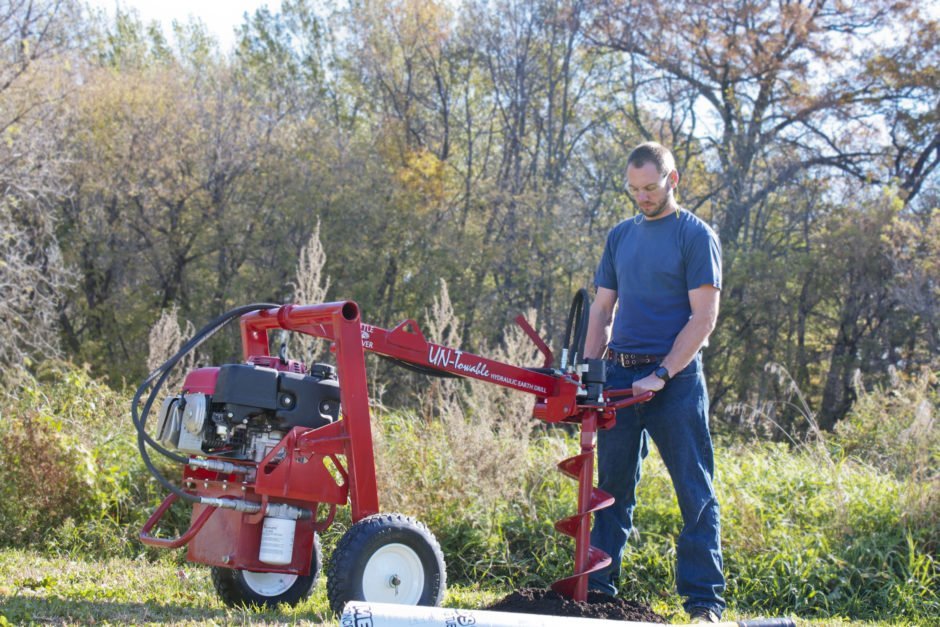
Mechanical earth auger for fencepost installationYou’ve become an expert in landscaping throughout the region. From planting trees and flowers to installing decks and curb edging, you’ve completed many projects for satisfied customers. Now it’s time to step up your game and add fence installation to your services.

Let these fence-building tips lead you to success.

1. Get Answers.
Start like you would with any project, by working with the homeowner or business owner to establish the size, scope and specifics of the project. To do this, always have a set of questions ready that will get to the heart of the project. What kind of fence does the customer want? What will the layout be? Where do they want gates? How high should you build it?

Check with city building codes and, if applicable, neighborhood association rules, so that the fence specs meet all of the codes. If the city assessor has not surveyed the property recently, you’ll want to coordinate that to ensure the fence is built in the proper location and, depending on the area, you may need a permit. Call 811 a few days prior to digging to have utility companies mark underground utility lines, gas pipes and sprinkler systems.

2. Get Your Tools.
Selecting the right hole digging equipment will help you finish on time and on budget. If it’s a small project, you might use a hand-held posthole digger. If you’re doing more than a dozen holes, though, it will be slow work to muscle each hole clean. To tackle bigger or multiple projects, you’ll want the speed and ease-of-use that comes with an earth drill. A Little Beaver mechanical one-man or hydraulic drill can bore each hole in less than a minute with little effort. It’s equally important is to make sure you select the correct auger, points and blades for the soil type you’re working in. This will help you dig holes faster with less pain.

3. Get it Straight.
You can’t get a straight fence without evenly spaced holes and firmly set posts. Set the spacing by marking and digging all corner and gate post holes first. Run a string from corner to corner and then measure the post spacing along the line.

For chain link fences, space postholes no more than 10 feet apart. For wooden fences, posts usually stand 6 to 8 feet apart. If installing posts in soft soils or windy areas, use a hand posthole digger to flare out the hole, creating a bell shape for more stability. The hole diameter needed is based on the size of the post used. For instance, a 4-by-4 post requires an 8-inch diameter hole. This can be easily achieved with Little Beaver’s snap-on augers that range in diameter from 1.5 to 16 inches. Holes are typically 24 inches deep, but you’ll need to ensure the depth is 3 inches below the frost line to prevent posts from cracking in the frozen ground. In some parts of the northern U.S. and into Canada, that means going as deep as 4 feet. If you’re in windy areas or sandy soil, you may want to dig your posts even deeper.

4. Get the Concrete.
Position the posts so that they are the correct height and plumb; even the slightest lean can create a slanted and potentially unstable fence. Next, shovel concrete into each hole. Avoid touching the post, which could cause it to move. Choosing concrete rather than a dirt and gravel mix will give the fence better stability. Allow 24 hours for the concrete to set, and then attach the chain link fabric or wood framing and face boards. With both types of fences, complete the gates last.

Once you’re done, it’s an ideal time to touch base with your customer on fence maintenance and landscaping recommendations. A job well done here can translate to more work, whether from this customer or referrals, as you continue to expand your landscaping services.

Feel free to contact us for further fence-building tips; or general questions on our full line of augers, one-man earth drills and two-man earth drills. We’re always happy to provide the tools and assistance you need.

Drilling Deeper

Drilling Deeper

Selecting the Best Earth Drill & Accessories for Your Project

Mechanical vs Hydraulic Earth Drill BenefitsAn earth drill is an excellent tool for a variety of projects, from installing fence to planting trees and creating irrigation systems. It can also be used for anchoring mobile homes, large tents and utility poles. Notice the diversity of work that can be accomplished using this singular tool. While these projects may appear similar because they all demand a hole, drill beneath the surface and you’ll find that soil composition makes a big difference in what power option and style of auger is best for the task at hand.
Taking a few minutes to understand the different drill types and components will win you enhanced productivity on the jobsite. You can choose between two types of engine-driven, one-man earth drills: hydraulic or mechanical. They might look alike, but each post hole auger was designed for a distinct purpose.

Hydraulic Power

Hydraulic earth drills are your best option for the toughest layers of sediment, including frozen ground and rocky soil. They have approximately double the torque of mechanical models. Little Beaver’s hydraulic machines have rugged bodies and powerful torque to punch through stony sediment. Precise, low-speed operation coupled with high torque allow the operator to drill clean and accurate holes, even in the most difficult applications.

Hydraulic drills are ideal for single-hole projects such as installing signs and planting trees because they’re compatible with large-diameter augers, some as wide as 16 inches. The torque makes them perfect for quickly anchoring mobile homes. Additionally, the drills typically have a reverse setting so you can safely remove the earth auger if it becomes lodged under a rock or tree root.

Mechanical Speed

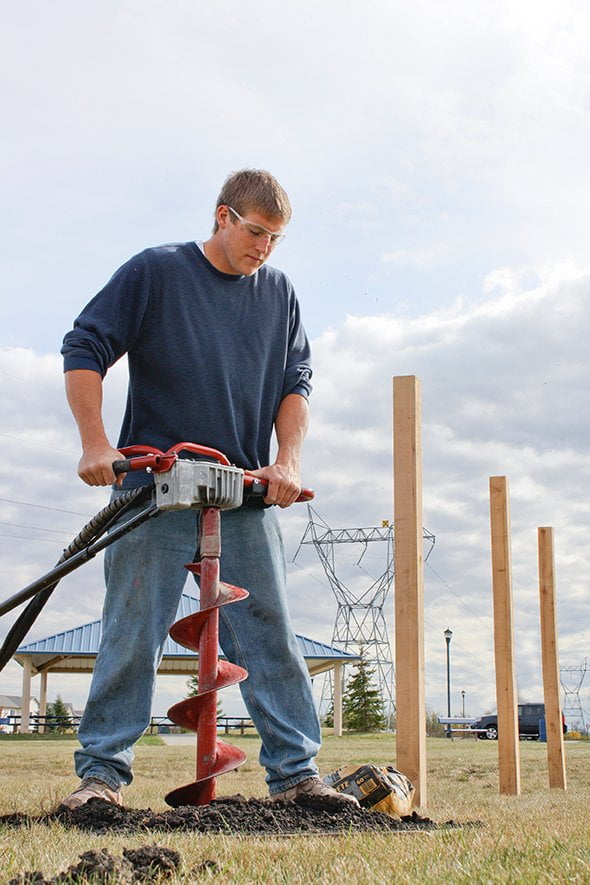
Mechanical earth drills are more compact and lightweight, but still pack a powerful punch. When your project needs speed and precision, this drill is up to the task. This transmission-powered unit performs high-speed auger rotations at 360 rpm so you can quickly drill several, narrow holes for a wide range of applications, such as fence post fitting and deck footings, as well as planting flowers. Paired with an effective horizontal boring kit, it can also drill under driveways or sidewalks for a variety of landscaping needs.

Superior Safety

Most drills with 360 rpm speed require two operators to stabilize the unit. Both our mechanical and hydraulic drills have a torque tube that transfers torque from the auger to the power source, drastically reducing the risk of encountering dangerous kickback. This one-of-a-kind invention makes one-man drilling not just possible, but also safe and efficient. The torque tube reduces physical strength on the operator and enables safe operation regardless of drilling experience.

Auger Selection

Once you’ve chosen your drill type, it’s time to pick the auger that matches the required hole diameter. Augers can be as narrow as 1-1/2 inches for smaller jobs like soil sampling, and wide as 16 inches for large applications, such as foundation repair. Little Beaver’s snap-on augers can make changing out the auger or attaching extensions a quick and easy process. They feature a spring-loaded snap button, which secures the auger to the drill head. This reduces set-up and take-down times. This connection method simplifies the process of adding extensions, which enables the operator to dig a few feet deeper without needing to purchase a longer auger.

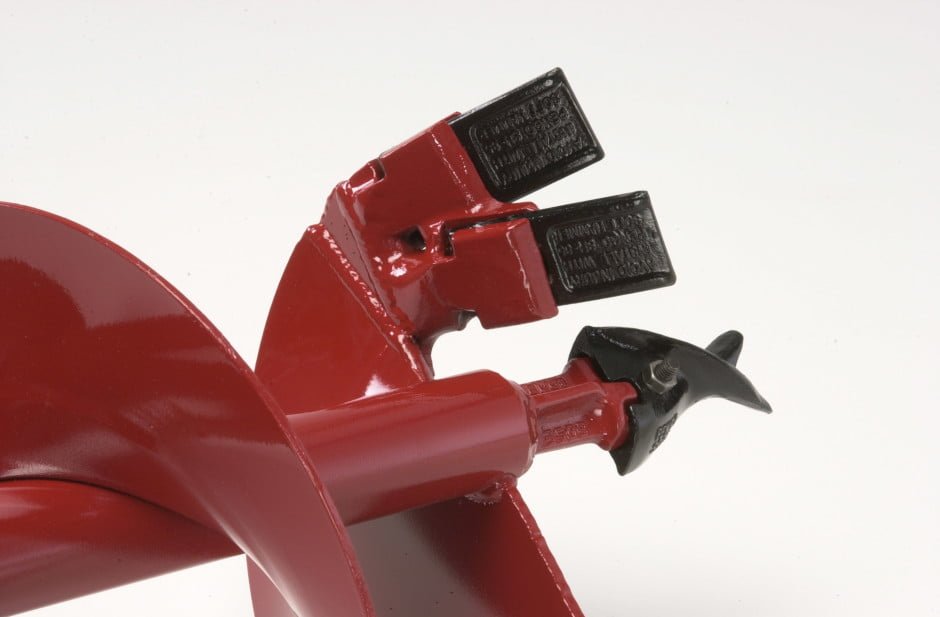
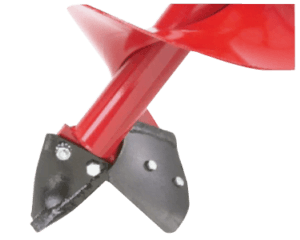
Little Beaver PointsContractors and landscapers should also look for augers that have swappable points and blades. Standard blades are ideal for loamy soils or areas with few rocks because of the cold-rolled steel and hard surfacing on the edges. Use Little Beaver’s carbide blades for drilling in denser soils. They equip the earth auger to chop hard clay and frozen ground into pieces. Swap out the blades using an adjustable wrench. These modifications enable an auger to drill more than 100 holes in prime soil conditions before needing service.

An Essential Tool

Whether you are a seasoned construction pro or a do-it-yourself weekend warrior, the one-man auger is a timesaving, indispensable companion in your arsenal of tools. Outfitted with Little Beaver’s reliable drill designs, you can tackle drilling projects in a fraction of the time you would with a shovel.

Spend More Time Drilling, Less on Repairs

Spend More Time Drilling, Less on Repairs

How Our Auger Blades and Points Slash Maintenance Costs and Reduce Downtime

Heavy-Duty Auger Points and Blades

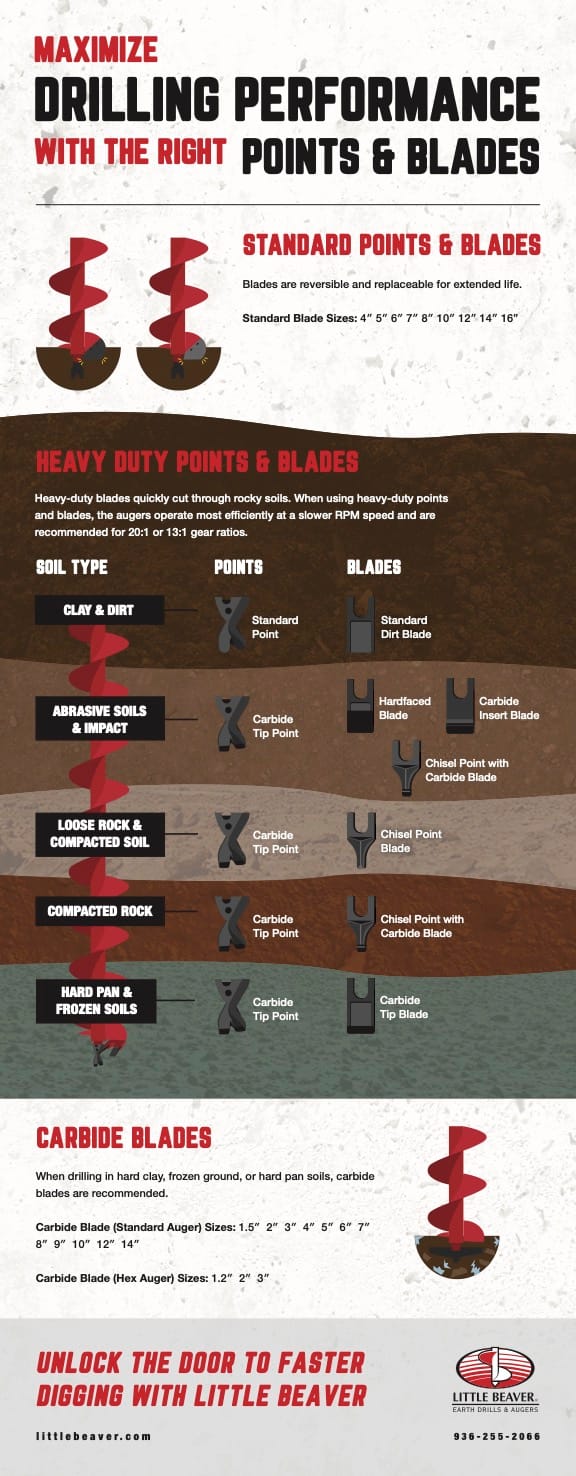
High-maintenance machines can be a real headache when you want to maximize uptime. That’s why it’s important to have the right equipment well-suited for whatever task and sediment you’re working with. Matching the ideal point and blade to the specific soil type minimizes premature wear, maintenance costs and labor. Unlike manufacturers that only make one auger blade, Little Beaver produces a variety of augers, points and blades. The components are designed for optimizing your ability to cut through a variety of soil profiles.

Our replaceable blades and points mount on our regular and heavy-duty snap-on augers with ease. They protect the earth augers from wear while drilling in material that ranges from loamy soil to compacted rock. Since drilling a bunch of holes in the ground can be time consuming, here are a few ways we make it easier.

Little Beaver manufactures a variety of augers, points, and blades designed to optimize their ability to cut through specific soil profiles.

Little Beaver manufactures a variety of augers, points, and blades designed to optimize their ability to cut through specific soil profiles.

Ease of Use, Low Maintenance

“We want to keep our customers drilling without interruption,” said Little Beaver President Joe Haynes. “We designed our blades and points for simple replacement on our signature snap-on augers so operators can focus on digging and quickly change out parts when they become dull or worn.”

The standard blades and points come with every Little Beaver snap-on auger. They fasten to the auger with two steel bolts, which operators can easily remove with a crescent wrench. Made with abrasive-resistant steel and hard surfacing on their edges, these components are ideally suited for loamy soils with few rocks.

Equipped with Little Beaver blades and points, an auger can drill more than 100 holes in prime soil conditions before you need to service it. Our parts are easy to use and require low levels of maintenance — benefits that remain unmatched across the industry.

Rugged and Versatile

Smaller-diameter augers — 1-1/2-inch, 2-inch and 3-inch — use standard points that simply screw or pin on. For dense soils, we offer Little Beaver exclusive carbide blades that fasten to the bottom of snap-on augers. They cut hard clay and frozen ground into smaller pieces.

“Many operators keep both the standard and carbide blades on hand if they will be transitioning between multiple jobsites. It’s quick and easy to make the swap,” Haynes said. “Having both sets enables digging in a diversity of soil conditions. It also prolongs the lifespan of blades and augers.”

To take on the most challenging soil formations, Little Beaver’s lineup of heavy-duty snap-on augers use specially engineered, heavy-duty steel and carbide blades and tips for abrasive soils and compacted rock. They lock into larger-diameter augers with rubber locks, forming a tight wedge fit to cut through tough sediment without coming loose.

Let’s Make It Happen

Little Beaver’s commitment to innovation and versatility for customers makes its augers, blades and points a reliable choice for professionals in the field, enhancing drilling efficiency while reducing overall operational costs. We would love to collaborate on maximizing the value of your earth drilling operation. To learn more, give us a call at 936-327-3121 or fill out our online contact form and a member of our team will be in touch with you soon.

Little Beaver Earth Drills Points and Blades Information