Last updated Mar 27, 2026
Soil sampling in confined spaces is a critical step in construction, urban agriculture and foundation repair projects. However, not every project has the space to accommodate a big soil sampling rig. For projects in confined spaces — such as a basement, backyard or on a sensitive historical site — finding equipment that can dig deep enough while fitting into these tight areas can be a challenge.
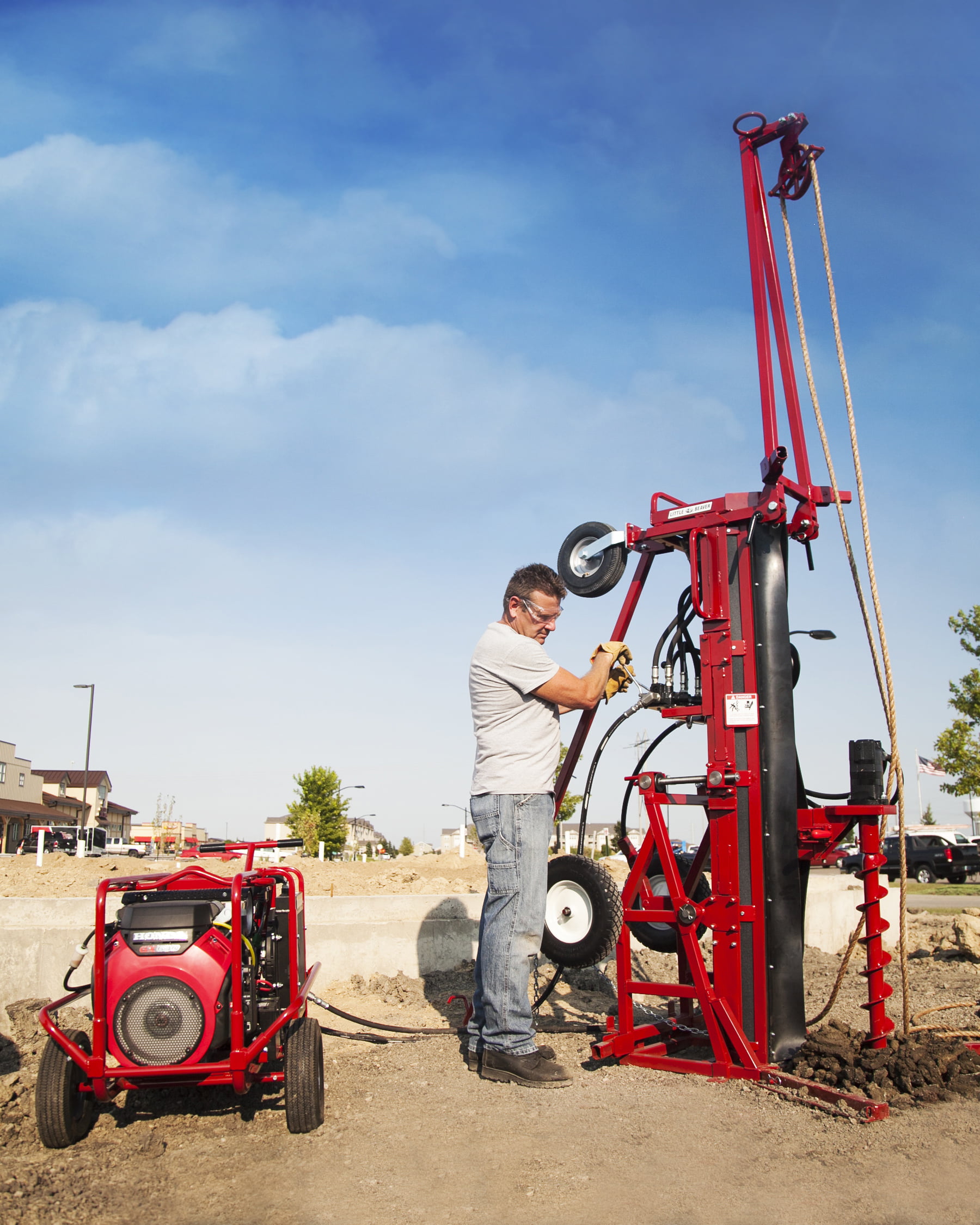
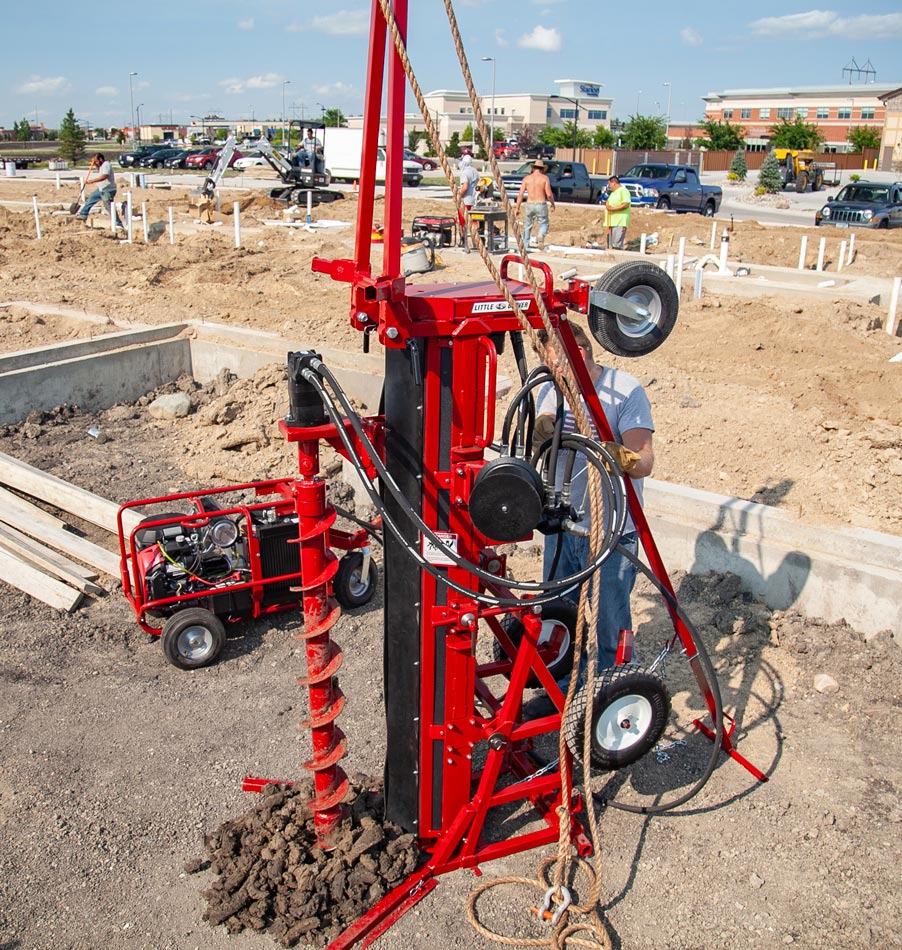
A Big Beaver Earth Drill makes soil sampling easier in restricted access locations by offering a compact, maneuverable design that is precise to control and safe to run with only one operator.
Maneuverability in Tight Spaces
The right equipment can make or break a soil sampling project with space limitations. Handheld samplers might seem like a good solution for tight spaces, but they don’t always reach deep enough to procure the samples you need. Alternatives, such as automated options, can be costly while truck- or trailer-mounted rigs can’t fit into small work areas.
Another challenge is that these projects often take place in urban developments, near or beside houses and fences. Contractors need portable, gentle equipment that doesn’t damage turf, sod or landscaping with its tires or heavy weight.
The Big Beaver is only 26 inches wide and 80 inches tall, making it compact enough to fit into an elevator and through a doorway or gate and short enough to stand upright under the eaves of a house or other areas with low overhead clearance. The auger tilt angles up to 15 degrees to get as close to a structure as possible. At 675 pounds, the drill is light enough to minimize damage to lawns and landscaping.
Depth Precision
Each soil sampling project requires the soil to be collected at a different depth. Some projects, like soil sampling for a home garden, only require sampling to about 4 inches deep. This can be completed with a simple hand sampler, but many projects require deeper digging. Construction and foundation repair projects can vary between 3 feet deep up to 100 feet deep.
- Utility: 3-10 feet deep
- Foundation Repair: 3-30 feet deep
- Construction: 10-100 feet deep
These depths vary based on soil type, what project is being carried out and local regulations. Some local agencies require certain soil sampling depths to be tested before construction takes place. The Big Beaver can dig to 30 feet with a 16-inch auger and up to 100 feet with a 6-inch auger, depending on the soil conditions.
Safe Drilling
The Big Beaver is a standalone auger drill rig that allows for safe one-man operation. It features a torque tube that redirects dangerous kickback away from the operator to the power source. The torque tube connects to the drill at three different points on the frame, which allows for nine different torque tube positions. This lets operators position the drill in the most convenient way possible.
In basements or other enclosed spaces, operators should place the engine carriage outside with an extension hose running to the drill. Removing the engine from the room protects against dangerous fumes while working in close quarters. When doing so, operators should anchor the drill to the floor with screw or concrete anchors. This protects the operator from counterrotation by preventing the drill from jerking or tipping when encountering an underground obstacle.
Soil Sampling with the Big Beaver
Restricted spaces shouldn’t hold up your soil sampling project. When automated, trailer- and truck-mounted options just don’t work, a Big Beaver earth drill makes projects easier, safer and more precise. Check out our Big Beaver Earth Drill and soil sampling options to learn more.
Last updated Mar 27, 2026
Portable Equipment Options
Portable soil sampling equipment is gaining traction. Soil sampling contractors will often supplement their fleet of large truck-mounted or tracked drills with compact units that are far gentler to turf and can work in confined spaces. For others who want the convenience of owning soil sampling equipment, such as site prep or design-build contractors, portable soil sampling tools are an economical foot in the door.
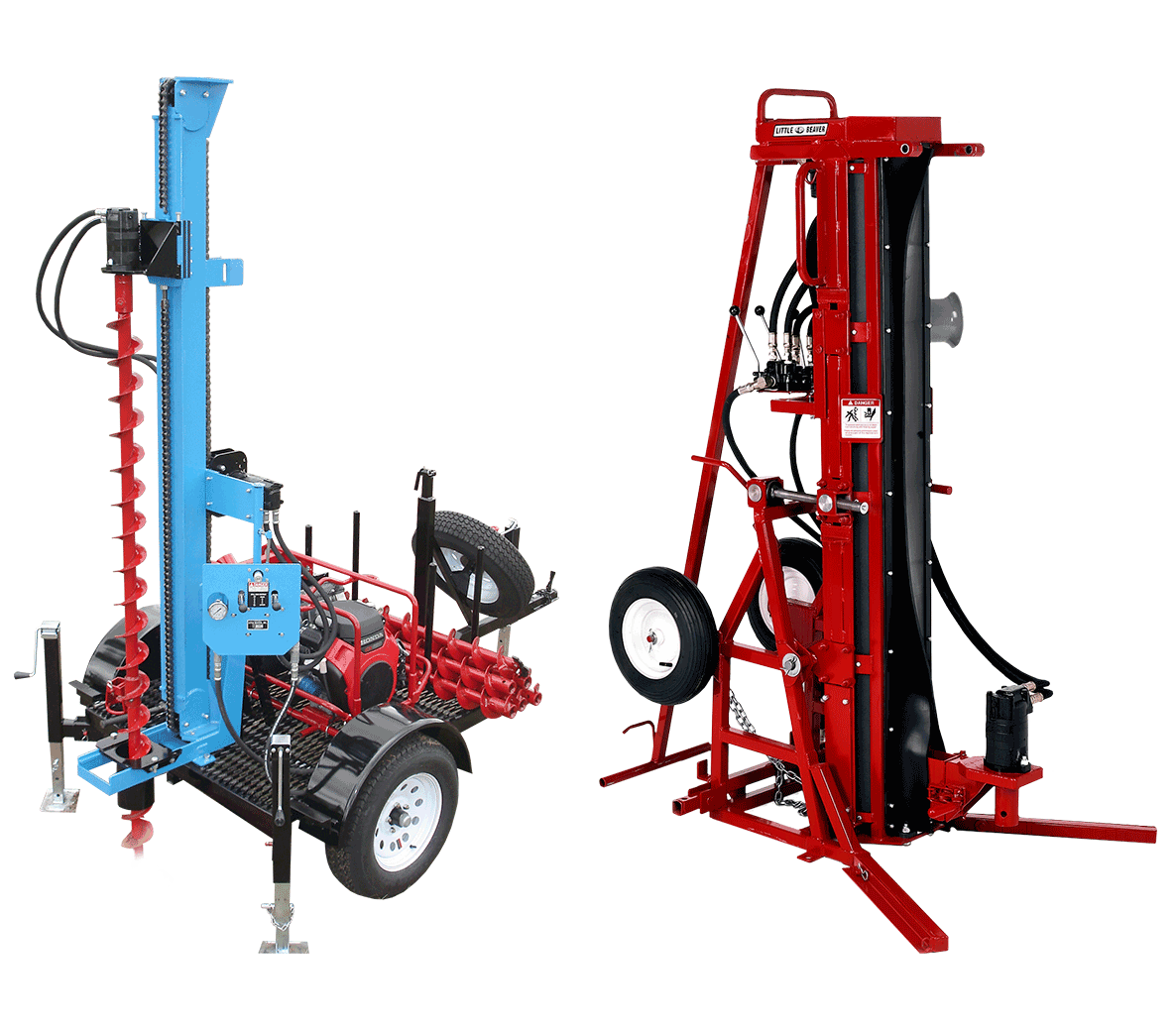
We offer four models of soil sampling drills. Though each has its strengths, these rigs share several characteristics:
• They are highly portable.
• They can drill as deep as 100 feet.
• They work well in various types of soil, including sand, clay and soft rock formations.
• They have comprehensive soil sampling capabilities, allowing users to conduct Standard Penetration tests, geotechnical testing, split spoon sampling and hollow stem sampling.
To decide which drill model is right for you, consider how you plan to use it and the demands of your worksites.
You’ve Got: A small tow vehicle and a smaller budget.
If you are on a tight budget, look for a unit that is lightweight and can be towed using an ATV or small pickup. Many of these trailer-mounted models are cost effective yet offer the oomph needed to drill as deep as 100 feet, even through rock formations.
Recommended Drill: LST1G+
You’ve Got: Hard soils and hard deadlines.
For maintaining highs speeds even when powering through harder soil, choose a drill with ample torque and pull/push back force as well as a healthy rpm. Rotary speeds around 100 rpm will be enough to make short work of larger jobs, ensuring you can finish projects on time and on budget. Lastly, a drill with a heavy-built frame will stand up to the demanding work ahead of it.
Recommended Drill: LST1G+HD
You’ve Got: A need for SPT and plenty of towing capacity.
With more and more states and cities requiring automatic hammers for Standard Penetration Testing, you will need a drill that gives you consistent SPT results. Regulations aside, if you plan to conduct a lot of SPT, you will want a drill with an automatic hammer to reduce worker fatigue, creating a safer and more productive jobsite. Because an automatic hammer configuration will add weight to the rig, be sure you have a vehicle with ample towing capacity to handle it.
Recommended Drill: LST1G+HDA
You’ve Got: Tight spaces and big plans.
If you know you’ll be working in limited access locations, such as backyards or even residential basements, you will need an extremely mobile drill. Transport dimensions of 26 inches wide and 80 inches tall are compact enough for the drill to squeeze into an elevator to reach a basement and easily fit through gates and doorways. And if you want the option to expand into other applications, such as foundation repair, you will want a rig able to dig close to structures and light enough to prevent lawn damage.
Recommended Drill: Big Beaver
For more information about choosing the right soil sampling equipment, talk to a Lone Star expert at 1-800-227-7515 or reach out through email.
Last updated Mar 27, 2026
Quick, Convenient and Cost-Effective Soil Sampling Equipment
Our mission as the leading manufacturer of torque-free, one-man drills is to provide equipment that’s cost-effective and convenient to use, such as our soil sampling tools that give you control over when and where you sample. We engineered these tools to prevent contamination and ensure the highest levels of accuracy. Read to learn more about what our drills offer your operation.
Balancing Strength and Maneuverability
Combining our Big Beaver Auger Drill Rig with the optional SSK-1 kit is ideal for standard penetration testing as it easily lifts the 140-pound safety hammer to drive the sampler into the soil. The SSK-1 kit includes an additional hydraulic valve, cathead and tower kit with stabilizer legs that extend out in front of the drill to keep it steady. It can be used with our AWJ drilling rod and 24-inch split spoon sampler, which allows you to obtain a core soil sample for geotechnical or environmental testing.
At 26 inches wide and 80 inches high, the Big Beaver is portable and is designed for use in confined spaces. But don’t be fooled by the name. The two-wheeled unit is still compact enough for one person to easily maneuver through gates, doorways and even basements. The Big Beaver has a swing-away drive head that allows easy access to the borehole when inserting the AWJ rod and split spoon sampler.
The Big Beaver’s hydraulic power is fueled with a 20-horsepower gasoline engine, and can be used with other hydraulic tools like concrete saws, breakers, tampers and chainsaws. It features our torque tube that enhances safety by directing dangerous kickback away from the operator when the auger hits tough soil, rocks and other obstructions. The design also enables an operator to maintain a safe distance from the power source.
Easy Extensions and Precise Positioning
We also offer standard sampling tools for environmental soil sampling. These samplers are available in 1.5-inch and 2-inch diameters, for use with our hydraulic earth drills. Our Hydraulic Earth Drills are available with 11- or 20-horsepower gasoline engines, as well as diesel options, which makes them ideal for drilling in rocky or heavy clay soils. They also feature a three-wheeled chassis for enhanced stability and maneuverability.
For drilling to shallow depths of 15-30 feet, we have a tripod kit for use with the 11-horsepower, PS11 Hydraulic Earth Drill. The kit is easy to set up and allows operators to add and remove auger extensions with little effort. It also stabilizes the drill during operation for precise positioning and controlled drilling — two essentials for getting the job done efficiently and without any blunders. Such depths may be relatively shallow, but 30 feet is deep enough that drilling at an improper angle can cause headaches. So, it’s hard to overstate the advantages of a tripod that firmly steadies the process.
Auger Options
For sandy or loose soils, we offer hollow-stem augers so the driller can collect samples without risking contamination from surrounding dirt. Offered in 6- and 8-inch diameters, the augers have a 2¾-inch or 3¾-inch internal diameter and work great for monitoring wells. The center rod and plug can be removed to create a clear path for inserting the soil sampler while keeping adjacent soil from falling into the testing area.
Continuing a Tradition of Excellence
We have proudly manufactured high-quality, safe and effective drilling equipment for three generations. With a complete line of easy-to-operate equipment, along with a full cast of versatile accessories, including augers, extensions, points and blades, we successfully serve your needs whether you’re a professional contractor or rental center. We also offer trailer-, truck-, and track-mounted soil sampling rigs through our Lone Star Drills brand. To learn more about our soil sampling tools, earth drills and other equipment, give us a call today at 936-327-3121 or fill out our online contact form and one of our team members will reach out to you.