Last updated Mar 27, 2026
Mechanical Earth Drill Maintenance
When using an earth drill to install fence posts, deck footings or landscaping, a well-maintained machine is key to ensuring productivity. Mechanical earth drills have many moving parts and some simple maintenance goes a long way toward keeping you up and running with every drill component in top-notch shape.
Completing routine, preventative maintenance allows you to achieve the most uptime for your hole-digging projects and keeps your drills moving along.
Preventative maintenance starts with checking wear parts.
1. Transmission/Gearbox
Check the transmission oil level every 30 days or after 40 hours of operation.
Problem Indicators: Inspect the transmission or gearbox immediately if it begins making unusual sounds or experiences extreme heat. An operator can detect extreme heat if they smell burnt oil or feels warmer than usual. Unusual sounds and heat are the first problem indicators, and if ignored, the motor might start to lock up when in use. This could be a sign of low oil. If you spot oil leaks along the top of the transmission, around the bottom seal and the lower output shaft, check the fluid in the gearbox and change the oil if necessary.
2. Flexible Drive Shaft
Examine, clean and grease the flexible drive shaft after every 50 hours of operation.
Problem Indicators: Replace the shaft housing if there are deep cuts or torn wire braids in the rubber casing. Replace the core of the flex shaft if you find broken wires, sharp kinks or if the motor runs and the gearbox will not turn. Doing so ensures the shaft will function properly. Also remember to use caution when applying grease — excessive grease can gum up in the flex shaft, reducing the shaft’s life. Not enough grease can dry out the cable, which will break easily or generate enough heat to burn through the outer housing. If you hit too many hard objects, like rocks, it will result in helixing of the flex shaft. This damage can cause it to lock up or diminish performance.
3. Clutch
Check the clutch every 30 days or when you lubricate the flexible drive shaft. Clean the shoes and drums and replace if any clutch padding is missing.
Problem Indicators: The clutch slipping or the drill jerking while it’s running is a problem indicator. A clutch will continue to run even if no more clutch padding exists, which causes a weaker performance when engaging the auger and accelerating the engine from idle to full speed. If the auger spins at idle or overheats, this might also indicate that the clutch springs need replacing. Also check the bearing in the clutch drum after replacing the flex shaft. Make sure it’s loose and turns easily. A clutch drum that does not turn easily will lock up and cause the clutch to slip.
4. Other Wear Parts
- Throttle: If the speed and power of the drills seem a little off and the throttle lever doesn’t pull smoothly, try adjusting the throttle wire to minimize slack.
- Torque Tube: Before each use, inspect the torque tube for cracks. And always check that the spring-button attachment is securely snapped into place and replace it if it’s bent or broken.
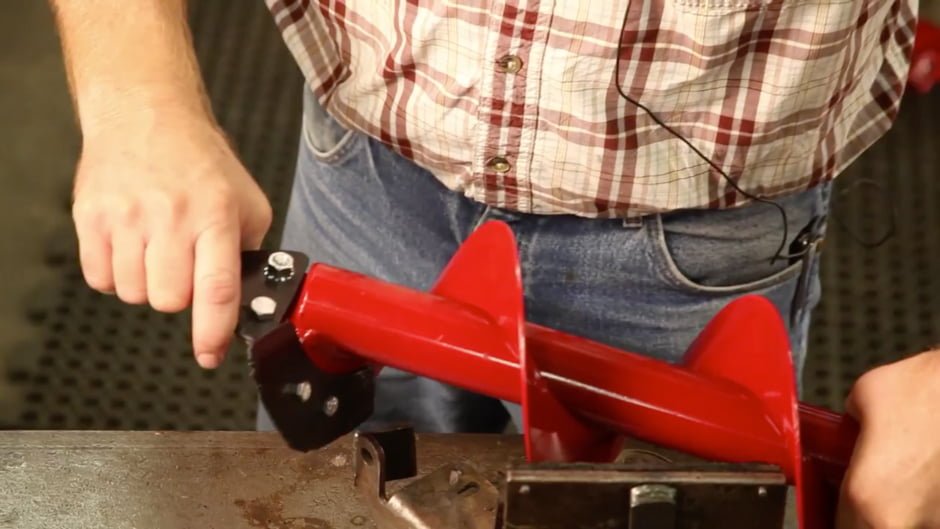
- Replaceable Points and Blades on the Auger: Look at the replaceable points and blades before and after drilling to ensure they’re not excessively worn and replace if necessary. Using worn blades eventually wears down the auger and may cause a tear or damage to the flighting, resulting in a costly repair or the replacement of the entire auger. Failure to replace blades or keep them sharp causes the drill point to taper, and become cone shaped and as a result, it won’t drill effectively.
- Engine Maintenance: Depending on the model, mechanical drills differ in the engine that powers them. However a good rule of thumb is to check the engine oil level daily and change every 50 hours or annually. Change air filters every 25 hours or annually. Air filters protect the internal engine parts from dirt. Dirt can cause wear to the intake system and contaminate of the oil, which reduces the engine capability. In dusty conditions, clean and maintain the engine wear parts more often. Refer to the engine manufacturer’s instructions for proper procedures and recommended fuel and oil.
For safety reasons never operate drills with damaged or missing parts. If you have a maintenance issue or question, check out Little Beaver’s online parts and operators’ manual and online service videos or contact us for in-house technical consultation.
Last updated Mar 27, 2026
4 Tips for Building the Perfect Fence
You’ve become an expert in landscaping throughout the region. From planting trees and flowers to installing decks and curb edging, you’ve completed many projects for satisfied customers. Now it’s time to step up your game and add fence installation to your services.
Let these fence-building tips lead you to success.
1. Get Answers.
Start like you would with any project, by working with the homeowner or business owner to establish the size, scope and specifics of the project. To do this, always have a set of questions ready that will get to the heart of the project. What kind of fence does the customer want? What will the layout be? Where do they want gates? How high should you build it?
Check with city building codes and, if applicable, neighborhood association rules, so that the fence specs meet all of the codes. If the city assessor has not surveyed the property recently, you’ll want to coordinate that to ensure the fence is built in the proper location and, depending on the area, you may need a permit. Call 811 a few days prior to digging to have utility companies mark underground utility lines, gas pipes and sprinkler systems.
2. Get Your Tools.
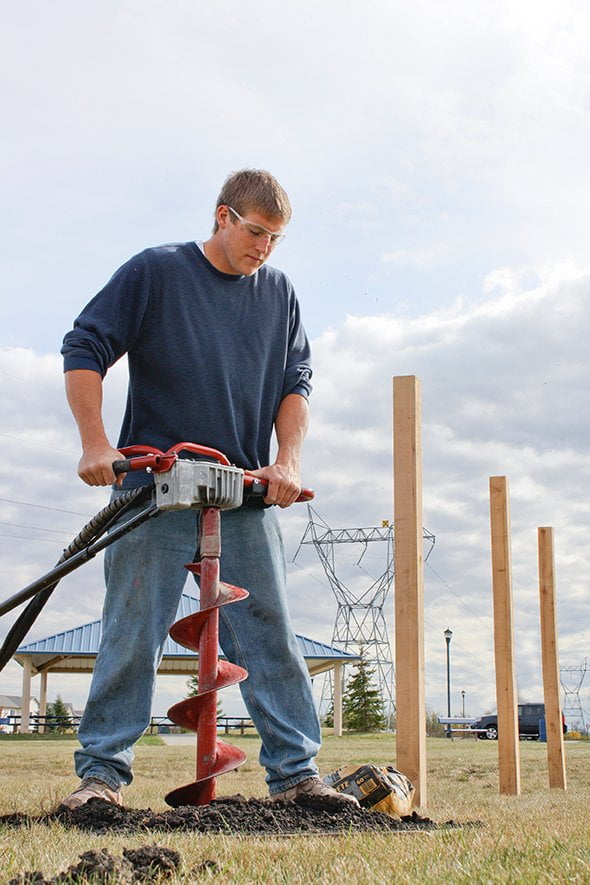
Selecting the right hole digging equipment will help you finish on time and on budget. If it’s a small project, you might use a hand-held posthole digger. If you’re doing more than a dozen holes, though, it will be slow work to muscle each hole clean. To tackle bigger or multiple projects, you’ll want the speed and ease-of-use that comes with an earth drill. A Little Beaver mechanical one-man or hydraulic drill can bore each hole in less than a minute with little effort. It’s equally important is to make sure you select the correct auger, points and blades for the soil type you’re working in. This will help you dig holes faster with less pain.
3. Get it Straight.
You can’t get a straight fence without evenly spaced holes and firmly set posts. Set the spacing by marking and digging all corner and gate post holes first. Run a string from corner to corner and then measure the post spacing along the line.
For chain link fences, space postholes no more than 10 feet apart. For wooden fences, posts usually stand 6 to 8 feet apart. If installing posts in soft soils or windy areas, use a hand posthole digger to flare out the hole, creating a bell shape for more stability. The hole diameter needed is based on the size of the post used. For instance, a 4-by-4 post requires an 8-inch diameter hole. This can be easily achieved with Little Beaver’s snap-on augers that range in diameter from 1.5 to 16 inches. Holes are typically 24 inches deep, but you’ll need to ensure the depth is 3 inches below the frost line to prevent posts from cracking in the frozen ground. In some parts of the northern U.S. and into Canada, that means going as deep as 4 feet. If you’re in windy areas or sandy soil, you may want to dig your posts even deeper.
4. Get the Concrete.
Position the posts so that they are the correct height and plumb; even the slightest lean can create a slanted and potentially unstable fence. Next, shovel concrete into each hole. Avoid touching the post, which could cause it to move. Choosing concrete rather than a dirt and gravel mix will give the fence better stability. Allow 24 hours for the concrete to set, and then attach the chain link fabric or wood framing and face boards. With both types of fences, complete the gates last.
Once you’re done, it’s an ideal time to touch base with your customer on fence maintenance and landscaping recommendations. A job well done here can translate to more work, whether from this customer or referrals, as you continue to expand your landscaping services.
Feel free to contact us for further fence-building tips; or general questions on our full line of augers, one-man earth drills and two-man earth drills. We’re always happy to provide the tools and assistance you need.

Last updated Mar 27, 2026
Hydraulic Earth Drills Offer Speed and Precision
When strong winds blow, a mobile home needs additional protection. No matter the geography, anchoring a mobile home typically involves installing tie-downs and anchors to secure it to solid ground. It’s essential to complete the anchoring process soon after positioning the mobile home on the lot.
Traditional methods to anchor a mobile home involve a pipe thread machine powered by a generator. This system is expensive, as well as slow and cumbersome, resulting in several hours of work to anchor a single home. Hydraulic earth drills simplify the process and eliminate back-breaking labor. Little Beaver hydraulic earth drills offer the mobile home anchoring process two substantial benefits, speed and precision. By pairing the drill’s earth auger with Little Beaver’s anchor adapters, you’ll install each anchor in less than a couple of minutes and complete an entire home in as little as 90 minutes. And Little Beaver’s hydraulic drills feature a reverse position that makes removing anchors as easy as installing them.
Five easy steps to anchoring a mobile home:
- Rent or buy a Little Beaver earth drill from a local rental center or dealer and gather the essential equipment, including Little Beaver’s mobile home anchoring kit, anchors and steel straps.
- Determine where and how many anchors you’ll need to install around the home’s perimeter. Depending on state laws and regulations, you’ll need to install anchors at 2- to 5-foot intervals, so the number of required anchors can vary. Unlike other models on the market, no predrilling is required.
- Snap Little Beaver’s anchor adapter on to the drill’s high-torque handle and fasten the 3-foot anchor with an adjustable wrench or ratchet.
- Start drilling the anchor into the first location until only a few inches of it is above ground. Continue this process around the mobile home.
- Fasten steel straps around the mobile home’s frame and attach them to each anchor with adjustable bolts.
It’s best to check anchors and straps periodically after installation, as well as before a major storm, to ensure each is secure and free from rust or cracks. Keeping fertilizer away from the anchors and straps prevents rust.
For more information about tying down a mobile home and the equipment needed, contact us. For questions on anchoring, contact an experienced installer or building inspector.
Last updated Mar 27, 2026
Hydraulic Earth Drill Maintenance
It’s easy to neglect little things we should do each day, like eating breakfast, drinking enough water or flossing our teeth. We tell ourselves it’s not a big deal if we forget, but doing so affects our overall health in the long run.
The same goes for hydraulic earth drill maintenance. Since hydraulic drills withstand extra tough conditions and have few moving parts, we assume we don’t have to worry about checking them often. But misuse and irregular maintenance significantly impact the health of a drill.
Neglecting hydraulic drill maintenance can lead to declined performance or, worse yet, a complete breakdown during hole digging projects. Keep your drill healthy by paying attention to these hydraulic wear parts.
1. Hydraulic Fluid & Motor Oil
Before starting the engine, check that the power pack’s hydraulic oil reservoir is filled to the top of the sight gauge. Keep the hydraulic oil and return line filter clean at all times, and change both after the first 15 hours of operation. From then on, change the filter and oil every three months or after 100 hours of operation.
Along with the hydraulic fluid, check the engine crankcase oil levels and ensure that all nuts, fasteners and fittings stay tight. A loose engine or tank mounting bolts can cause premature wear.
2. Quick Disconnects & Hoses
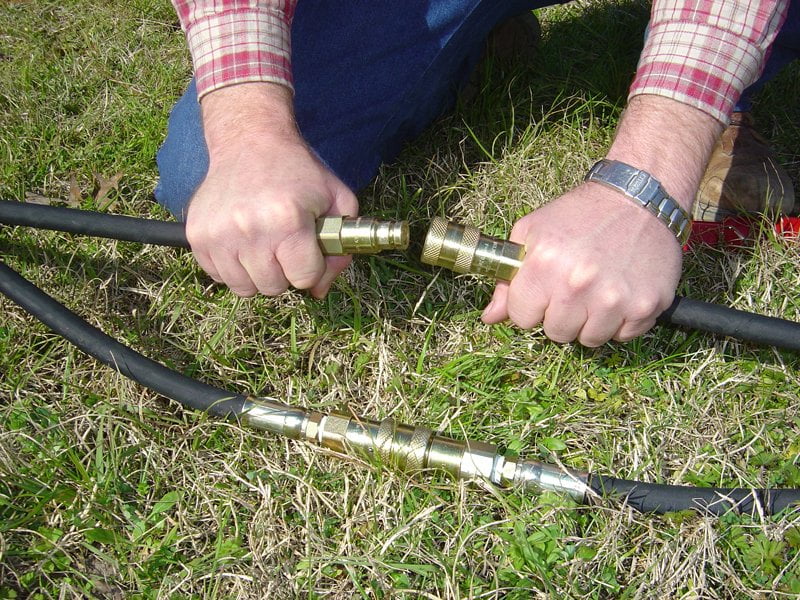
Regularly clean the hoses’ quick disconnects before and after drilling. After a job is complete and you begin to take the drill apart, attach the disconnect from the drill’s hydraulic output hose onto its input coupler and vice versa on its power pack. This prevents dirt from getting inside the hydraulic system. If one of the quick disconnect fittings begins leaking, the quick disconnect coupling needs replacement.
Examine hydraulic drill hoses and pipes for leaks, cracks and abrasions and replace if necessary. Keep hose connections tight and fitted for optimum performance.
3. Other Wear Parts
- Replaceable Points and Blades on the Auger: Your earth auger’s points and blades need replacement if dull or worn. Always check before and after drilling each hole. If a worn blade isn’t replaced it might damage the auger flighting, which requires either a costly repair or a total auger replacement.
- Torque Tube: Inspect the tube for cracks before each use. Check that the spring-button attachment is securely snapped into place and replace the attachment if it is bent or broken.
- Control Valve: If operators encounter any hydraulic oil leakage, they should shut down the power source and relieve the hydraulic pressure by moving the control valve in both directions, which opens the hydraulic oil flow. Tighten the screw-on fittings on the end of each hose. Replace the related hose assembly if the leakage continues. If the control valve leaks around the spool shaft, replace the seal kit.
When putting drills away for the off-season, remember that proper storage contributes to overall maintenance. Drain the gas or put recommended additive in the fuel, whichever the manufacturer suggests. Always store the drills in a dry place because the steel components will eventually rust if left outside or in places with a lot of moisture, such as propped up outside against a building.
Regular maintenance prolongs the life of your digging equipment, boosting your productivity and efficiency. If you have a maintenance issue or question, make sure to reference Little Beaver’s online parts and operators’ manual, online service videos or contact us for in-house technical consultation.

Last updated Mar 27, 2026
Add Horsepower Behind Hydraulic Tools
The newly redesigned PS-20HC is the latest addition to Little Beaver’s line of hydraulic power sources. With a powerful Honda GX630 engine and a 10-gallon-per-minute hydraulic flow, it can easily power any hydraulic hand tool or equipment that requires hydraulic power for extended periods of time.
“The PS-20HC is the next generation of the PS-20HA hydraulic power source,” explained Little Beaver President Joe Haynes. “The most recent improvements to the unit were increasing the size of the hydraulic oil reservoir and fuel tank to a 5-gallon capacity for extended use.”
The power source’s 5-gallon hydraulic oil reservoir is twice the size of the previous model and uses a larger radiator and electric fan to reduce the heat generated from the 10-gallon-per-minute flow. This allows it to deliver robust power for Little Beaver’s Big Beaver auger drill rig or one of its Lone Star Drill rigs. Because of its versatility, it can also power a wide range of other hydraulic tools, such as jackhammers, chain saws, and post drivers.
A Honda GX630 engine with electric starter powers the PS20HC for dependable, easy starts. Little Beaver also offers the PS-20HC with a Kohler diesel engine for remote sites where diesel is more available than gasoline.
The PS-20HC is an environmentally sound hydraulic power source for markets with strict, clean air regulations. Non-permeable fuel tanks and fuel lines, a vapor recovery system and a special, ratcheting gas cap prevent harmful volatile organic compounds found in gasoline and diesel fuel from escaping the PS-20HC. Little Beaver also offers an optional charcoal recovery canister that captures additional particulates and meets California EPA emission standards.
The PS-20HC comes mounted to a three-wheeled steel carriage for easy maneuverability to, from and around the job site.
