
Last updated Mar 27, 2026
By Ryan Tollefsen Realtor,
Keller Williams Realty Alaska Group
When homeowners make a plan for a curb appeal upgrade, there is often a lot of discussion about what is necessary and which ideas are practical. Having the proper tools for any home improvement project is crucial for its success. Since curb appeal is so important for home value, homeowners want to be sure they can do it right the first time. Here are a few tips (and tools) that ensure greater accuracy and make the whole project easier.
Why Every Home Needs Curb Appeal
Although some homeowners do not think about curb appeal until they want to sell a home, many choose to maintain or improve their exterior systematically over time.
The view of the home in relation to other homes in the neighborhood is what makes up what is called, “curb appeal.” Why does one home look better than others on the block? Curb appeal is a vital part of the home’s overall value. Even if homeowners have just moved in and do not plan to sell for many years, preserving home value should always be on their minds. They may need it if they want to refinance their mortgages, get a home equity loan for other improvements, or sell the home unexpectedly.
Here are two high-impact improvements to consider when looking to boost a home’s curb appeal:
Highlighting With Landscape & Outdoor Recreational Lighting
There are many things that homeowners can do for their properties to accentuate the wonderful aspects that are already there. Lighting is a good example. Landscape lighting is an excellent way to make the perfect look for the property at night. Lighting can also be used for outdoor recreational lighting to entertain guests or simply enjoy a change of scenery at night.
Of course, installing lighting outside often involves digging the electrical lines for the lighting. Doing this by hand, homeowners could spend hours putting strain on their backs digging down 6 to 12 inches so that they can install their sidewalk lighting. Alternatively, they could use a Little Beaver Kwik-Trench mini-trencher to save their backs and a great deal of time. The Kwik-Trench allows homeowners to:
- set the perfect depth for the trench
- move at a rapid pace
- reach spots that a larger trencher cannot access
Installing landscape lighting should not have to be a task that takes days or weeks. With this tool, the job will be done much more quickly.
Building the Ideal Perimeter Fence
Curb appeal concerns more than just the home and garden. That is why homeowners often look for ways to create attractive fencing or barriers surrounding the edges of the property. When homeowners need to install trees, vegetation or fences, they usually need to drill or dig using an auger. The best augers make it simple for people to dig a hole through any type of soil, of any width and a variety of depths. Snap-on augers offer exactly what homeowners need, with a design that is practical for almost anyone to use.
Planning Into the Future
Homeowners may be surprised with just how many projects they can accomplish with the right tools. Homeowners who used a trencher to install lighting might decide to call on it again to build a new garden, or change up their landscaping design. An auger with removable blades is a useful implement to keep on hand for landscape maintenance and other digging projects.
Building curb appeal for a home is less a single task than it is a state of mind. Taking advantage of tools that simplify the work allows people to ensure their homes look great every year without wasting time or effort. When homeowners use the right tools it creates the opportunity to do much more, both inside and outside the home.
Last updated Mar 27, 2026
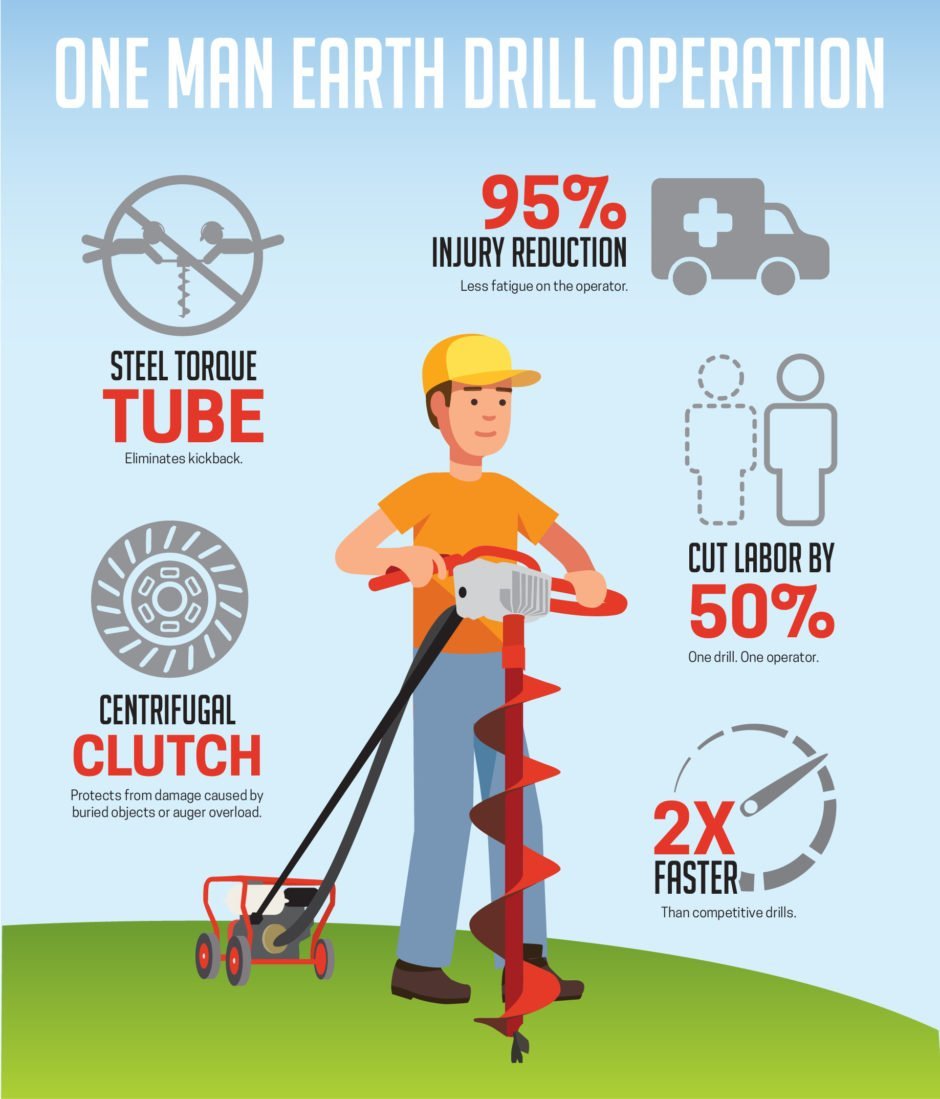
Little Beaver Earth Drills are designed to be safely operated by just one person. What does that mean for your business? More efficient labor utilization. Faster job completion. Fewer injuries. More profit on every job.
Check out the infographic below to learn how Little Beaver Earth Drills can double your productivity and maximize jobsite safety.
Last updated Mar 27, 2026
Portable Equipment Options
Portable soil sampling equipment is gaining traction. Soil sampling contractors will often supplement their fleet of large truck-mounted or tracked drills with compact units that are far gentler to turf and can work in confined spaces. For others who want the convenience of owning soil sampling equipment, such as site prep or design-build contractors, portable soil sampling tools are an economical foot in the door.
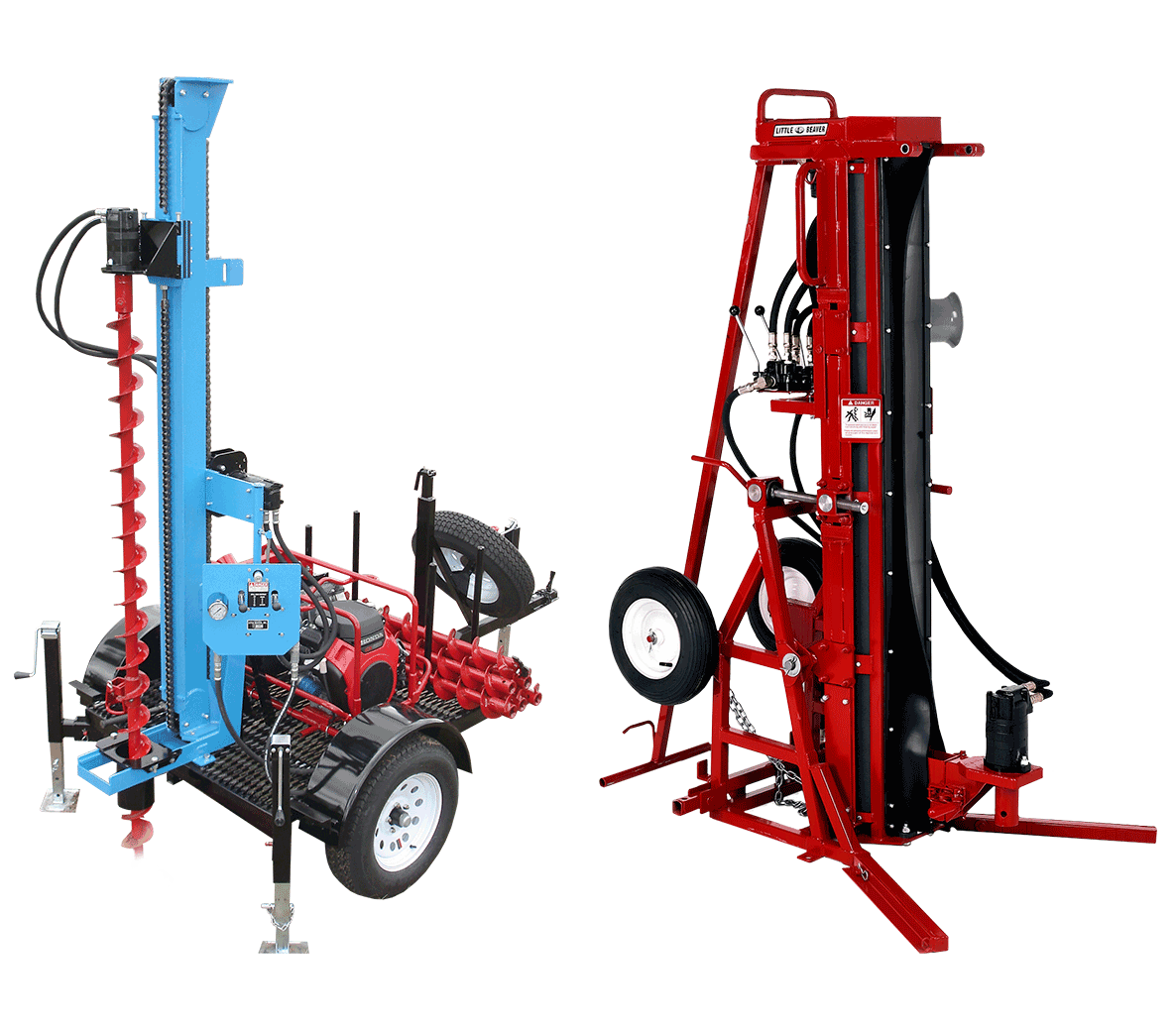
We offer four models of soil sampling drills. Though each has its strengths, these rigs share several characteristics:
• They are highly portable.
• They can drill as deep as 100 feet.
• They work well in various types of soil, including sand, clay and soft rock formations.
• They have comprehensive soil sampling capabilities, allowing users to conduct Standard Penetration tests, geotechnical testing, split spoon sampling and hollow stem sampling.
To decide which drill model is right for you, consider how you plan to use it and the demands of your worksites.
You’ve Got: A small tow vehicle and a smaller budget.
If you are on a tight budget, look for a unit that is lightweight and can be towed using an ATV or small pickup. Many of these trailer-mounted models are cost effective yet offer the oomph needed to drill as deep as 100 feet, even through rock formations.
Recommended Drill: LST1G+
You’ve Got: Hard soils and hard deadlines.
For maintaining highs speeds even when powering through harder soil, choose a drill with ample torque and pull/push back force as well as a healthy rpm. Rotary speeds around 100 rpm will be enough to make short work of larger jobs, ensuring you can finish projects on time and on budget. Lastly, a drill with a heavy-built frame will stand up to the demanding work ahead of it.
Recommended Drill: LST1G+HD
You’ve Got: A need for SPT and plenty of towing capacity.
With more and more states and cities requiring automatic hammers for Standard Penetration Testing, you will need a drill that gives you consistent SPT results. Regulations aside, if you plan to conduct a lot of SPT, you will want a drill with an automatic hammer to reduce worker fatigue, creating a safer and more productive jobsite. Because an automatic hammer configuration will add weight to the rig, be sure you have a vehicle with ample towing capacity to handle it.
Recommended Drill: LST1G+HDA
You’ve Got: Tight spaces and big plans.
If you know you’ll be working in limited access locations, such as backyards or even residential basements, you will need an extremely mobile drill. Transport dimensions of 26 inches wide and 80 inches tall are compact enough for the drill to squeeze into an elevator to reach a basement and easily fit through gates and doorways. And if you want the option to expand into other applications, such as foundation repair, you will want a rig able to dig close to structures and light enough to prevent lawn damage.
Recommended Drill: Big Beaver
For more information about choosing the right soil sampling equipment, talk to a Lone Star expert at 1-800-227-7515 or reach out through email.

Last updated Mar 27, 2026
One-of-a-Kind Feature Improves Operator Safety
In the mid-1970s, Van Cox set out to solve one of earth drilling’s most punishing problems — auger torque. Cox, an engineer for Little Beaver, soon completed a design and secured a patent for what is now known as the torque tube. The one-of-a-kind invention protects operators from the harmful effects of a drill’s torque by transferring kickback from the auger to the power source.
More than 40 years later, deck builders, fence contractors, landscapers and rental customers continue to enjoy torque-free drilling as well as the labor-saving benefits made possible by safe, one-person drilling.
The invention remains a defining feature on Little Beaver’s of mechanical and hydraulic earth drills, and it continues to make life easier for business owners and drill operators thanks to the many benefits of torque-free drilling.
Less Manpower: By transferring dangerous kickback to the engine carriage as opposed to the handles, one person can safely operate a Little Beaver drill. Most drills without torque protection require two operators for safe use. One-person drilling frees up the second individual to work on other tasks so jobs are completed in less time.
Fewer Strains: Kickback on traditional drills can jar an operator’s body, causing strains and injuries, which lead to time off and worker’s compensation costs. Even minor injuries, ones that don’t result in time away from work, can slow individuals down, decreasing overall production.
Easier Use: Since the torque tube absorbs kickback, operators don’t need to work as hard to control the machine. This significantly reduces fatigue while allowing operators of any age or experience level to easily handle the drill.
If you’re still not convinced of the benefits of Van Cox’s invention, see Little Beaver’s solutions for yourself.
Last updated Mar 27, 2026
Keep Projects Going When Up Against Pavement
From landscape lighting installation to irrigation system maintenance, horizontal boring is highly valuable for keeping projects going when up against pavement. As a result, many landscaping professionals and homeowners find a fast return on investment in horizontal boring equipment. But others fail to realize the benefits due to misconceptions that boring machines are too expensive to rent or purchase or are limited in use.
The applications for boring equipment in landscaping are actually quite diverse. Horizontal boring is highly valuable for every job from landscape lighting line installation to irrigation system maintenance. And whether it’s contractors with their own equipment or rental centers serving landscapers, homeowners and do-it-yourselfers, most already have machines that can pair with boring attachments and accessories, maximizing their fleet efficiency with multi-purpose equipment that can be used every day and on every job.
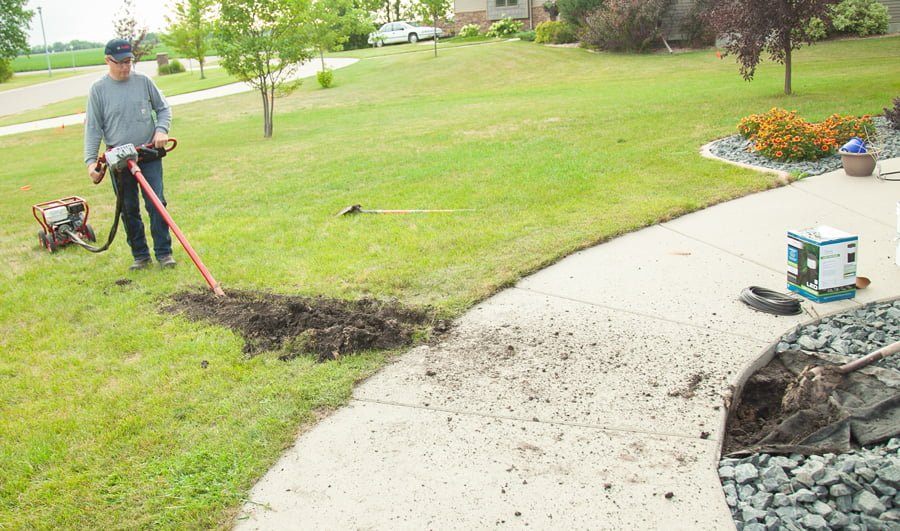
Little Beaver’s horizontal boring kit turns a traditional earth drill into an economical boring solution. Though inherently more limited than a large dedicated boring machine, the Little Beaver Boring system easily completes the jobs landscapers and homeowners tackle.
Solutions for the homeowner
A Little Beaver earth drill fitted with the horizontal boring attachment is a perfect fit for the do-it-yourselfer. The drill and attachment are lightweight and safely operated by just one person. And because it’s a cost-effective alternative to renting larger boring machines, it’s an ideal solution for cost-conscious homeowners.
Homeowners and DIYers use the horizontal boring kit to install and maintain:
- Sprinkler systems
- Water softener lines
- Landscape lighting lines
- Gas lines
Fast ROI for the contractor
Professional landscape contractors are often faced with small- to medium-size projects that do not require the industrial capacity of expensive and heavy directional drilling equipment. While moles are geared for this size of project, they are expensive to buy or rent, complicated to use, and typically require at least two people to operate.
A horizontal boring attachment is an inexpensive way for contractors to efficiently install or maintain:
- Fiber optic lines
- Gas lines
- Irrigation systems
- Conduit pipe
For more ways to improve landscaping efficiency, contact a Little Beaver expert.
