Last updated Mar 27, 2026
Learn how hydraulic drills work and the safest ways to use them
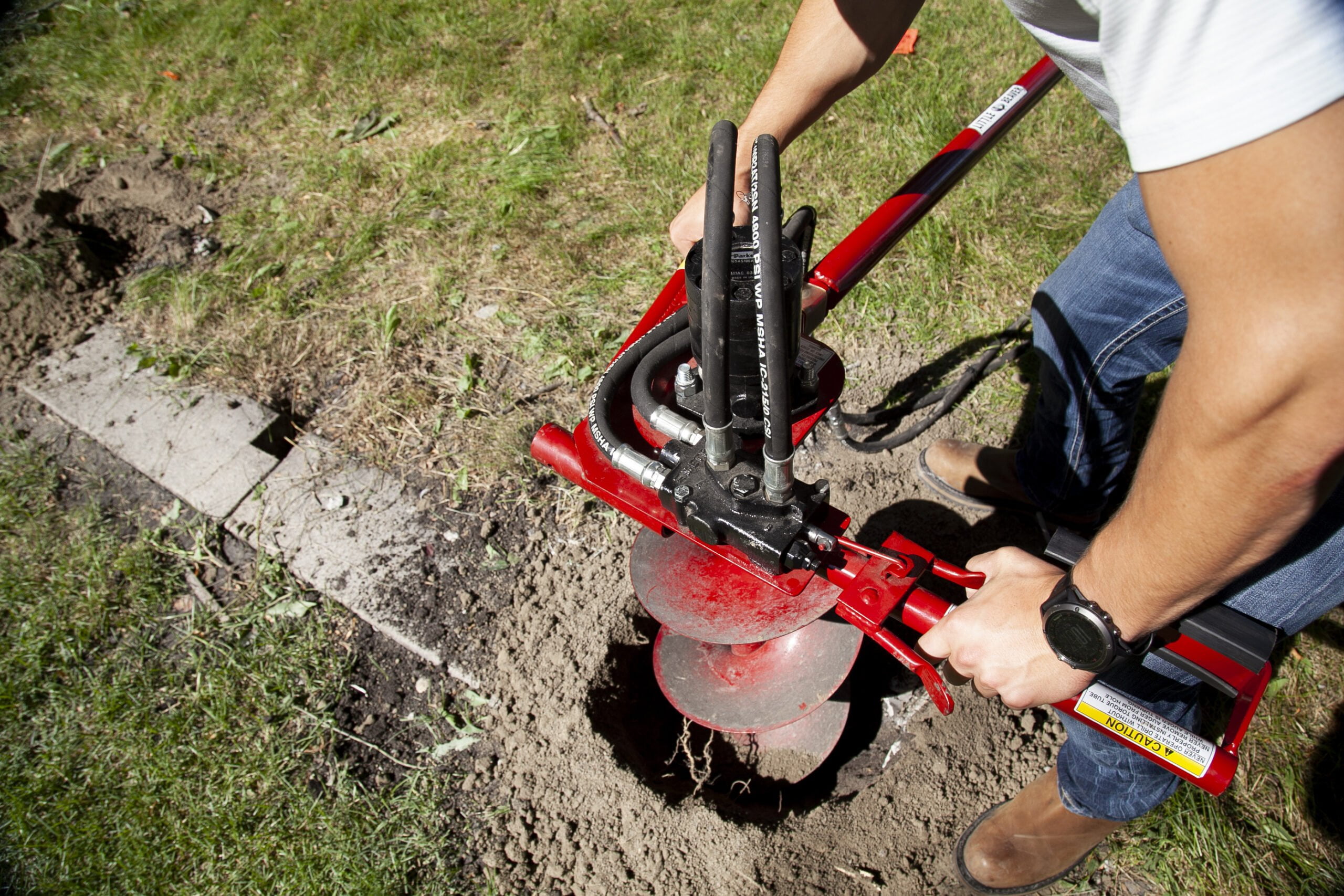
Powerful and reliable, hydraulic earth drills offer a variety of benefits for drilling projects that require breaking through heavy clay or rocky soils. With the additional torque that comes with the hydraulic drill, it’s important to understand the hydraulic power source and how to use a hydraulic earth drill safely.
Why choose hydraulic earth drills?
Perhaps the most obvious question is why choose hydraulic earth drills in the first place? With a durable body and higher torque than mechanical options, a hydraulic drill can bring more power to a drilling project. Hydraulic earth drills can also drive larger diameter augers with extensions available for deeper drilling projects. Equipment longevity is a factor too. Hydraulic earth drills usually require fewer repairs overall, which lowers costs in the long run.
Once you’ve decided the hydraulic drill is right for your project, it’s time to learn more about what a hydraulic drill is and what you need to be aware of to use one safely. Hydraulic pressure is what generates the force behind a hydraulic drill. So, we’ll start there.
What is hydraulic pressure?
The term ‘hydraulic pressure’ refers to the pressure exerted by fluid (whether at rest or moving) on a surface or structure. In the case of hydraulic earth drills, the hydraulic pressure is the force the fluid creates to drive the drill’s auger forward.
The hydraulic system in Little Beaver hydraulic earth drills generates pressure ranging from 2,500 to 2,700 pounds per square inch with operating speeds up to 150 rpm. Little Beaver hydraulic drills have a hydraulic pressure relief valve that reduces the risk of hydraulic power exceeding the maximum pressure the drill is built to withstand. Once the hydraulic pressure reaches a pre-determined point, the pressure relief valve responds and feeds the excess flow from the system back into the tank. To ensure safety, the valve should be set as equal to or less than the rated working pressure of the weakest component in the hydraulic system.
A relief valve doesn’t remove system pressure, it instead works to prevent pressure from rising past the pre-determined level. The valve reacts quickly to protect against damaged equipment, disrupted work and even injury that can come from hydraulic pressure being too high.
How can you increase safety with the hydraulic earth drills?
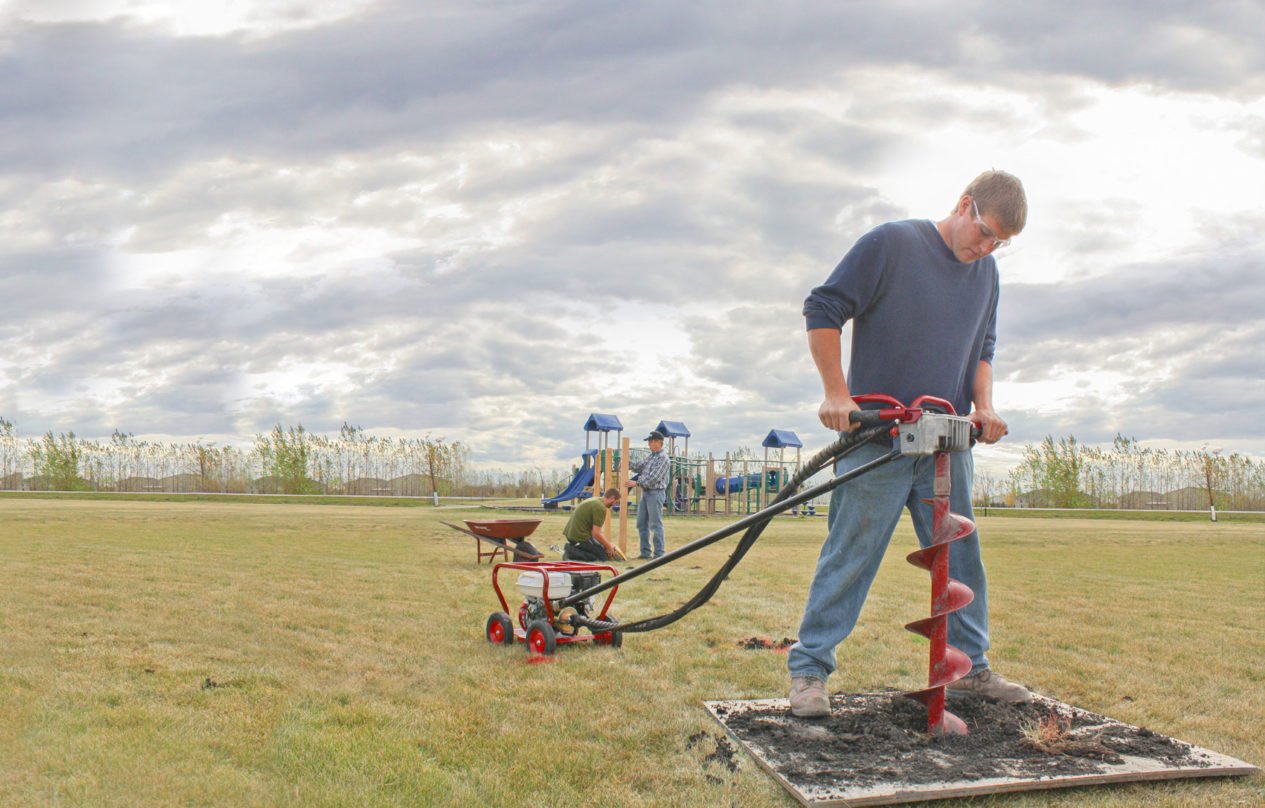
Little Beaver hydraulic earth drills improve operator safety thanks to the torque tube, which eliminates kickback and allows for safe and productive one-man drilling without sacrificing power. An optional two-man handle is available too. This handle is more convenient when drilling boreholes between 10-16 inches in diameter where two people are needed to steady the auger. The bigger, heavier auger requires two people to handle it and lift it out of the ground.
As with any project, you should follow basic safety precautions with your hydraulic earth drill. Make sure there are no bystanders in the area before you start. Never run the engine inside a building or enclosed space as exhaust gases contain carbon monoxide and can be deadly. Observing your surroundings before you start drilling keeps both you and any bystanders safe throughout the drilling process.
Always contact local utility companies before drilling to determine the exact location of underground services. Inadvertent severing of telephone, fiber optic or community antenna television transmission cables or damaging sewer pipe is costly. Additionally, rupturing gas or water lines can cause serious injury. To locate these lines, call your local utility companies 48 hours in advance of digging to mark the positions.
Know Your Drill
If you’re looking to complete a drilling project for industrial fencing, landscaping, mobile home and light utility anchoring or any other drilling project that needs high power while still requiring maneuverability, a hydraulic earth drill might be right for you. To learn more about how hydraulic earth drills can help in your outdoor projects, consult with the Little Beaver team!
Contact our team today.
Last updated Mar 27, 2026
How Innovative Design Can Improve Operator Safety
Fencing contractors have come to rely on high-speed mechanical earth drills for quick hole digging — and for good reason. These powerful machines greatly increase productivity over manual methods, improving profits and ROI. However, some efficiency is lost on increased labor costs and safety concerns directly resulting from the brute force these machines employ. Some companies — like Little Beaver — have made improvements to the design to allow a single operator to drill safely, saving time, labor costs and reducing the possibility of injury to the operator and damage to the machine.
Torque Transfer
One-man drilling leaves the torque generated from a mechanical drill operating at 360 rpm in the hands of one person, a dangerous and potentially costly situation that can leave workers injured, jobs unfinished and insurance claims to be filed. It’s why Little Beaver builds its mechanical drills standard with steel torque tubes to prevent such situations from spinning out of control.
The steel torque tube transfers auger torque and kickback to a separate engine carriage instead of the drill’s handles. Little Beaver makes this possible by mounting the engine on a separate carriage and then connecting the engine to the drill via the torque tube. This makes one-man drilling a safe and efficient reality instead of a potential hazard.
But what happens when the kickback proves too much for the drill?
Centrifugal Clutch
Fence installers know the frustration of hitting tough objects, like roots or rocks, that can abruptly halt drilling at the expense of the operator or the drill itself. Quick changes in torque when drilling can destroy a transmission as easily as it can a shoulder. A centrifugal clutch helps to alleviate these hazards and headaches.
As the torque tube mitigates operator risk by reverting the torque back to the engine carriage, the drill’s transmission now takes on the risk of overloading from all the torque and drilling pressure or damage from encountering a buried object. This is where the centrifugal clutch kicks in. A drill equipped with a centrifugal clutch will automatically slip if it becomes overloaded or strikes an object that cannot be readily drilled through. Pairing this feature with a heavy-duty transmission limits the chances for auger and transmission damage or an untimely breakdown.
A centrifugal clutch, along with the steel torque tube, brings repair cost mitigation and safety maximization full circle. The increased safety of the operator combined with one-man operation and the decreased likelihood of a breakdown equals a smaller and more efficient crew that can take on more jobs.
Intuitive Design
Intuitive design leads to fluid operation. A drill operator shouldn’t need to waste time or focus searching for a switch or changing a cumbersome attachment. Time saving features like snap-on augers and handle-mounted on/off switches on Little Beaver drills help to improve operation, increasing efficiency and potentially saving the operator and machine from unnecessary harm.
There is no formula for increasing the number of jobs completed while decreasing labor input. Such a conundrum takes technological advances to overcome, and Little Beaver has done just that. Fencing crews can now complete jobs with less labor, freeing up time and budget to tackle more work safely.
Last updated Mar 27, 2026
Keeping Safety in Mind Before Starting the Job
Whether you’re using a hand shovel or an excavator, an earth drill or a trencher, a hole is a hole and there are several safety precautions that come along with a digging project. Sharp tools present the opportunity for dangerous situations, let alone combined with the power of a mechanical or hydraulic rig. Choosing a safe machine, calling before you dig and operating the machine according to manufacturer recommendations are all things to consider before starting. Keeping safety in mind before starting any job is crucial to avoiding injuries, some of which can be serious.
Select a Safe Drill
Choosing a drill with safety-enhancing features can make or break a project. No matter what kind of drill you’re looking for – mechanical or hydraulic, a larger rig or smaller piece of equipment – there are certain features to look for to ensure the safest operation.
First, make sure the drill has a torque bar. This addition protects operators from the harmful effects of a drill’s torque by transferring kickback from the auger to the power source. By distributing force to the engine carriage as opposed to the handles, one person can safely and comfortably operate these drills. In addition to protecting the operator from harm, torque tubes reduce operator effort and fatigue.
Torque tubes are the only way to ensure safe operation of a one-man drill. The torque tube eliminates the kickback common with competitive earth augers, making one-man drilling safe, fast and productive. Many two-man drills exist, but if they’re not operated correctly, they present a handful of potential issues. If one operator slips or lets go, the other operator risks being thrown and injured. A one-man earth drill is designed to be a safe and efficient piece of equipment.
Additionally, mechanical drills are often equipped with a centrifugal clutch. If the auger encounters an object beneath the surface or if it’s overloaded, the clutch automatically slips to protect the operator from serious injury.
Call Before You Start
 Calling before you dig can be the difference between smooth sailing and a potential disaster. There are millions of miles of buried utilities below the surface, including gas lines, underground sprinklers, sewer pipes and more. Buried gas or power lines are the most dangerous, with the potential for electrocution, fire, severe burns or even fatalities. Always call the national diggers hotline at 811 at least 48 hours prior to digging to have underground utilities marked. When the inspector arrives, pay attention to the details since state laws differ when it comes to how long your permits are valid and what the paint or flags indicate. There may be multiple utility lines to be aware of.
Besides underground utilities, you should have a general idea of what lies below. Fill material, wood, rocks and more can be hiding underground. Take a good survey of your site beforehand. Not only does this provide another level of safety, but it helps you make a decision on which kind of drill bit to select.
Operate Safely
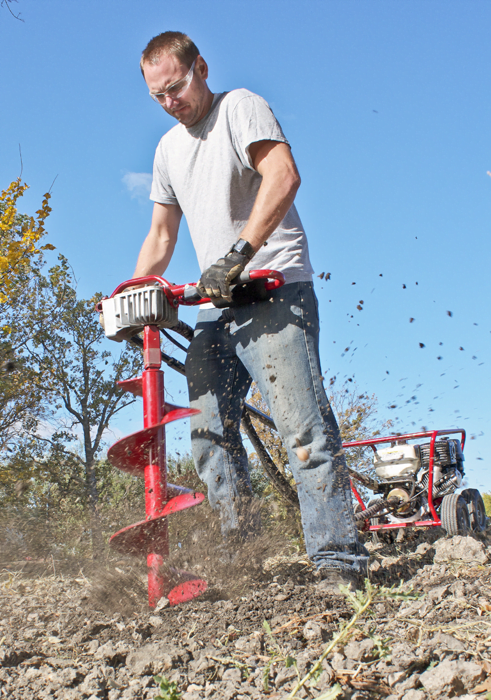
After you’ve equipped yourself with the safest drill and underground utilities have been marked, it’s time to start your project. If you’ve chosen a one-man drill, it’s important to operate the drill alone, as the handles are designed for a solo operation. Bystanders should be at least 10 feet away, and everyone should be wearing hard hats and safety goggles.
Avoid loose-fitting clothing, including gloves. If work gloves are too loose, they can hinder your ability to appropriately operate the drill. Wear work boots or quality athletic shoes, avoiding hanging shoelaces that could get caught in the auger.
Once the auger is running, position it perpendicular to the ground for the best possible control and optimal results. Touch the auger to the ground before you start rotating. For the best control, adjust the downward pressure based on the soil conditions. If the soil is soft, ease up slightly. If the ground is harder, apply a little more pressure, but not so much that rotation slows or stops.
Once you’ve reached the desired depth, there’s a proper procedure for safely removing the auger from the ground. Release the throttle control and allow the auger to come to a complete stop. Once the auger has stopped turning, it can safely be removed from the hole. Hydraulic rigs feature a forward/reverse lever to make it easier to lift the dirt out. This allows the operator to ease the drill out of the ground as opposed to tugging heavily on the equipment, greatly minimizing the physical effort required to get the job done.
By following a few easy steps, you can ensure your drilling operation is safe, efficient and injury-free.
Last updated Mar 27, 2026
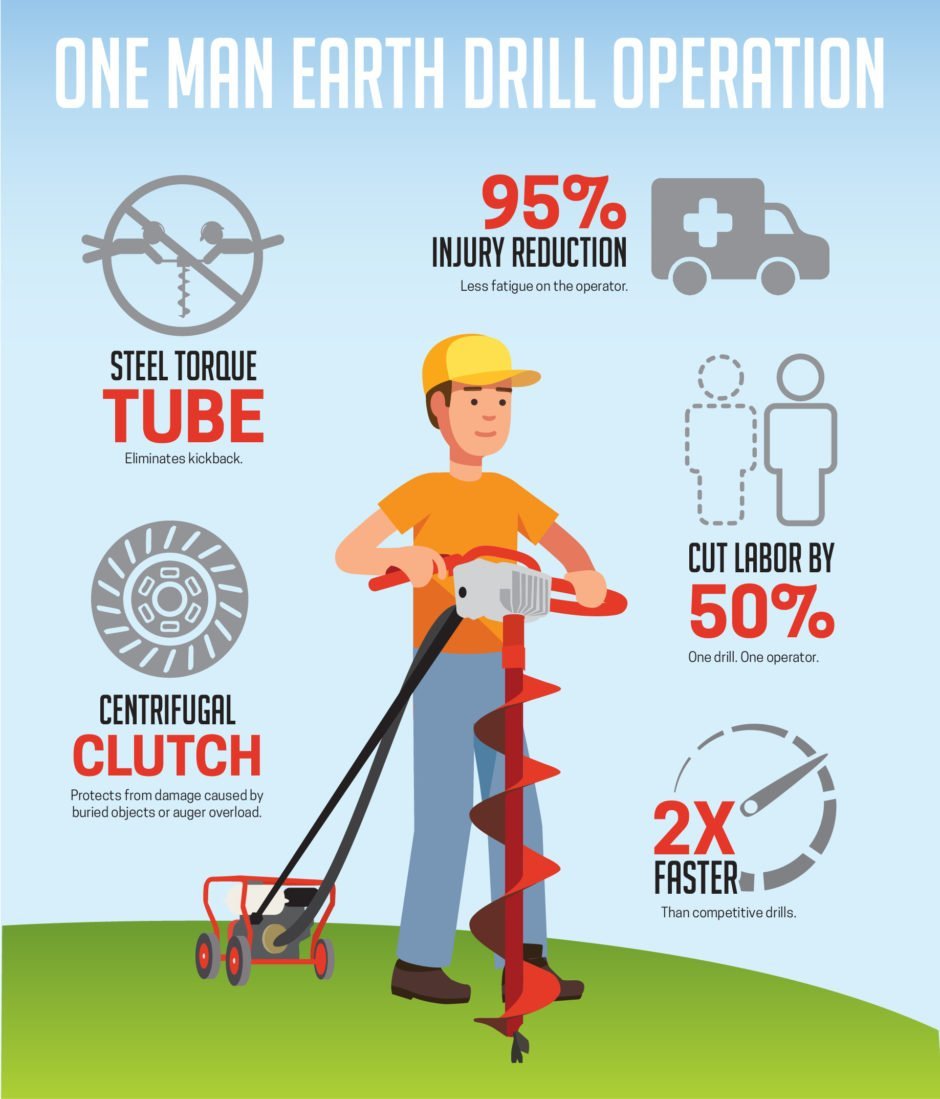
Little Beaver Earth Drills are designed to be safely operated by just one person. What does that mean for your business? More efficient labor utilization. Faster job completion. Fewer injuries. More profit on every job.
Check out the infographic below to learn how Little Beaver Earth Drills can double your productivity and maximize jobsite safety.
Last updated Mar 27, 2026
One-of-a-Kind Feature Improves Operator Safety
In the mid-1970s, Van Cox set out to solve one of earth drilling’s most punishing problems — auger torque. Cox, an engineer for Little Beaver, soon completed a design and secured a patent for what is now known as the torque tube. The one-of-a-kind invention protects operators from the harmful effects of a drill’s torque by transferring kickback from the auger to the power source.
More than 40 years later, deck builders, fence contractors, landscapers and rental customers continue to enjoy torque-free drilling as well as the labor-saving benefits made possible by safe, one-person drilling.
The invention remains a defining feature on Little Beaver’s of mechanical and hydraulic earth drills, and it continues to make life easier for business owners and drill operators thanks to the many benefits of torque-free drilling.
Less Manpower: By transferring dangerous kickback to the engine carriage as opposed to the handles, one person can safely operate a Little Beaver drill. Most drills without torque protection require two operators for safe use. One-person drilling frees up the second individual to work on other tasks so jobs are completed in less time.
Fewer Strains: Kickback on traditional drills can jar an operator’s body, causing strains and injuries, which lead to time off and worker’s compensation costs. Even minor injuries, ones that don’t result in time away from work, can slow individuals down, decreasing overall production.
Easier Use: Since the torque tube absorbs kickback, operators don’t need to work as hard to control the machine. This significantly reduces fatigue while allowing operators of any age or experience level to easily handle the drill.
If you’re still not convinced of the benefits of Van Cox’s invention, see Little Beaver’s solutions for yourself.