Learn how to properly set up the Little Beaver mechanical earth drill for fast success starting your projects, whether it’s installing a fence, building a deck or planting a row of trees. Follow along as Randy VanWagner, our engineering manager, demonstrates the step-by-step process for setting up the drill as well as disassembling it for transportation or storage.
Achieve Project Success with the Right Methods and Equipment
If you’ve installed landscape lighting, underground sprinkler systems or drain tile running through a lawn, you understand the demanding work caused by a sidewalk or driveway blocking your path. Boring under cement may not be a part of every job you do, but it’s nice to know you have a solution available for this situation.
With help from Little Beaver’s horizontal boring attachments, you can get underneath almost any concrete obstacle to install conduit, pipe and irrigation systems. The attachments pair with our Mechanical Earth Drills. Before you start your next project that involves burying lines, consider your horizontal boring options and learn best practices.
Sidewalk or Driveway
The first step is to evaluate the size of the project. This will help you determine the equipment best suited for your needs. Smaller jobs, such as boring under sidewalks to connect a water line or run wires for lighting, are best done with a sidewalk boring kit that easily bores up to 5 feet.
Larger projects — as long as 50 feet — can be tackled with the driveway boring kit. This attachment bores smoothly under a street or driveway, which makes it ideal for installing underground irrigation systems. After choosing the proper attachment, you can get started with your boring project.
Digging In
First, gather your horizontal boring kit, mechanical drill and either a trenching machine or a round point hand shovel and spade. For wet drilling you will also need a garden hose, 3/4-inch Schedule 80 water pipe and 3/4-inch pipe couplings.
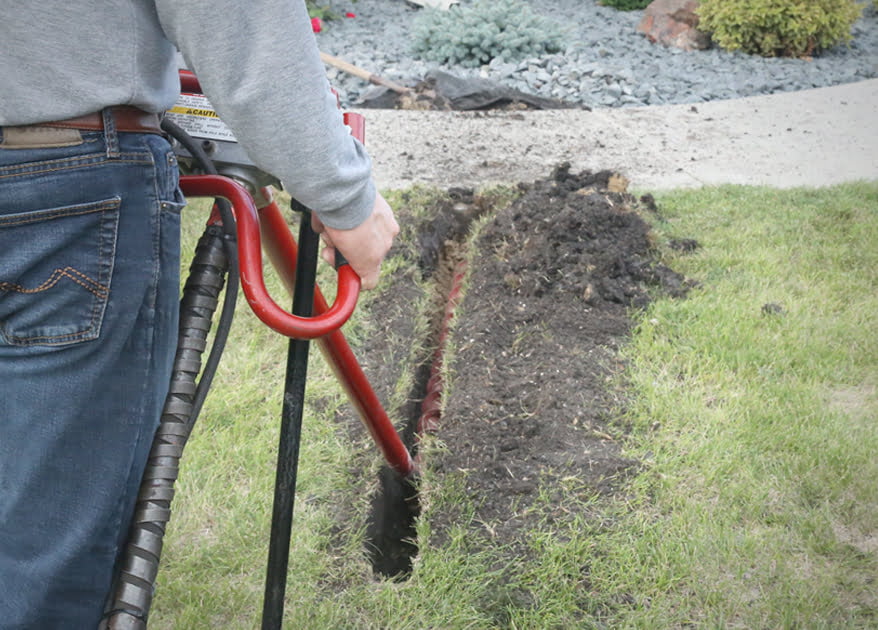
Then, dig a small starter trench so that you can reach the correct depth and angle as you start to bore. The dry boring kit requires a 6-foot-long trench 6 inches below the bottom of the concrete slab. When using the wet auger kit, dig a trench 15 feet long. Trench depth is important, as a deeper trench will greatly reduce the risk of cracking concrete while boring. Then move to the opposite side of the pavement and dig a shorter trench to receive the drill as it passes from under the pavement.
Since this is such a low-torque job, the torque tube is not needed. Disable it by attaching the horizontal drill key to the tube connector, which activates the safety interlock. Drill setup varies slightly for each auger kit, so follow the instruction manual for finer details. Before you begin, call 811 to verify there are no existing utilities in the digging area and follow all other safety precautions.
Here to Serve You
Little Beaver Mechanical Earth Drills are designed to make horizontal boring easier so you can take on more boring projects in a shorter period of time. To complete your next horizontal boring job quickly, efficiently and safely, watch our attachments in action. Then contact us to get the horizontal boring attachment that fits your next project. Do not let sidewalks and driveways get in your way.
You’ve become an expert in landscaping throughout the region. From planting trees and flowers to installing decks and curb edging, you’ve completed many projects for satisfied customers. Now it’s time to step up your game and add fence installation to your services.
Let these fence-building tips lead you to success.
1. Get Answers.
Start like you would with any project, by working with the homeowner or business owner to establish the size, scope and specifics of the project. To do this, always have a set of questions ready that will get to the heart of the project. What kind of fence does the customer want? What will the layout be? Where do they want gates? How high should you build it?
Check with city building codes and, if applicable, neighborhood association rules, so that the fence specs meet all of the codes. If the city assessor has not surveyed the property recently, you’ll want to coordinate that to ensure the fence is built in the proper location and, depending on the area, you may need a permit. Call 811 a few days prior to digging to have utility companies mark underground utility lines, gas pipes and sprinkler systems.
2. Get Your Tools.
Selecting the right hole digging equipment will help you finish on time and on budget. If it’s a small project, you might use a hand-held posthole digger. If you’re doing more than a dozen holes, though, it will be slow work to muscle each hole clean. To tackle bigger or multiple projects, you’ll want the speed and ease-of-use that comes with an earth drill. A Little Beaver mechanical one-man or hydraulic drill can bore each hole in less than a minute with little effort. It’s equally important is to make sure you select the correct auger, points and blades for the soil type you’re working in. This will help you dig holes faster with less pain.
3. Get it Straight.
You can’t get a straight fence without evenly spaced holes and firmly set posts. Set the spacing by marking and digging all corner and gate post holes first. Run a string from corner to corner and then measure the post spacing along the line.
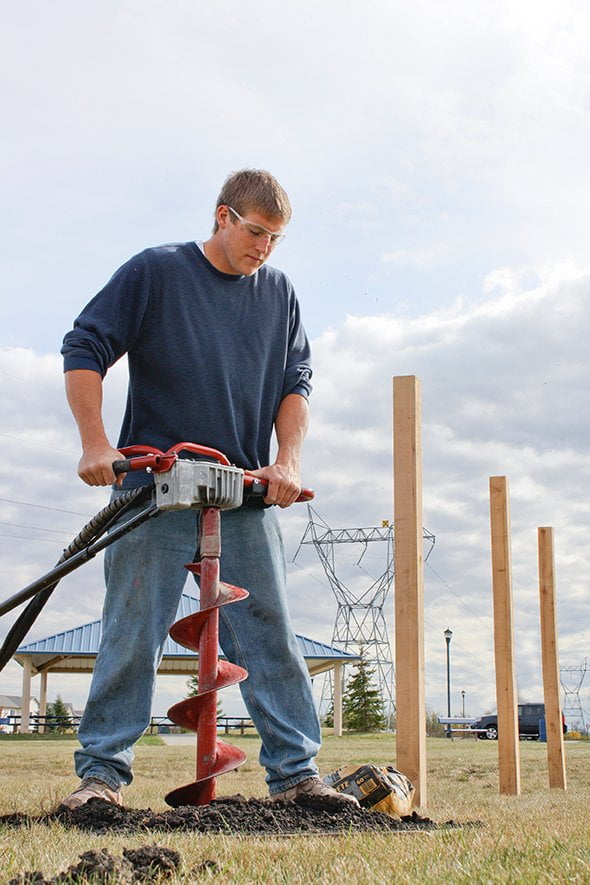
For chain link fences, space postholes no more than 10 feet apart. For wooden fences, posts usually stand 6 to 8 feet apart. If installing posts in soft soils or windy areas, use a hand posthole digger to flare out the hole, creating a bell shape for more stability. The hole diameter needed is based on the size of the post used. For instance, a 4-by-4 post requires an 8-inch diameter hole. This can be easily achieved with Little Beaver’s snap-on augers that range in diameter from 1.5 to 16 inches. Holes are typically 24 inches deep, but you’ll need to ensure the depth is 3 inches below the frost line to prevent posts from cracking in the frozen ground. In some parts of the northern U.S. and into Canada, that means going as deep as 4 feet. If you’re in windy areas or sandy soil, you may want to dig your posts even deeper.
4. Get the Concrete.
Position the posts so that they are the correct height and plumb; even the slightest lean can create a slanted and potentially unstable fence. Next, shovel concrete into each hole. Avoid touching the post, which could cause it to move. Choosing concrete rather than a dirt and gravel mix will give the fence better stability. Allow 24 hours for the concrete to set, and then attach the chain link fabric or wood framing and face boards. With both types of fences, complete the gates last.
Once you’re done, it’s an ideal time to touch base with your customer on fence maintenance and landscaping recommendations. A job well done here can translate to more work, whether from this customer or referrals, as you continue to expand your landscaping services.
Feel free to contact us for further fence-building tips; or general questions on our full line of augers, one-man earth drills and two-man earth drills. We’re always happy to provide the tools and assistance you need.
Nothing says summer like a backyard barbeque on your new deck. When built correctly, the deck can be a hot spot for many backyard escapes and a refuge for enjoying perfect summer evenings. But it all can come crashing down if the deck doesn’t have proper footings.
Footings support the deck’s weight at different points in the ground, creating a crucial support network that prevents problems, such as sagging and wood rot. Those problems not only make your deck unattractive, but unsafe as well. And to fix them as they surface taps your savings and generates unwanted stress. Without proper footings, the deck will sink into the ground, taking with it any future summer get-togethers.
Laying the Groundwork
When starting a new deck project, choosing the correct footings boils down to two things, loads and codes. The first step you should take is to determine the deck’s size, location and layout. After getting a general idea of what you want the deck to look like, think how will you use it. Will it be the next venue for the neighborhood block party? Or will it be for intimate gatherings of family and friends? Based on your answer, your deck will have different footing requirements because of the weight requirements.
Local building codes also determine the footing style and measurements. Building codes can vary state to state, so it’s crucial to contact local government experts. They can provide information regarding the minimum number of footings needed, spacing requirements and even how deep to dig. For instance, holes need to be dug below the frost line, which can range anywhere between 12-60 inches, depending on where the project is within the U.S.
The Digging Commences
After securing the necessary building permits from city hall and locating underground utility lines, it’s time to dig. When it comes to bringing heavy duty equipment through your yard, let’s face it. You’re not thrilled about skidsteers leaving ruts in your soft, green grass, and fences and narrow side yards limit what type of equipment can even reach the worksite — commonly forcing homeowners to seek out hand augers and mechanical drills.
Mechanical earth drills, which can be rented from a local rental business, can get to the site, not to mention save time when digging deck footings. These earth augers can cut through different soil types, dig clean, consistent holes and quickly set up the beginnings for the perfect deck. Earth drills are compact and offer multiple types of digging teeth depending on the types of soil you have.
Additionally, mechanical drills are more portable than heavy machinery. For instance, some drills feature pneumatic wheels so a single person can pull the drill and carriage to the footing location without forming lawn ruts or dismantling fences. Some manufacturers build models with torque tubes that transfer digging torque to the engine carriage, which allows one person to safely operate the drill. Once in place, the user can drill to the required depth and quickly move to the next footing location.
After the footings are placed and the concrete has set, you can continue building the frame for the deck that will be the hot spot next summer and for many more to come.
We use cookies to ensure that we give you the best experience on our website. If you continue to use this site we will assume that you are happy with it.