
Last updated Mar 27, 2026
Minimize Downtime with Proactive Maintenance
A little maintenance work goes a long way to decrease costs, expand the lifespan and enhance the power of your earth drill. Contractors choose our Mechanical Earth Drills for high power in a variety of applications such as fence installation, deck installation or landscaping. Like most equipment, a mechanical drill requires simple, routine maintenance to stay up and running. By maximizing uptime, you’ll generate higher profits across the board from your landscaping projects.
Earth Auger Maintenance Basics:
- Transmission/gearbox: Every 30 days, or after 40 hours of use, verify the transmission oil level offers adequate lubrication. Low oil can cause excessive gear wear.
- Flexible Drive Shaft: Examine, clean and grease the flexible drive shaft after every 50 hours of operation. Apply sufficient grease so that it’s not gumming up the flex shaft but not so little that it’s dry and puts the cable at risk of breaking.
- Clutch: Check the clutch every 30 days or when you lubricate the flexible drive shaft. Clean the shoes and drums and replace if any clutch padding is missing. A worn clutch can slip or cause the drill to jerk. Worn springs might result in the auger spinning at idle or overheating.
A Comprehensive Approach
While these are the most frequent maintenance areas, it’s important to keep other components on your radar, as well. Be sure to monitor other parts, including the throttle, torque tube, augers, points and blades, and the engine to identify any potential issues.
To learn more about warning signs and maintenance tips, check out our online service videos. They offer step-by-step guidance on Little Beaver maintenance protocols. You can find further advice in our product manuals as well as our blogs.
You can also contact us directly regarding any technical issues. Our dedicated support team is just a click or phone call away.
Last updated Mar 27, 2026
4 Tips for Building the Perfect Fence
You’ve become an expert in landscaping throughout the region. From planting trees and flowers to installing decks and curb edging, you’ve completed many projects for satisfied customers. Now it’s time to step up your game and add fence installation to your services.
Let these fence-building tips lead you to success.
1. Get Answers.
Start like you would with any project, by working with the homeowner or business owner to establish the size, scope and specifics of the project. To do this, always have a set of questions ready that will get to the heart of the project. What kind of fence does the customer want? What will the layout be? Where do they want gates? How high should you build it?
Check with city building codes and, if applicable, neighborhood association rules, so that the fence specs meet all of the codes. If the city assessor has not surveyed the property recently, you’ll want to coordinate that to ensure the fence is built in the proper location and, depending on the area, you may need a permit. Call 811 a few days prior to digging to have utility companies mark underground utility lines, gas pipes and sprinkler systems.
2. Get Your Tools.
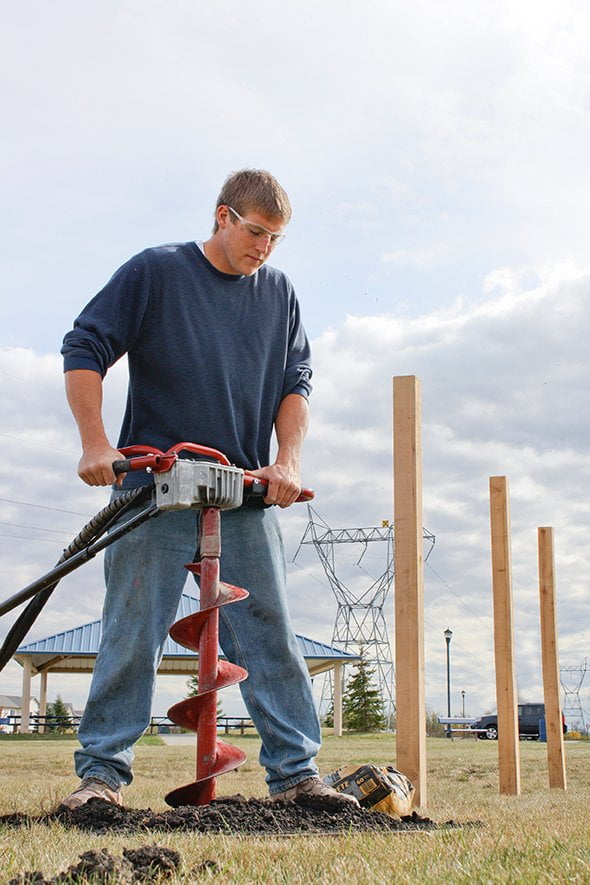
Selecting the right hole digging equipment will help you finish on time and on budget. If it’s a small project, you might use a hand-held posthole digger. If you’re doing more than a dozen holes, though, it will be slow work to muscle each hole clean. To tackle bigger or multiple projects, you’ll want the speed and ease-of-use that comes with an earth drill. A Little Beaver mechanical one-man or hydraulic drill can bore each hole in less than a minute with little effort. It’s equally important is to make sure you select the correct auger, points and blades for the soil type you’re working in. This will help you dig holes faster with less pain.
3. Get it Straight.
You can’t get a straight fence without evenly spaced holes and firmly set posts. Set the spacing by marking and digging all corner and gate post holes first. Run a string from corner to corner and then measure the post spacing along the line.
For chain link fences, space postholes no more than 10 feet apart. For wooden fences, posts usually stand 6 to 8 feet apart. If installing posts in soft soils or windy areas, use a hand posthole digger to flare out the hole, creating a bell shape for more stability. The hole diameter needed is based on the size of the post used. For instance, a 4-by-4 post requires an 8-inch diameter hole. This can be easily achieved with Little Beaver’s snap-on augers that range in diameter from 1.5 to 16 inches. Holes are typically 24 inches deep, but you’ll need to ensure the depth is 3 inches below the frost line to prevent posts from cracking in the frozen ground. In some parts of the northern U.S. and into Canada, that means going as deep as 4 feet. If you’re in windy areas or sandy soil, you may want to dig your posts even deeper.
4. Get the Concrete.
Position the posts so that they are the correct height and plumb; even the slightest lean can create a slanted and potentially unstable fence. Next, shovel concrete into each hole. Avoid touching the post, which could cause it to move. Choosing concrete rather than a dirt and gravel mix will give the fence better stability. Allow 24 hours for the concrete to set, and then attach the chain link fabric or wood framing and face boards. With both types of fences, complete the gates last.
Once you’re done, it’s an ideal time to touch base with your customer on fence maintenance and landscaping recommendations. A job well done here can translate to more work, whether from this customer or referrals, as you continue to expand your landscaping services.
Feel free to contact us for further fence-building tips; or general questions on our full line of augers, one-man earth drills and two-man earth drills. We’re always happy to provide the tools and assistance you need.
