
Learn how hydraulic drills work and the safest ways to use them
Powerful and reliable, hydraulic earth drills offer a variety of benefits for drilling projects that require breaking through heavy clay or rocky soils. With the additional torque that comes with the hydraulic drill, it’s important to understand the hydraulic power source and how to use a hydraulic earth drill safely.
Why choose hydraulic earth drills?
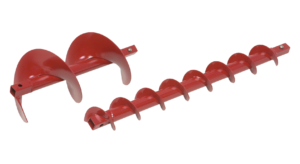 Perhaps the most obvious question is why choose hydraulic earth drills in the first place? With a durable body and higher torque than mechanical options, a hydraulic drill can bring more power to a drilling project. Hydraulic earth drills can also drive larger diameter augers with extensions available for deeper drilling projects. Equipment longevity is a factor too. Hydraulic earth drills usually require fewer repairs overall, which lowers costs in the long run.
Once you’ve decided the hydraulic drill is right for your project, it’s time to learn more about what a hydraulic drill is and what you need to be aware of to use one safely. Hydraulic pressure is what generates the force behind a hydraulic drill. So, we’ll start there.
What is hydraulic pressure?
The term ‘hydraulic pressure’ refers to the pressure exerted by fluid (whether at rest or moving) on a surface or structure. In the case of hydraulic earth drills, the hydraulic pressure is the force the fluid creates to drive the drill’s auger forward.
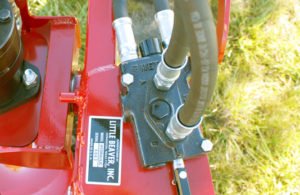 The hydraulic system in Little Beaver hydraulic earth drills generates pressure ranging from 2,500 to 2,700 pounds per square inch with operating speeds up to 150 rpm. Little Beaver hydraulic drills have a hydraulic pressure relief valve that reduces the risk of hydraulic power exceeding the maximum pressure the drill is built to withstand. Once the hydraulic pressure reaches a pre-determined point, the pressure relief valve responds and feeds the excess flow from the system back into the tank. To ensure safety, the valve should be set as equal to or less than the rated working pressure of the weakest component in the hydraulic system.
A relief valve doesn’t remove system pressure, it instead works to prevent pressure from rising past the pre-determined level. The valve reacts quickly to protect against damaged equipment, disrupted work and even injury that can come from hydraulic pressure being too high.
How can you increase safety with the hydraulic earth drills?
Little Beaver hydraulic earth drills improve operator safety thanks to the torque tube, which eliminates kickback and allows for safe and productive one-man drilling without sacrificing power. An optional two-man handle is available too. This handle is more convenient when drilling boreholes between 10-16 inches in diameter where two people are needed to steady the auger. The bigger, heavier auger requires two people to handle it and lift it out of the ground.
As with any project, you should follow basic safety precautions with your hydraulic earth drill. Make sure there are no bystanders in the area before you start. Never run the engine inside a building or enclosed space as exhaust gases contain carbon monoxide and can be deadly. Observing your surroundings before you start drilling keeps both you and any bystanders safe throughout the drilling process.
Always contact local utility companies before drilling to determine the exact location of underground services. Inadvertent severing of telephone, fiber optic or community antenna television transmission cables or damaging sewer pipe is costly. Additionally, rupturing gas or water lines can cause serious injury. To locate these lines, call your local utility companies 48 hours in advance of digging to mark the positions.
Know Your Drill
If you’re looking to complete a drilling project for industrial fencing, landscaping, mobile home and light utility anchoring or any other drilling project that needs high power while still requiring maneuverability, a hydraulic earth drill might be right for you. To learn more about how hydraulic earth drills can help in your outdoor projects, consult with the Little Beaver team!